
The inspiration behind Operation Aerial
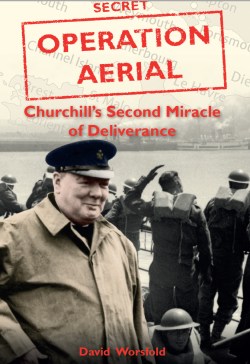
Since the publication of Operation Aerial: Churchill’s Second Miracle of Deliverance in the summer many people have asked me what inspired me to write it.
The answer goes back to my earlier book, Fighting for the Empire, which is a life and times biography of Thomas Kelly, a doctor from Galway who spent 50 action-packed years in a British uniform. He also happens to be my wife’s grandfather.
In the middle of June 1940, at the age of 70, he was serving as ship’s surgeon on the SS Madura which was re-directed into Bordeaux while returning from East Africa. This surprised me because like most people I thought when Dunkirk fell in the early hours of 4 June we were out of France. My father was a driver with the British Expeditionary Force and came home through Dunkirk so I have always taken a keen interest in that phase of the war but never realised just how extensive the evacuations after Dunkirk were.
My quest for a book to explain what happened after Dunkirk drew a blank, so when I finished the Kelly biography I vowed to fill that gap.
There are a couple of decent military histories, which are very detailed and thorough, but they only deal with the military aspects of what happened during the rest of June 1940. There are also two books that list the ships involved in the post-Dunkirk evacuations with some narrative. All of these are credited in my book.
However, there was nothing that drew both aspects together, let alone covered the stories of the 25,000 British civilians living and working in Belgium, Holland, Luxembourg and France when the Germans attacked on 10 May. They were left to their own devices and fled south in the hope of finding safety and deliverance from the Nazi menace.
Pulling all those aspects together was a huge challenge.
There is a wealth of excellent literature on Dunkirk but it is a relatively easy story to tell because it is linear. It is linear geographically because it eventually focusses on a single port. It is also linear chronologically because it can be told day-by-day with few complications.
Operation Aerial is just the opposite.
It is hugely complicated, sweeping round the Brittany peninsula, all the way down the Biscay coast to the ports on the Spanish border and eventually to the French Riviera. The evacuations from the many ports involved also overlap, so a simple chronological treatment would not do the story justice and would probably lose the reader.
There was a period as my researches were nearing completion when I wondered if I could find a satisfactory way of telling this complex story. I struggled for a while with various options but eventually found a way of organising the content that I hope gives the reader a coherent picture of what happened to bring home another 250,000 people from France in June 1940.
I hope by telling the story of Operation Aerial I have filled a gap for people, especially those who had relatives stuck in France after the evacuations through Dunkirk were brought to an end but, until now, have not had a clear picture of why, what was happening and how they eventually found their way back to England.
• Operation Aerial: Churchill’s Second Miracle of Deliverance is available from the publisher Sabrestorm, Amazon and all good bookshops.
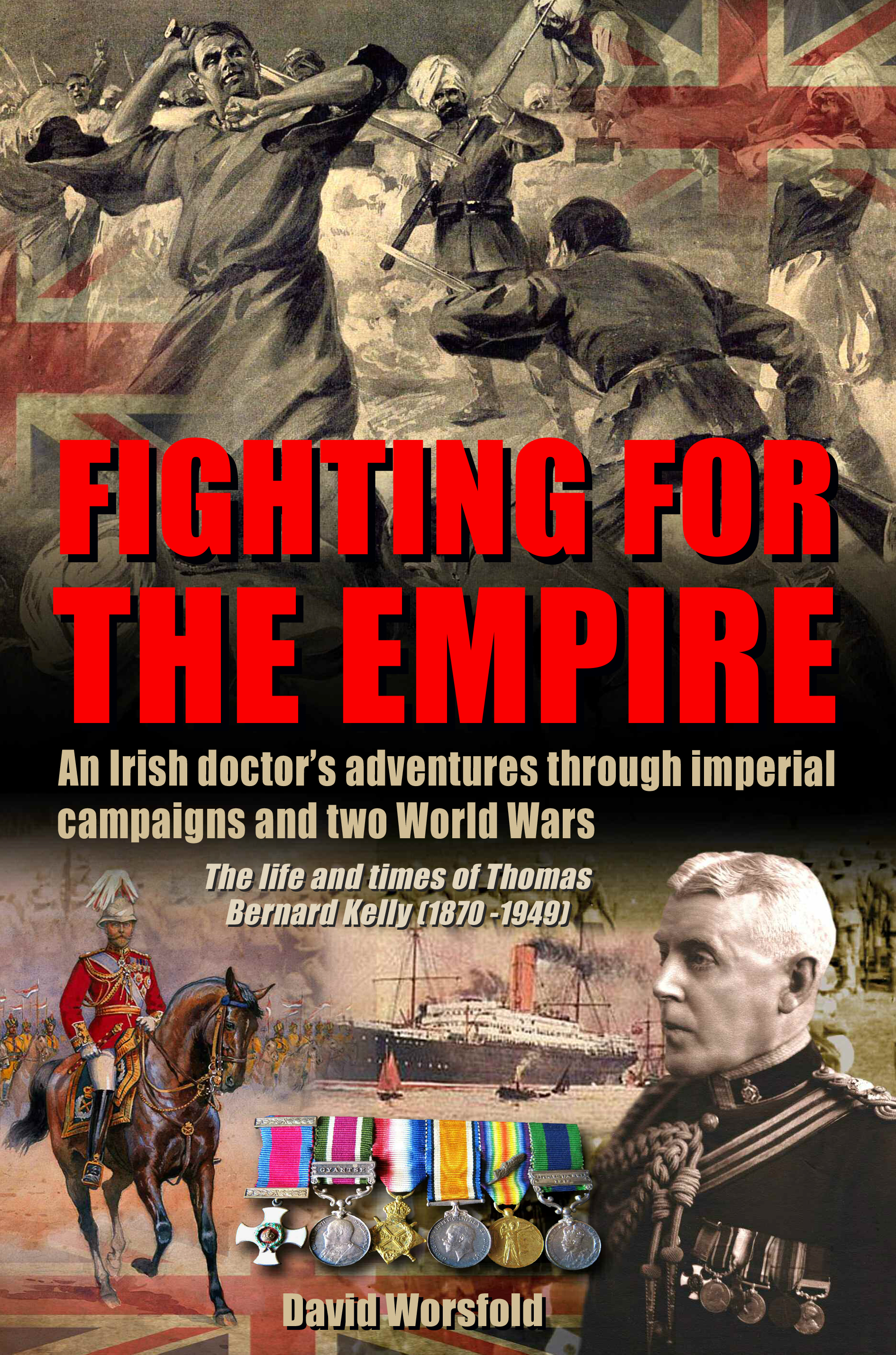 • Fighting for the Empire is also still available on Amazon at a ridiculously low price in the run-up to Black Friday!
 David Worsfold