
History is personal. Why telling people’s stories matters
One of the most rewarding aspects of writing two military history books has been bringing alive the stories about the people whose lives were shaped – sometimes broken – by great events beyond their control. Military history is not just about powerful leaders, great armies, strategic vision and bloody battles. It is about the people who find themselves part of history without ever seeking to do so.
With my recent book on the post-Dunkirk evacuations from France in June 1940 – Operation Aerial: Churchill’s Second Miracle of Deliverance – I very early on in my planning and researches decided to tell the story of the dramatic escapes from the advancing German armies through the voices of those those who were involved, always taking care to establish the context. The reader has to be able to understand why they were there and what they were being asked to do for their responses to the situation to make any sense.
Sometimes taking these individual stories and putting them into their full context answers long-unanswered questions for relatives and descendants.
I was reminded of this by a recent family anniversary.
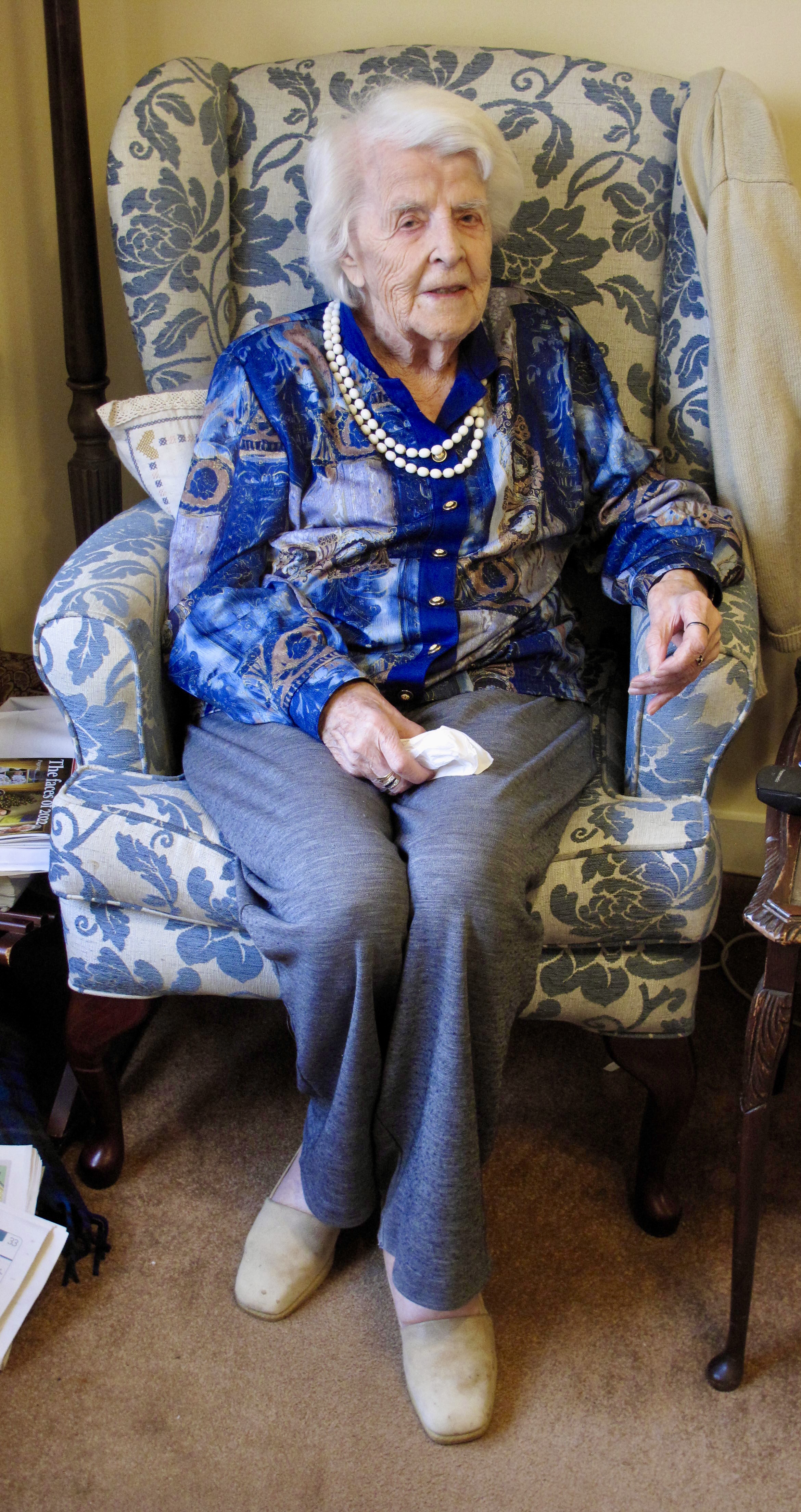
Earlier this month, my mother-in-law, Rosemary Mason (left), celebrated her 102nd birthday. The same week would have been her 80th wedding anniversary, as she was a wartime bride, and war left its mark on her wedding and her relationship with her father.
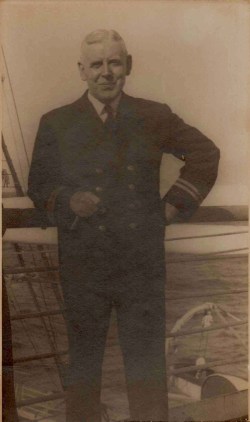
Her father, Thomas Kelly (pictured above), was an Irish doctor, who had served in the Indian Medical Services for 30 years and in World War Two was, in his 70s, a ship’s surgeon in the Merchant Navy. His remarkable story is told in Fighting for the Empire. He missed his daughter’s wedding in January 1943 and she never knew why until I pieced together the events of late 1942 and early 1943 for Fighting for the Empire.
This edited extract from the book takes up the story.
“Back home Kelly’s two daughters were by now both engaged to young doctors and weddings were being planned. The challenge was to fit the weddings in around the times when their father expected to be in the UK. This was only a partial success.
Both men, Tom Foot engaged to Brigid, now almost 22, and Adair Stuart Mason engaged Rosemary, 21, had trained at the London Hospital.
So at the end of July 1942 it was Brigid and Tom who married first at the Catholic church of Our Lady of the Rosary not far from St Mary’s Mansions with a reception at Lord’s Cricket Ground, Kelly was there, having returned to England on the Ruahine just 10 days earlier.
By mid-August he was bidding his family farewell again to join another New Zealand Shipping Company vessel, the Rangitata at Liverpool, ready to sail to the Clyde to form part of convoy WS22 to take the 56th(London) Division to Iraq (the former Mesopotamia), a huge complement of 50,000 military and support personnel.
After disembarking its military contingent in October, it had a routine return journey planned, crossing the Atlantic to collect food cargoes from Buenos Aires and La Plata, arriving back in the UK just in time for Christmas 1942. More importantly for Kelly to be in good time for Rosemary’s wedding now set for mid-January. Almost immediately the plans started to change. Rangitata was sent with additional troops to reinforce Diego Suarez on Madagascar, which had recently been seized from the Vichy French to prevent it being used as a base by the advancing Japanese forces. While there it collected a troop detachment to take to Mauritius, the only ship from any of the 30-plus Winston Special convoys – each consisting of dozens of ships – to visit Mauritius. Having done this it headed off to South America where it collected its cargo of meat but was diverted again, this time to New York where it was asked to pick up US troops coming to Europe. It docked in New York on 4 January 1943 and by then Kelly must have realised he wasn’t going to make his younger daughter’s wedding planned to take place on 11 January. Wartime secrecy meant that he was unable to send a message home to tell them of the delays.
Gertrude [Rosemary’s mother] had been calmly reassuring her daughter that her father would be home in time for the wedding, and even when Christmas came and went without any word from him she remained convinced he would arrive in time. He didn’t.
On her wedding day Rosemary was accompanied down the aisle in the grand setting of St James’s, Spanish Place by an uncle she hardly knew, convinced that her father [with whom she had never enjoyed the best relationship] couldn’t be bothered to get to her wedding, a resentment that festered for more than 70 years until the research for this book revealed the truth of why he wasn’t there. She never raised the matter with her father and saw relatively little of him after her marriage, not least because in early 1946 she followed her husband, by then serving with the RAMC, to India. Equally, he never made any attempt to explain what had happened: it was for him a simple matter of duty calls. He docked in England on 24 January, nearly two weeks after the wedding.
He was quickly back on the Rangitata this time to Algiers and Oran where it was attacked by German planes on 26 March.”
This explanation, accompanied by my discovery of a tea spoon from the Rangitata at an antique fair, provided some closure for her.
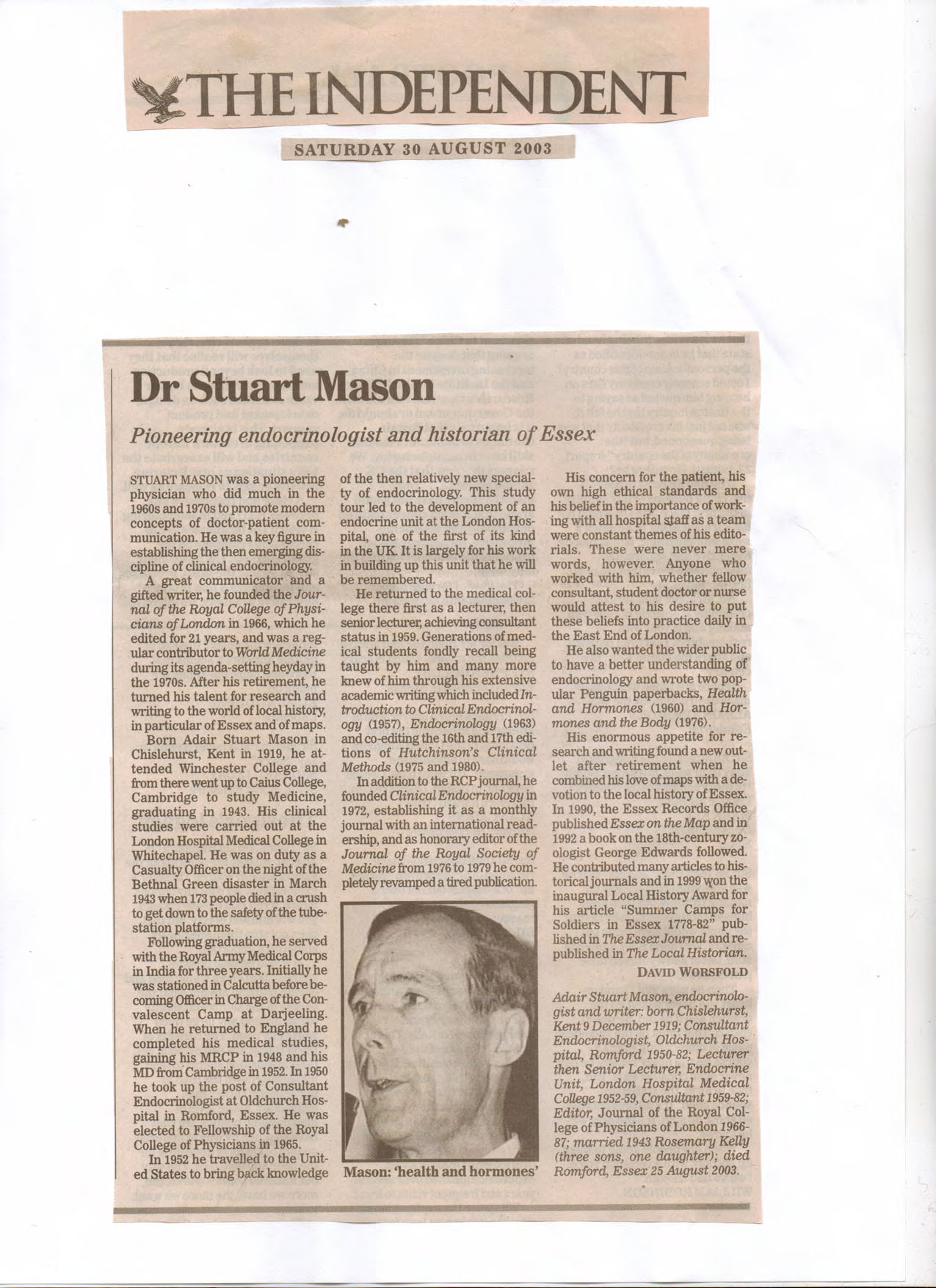
• Rosemary’s husband, Dr Stuart Mason, passed away nearly 20 years ago and his obituary appeared in The Independent (right), The Times and the British Medical Journal.
 David Worsfold