

We hear so much about fake news, media bias and suspect journalistic standards nowadays that people might think that journalists rarely, if ever, stop to think about what they do or how they go about their daily task of reporting. My experience is that professional journalists care deeply about about the quality and accuracy of what they write and the way they go about gathering information.
A few years ago, I wrote a booklet for Incisive Media journalists on editorial standards which contains plenty of valuable advice and guidance for journalists. Much of it remains highly relevant and is worth sharing. This is the second in a series of blogs doing just that with a few minor up-dates.
••••••••••••••••
Sources: All of your conversations with sources are presumptively on the record, provided that you clearly identify yourself at the start of the interview as a reporter for your publication. Many of the people you interview will want to go ‘off the record’. Resist this: encourage sources to be on the record. Remind them that readers place more stock by an attributed quote. If you must, allow them to go ‘not for attribution’ or ‘off the record’ (see below). Make sure that you and the source have the same understanding of the terms used below. Avoid conversations that wander from one status to another: it is generally best to take them off the record and then go through with the source to get his or her agreement as to what can be used on the record at the end.
You should aim to get as much as possible on the record. Do not let sources think they can easily gain anonymity in order to criticise other people or damage competitors; encourage them to go on the record. Never forget that some sources want to remain anonymous because they want to advance an agenda or hurt someone. Do not let yourself be used.
Everything given to you by one source as that you wish to present as fact should always be checked, no matter who they are. You must always be on your guard against being used or too easily accepting something as fact just because it sounds true or is headline grabbing. Unfortunately, journalism is littered with examples of people who have deviated from this simple rule.
Sourcing and status: There are three levels of conversation between source and reporter: on the record, not for attribution and off the record.
• On the record is exactly what it says: sources, by name, being quoted or paraphrased in print.
• Not for attribution is when you quote or paraphrase someone without identifying them by name. “A source in the Justice Department…” “A leading fund manager…”. Two important points to bear in mind when using not-for-attribution sources are: work out in detail how you will describe an anonymous source – the source should not be surprised to see how you have described them – and give the reader some help on how to judge the value of information from the anonymous source by being as detailed as possible in the identification while preserving the source’s anonymity.
• Off the record means you cannot attribute the information to the person you are interviewing and you cannot use it based on that source at all. It does not mean that the information goes into a black box, protected from ever being made public. You can take what you learn in an off-the-record interview and use it to try to ferret out other information, or the same piece of information, on the record or not for attribution using other sources.
• At some events people may refer to the Chatham House Rules. These are frequently misunderstood. Firstly, there is only one Chatham House Rule. Secondly, it does not mean off the record. It is a non-attributable status that means it can be reported: “At an dinner in the City last night top compliance directors slammed the regulator…”. You cannot identify the participants but do not be surprised if some people at the event think they were talking off the record.
Getting comment: No one should be surprised to see their name in one of our publications. No one should be surprised to read an allegation or accusation about them. You should get comment from, or at least attempt to get comment from, people whose names will appear in and are the subject of a story. Be persistent: one phone call is not nearly enough; you should try hard, often leaving multiple messages, to reach key players in a story and tell them when your deadline is.
In most instances, organisations should also not be surprised. For example, if you are mentioning a firm, even if you are not quoting anyone from that firm, you should call a manager or PR representative of that firm to confirm facts or to get comment. You should give people a real chance to respond to an article by contacting them ahead of deadlines when circumstances permit. As with all of these guidelines, there are obvious common-sense exceptions. For example, it is not necessary to get comment when a person’s name appears as part of a contemporaneous court report.
People and companies cannot suppress a story about themselves that they do not want published merely by refusing to comment. In order to protect yourself and your publication you should put allegations to someone and invite them to comment but if they do not respond within a reasonable time or refuse to comment then you can publish. It is best to make your readers aware that you invited comment but did not receive it.
There is plenty of law covering this, much of it now enshrined in the 2013 Defamation Act.
 Representing yourself as a reporter: Do not tell people you are someone you are not. That means, in virtually all cases, you should introduce yourself to potential sources and subjects as a reporter and name your publication. Deception should only be used in exceptional circumstances where there is a clear public interest to be served and these should be discussed with senior editorial staff. The Editors’ Code of the Independent Press Standards Organisation has some sensible advice on this.
Quotes: Do not use quotes out of context. Use an ellipsis (…) when you omit long stretches of quoted material. You do not need to use an ellipsis when you omit odd words from an interview: just be careful not to distort the meaning or take a quote out of context.
Facts: You are responsible for not making mistakes. The best practice is to fact check everything you write formally. That means going through a copy of the final, edited version of your story and questioning every fact: the spelling of names, the names of companies, job titles and so on. Just getting the spelling of someone’s name wrong undermines the authority of a story. A good practical tip is to fact check from the bottom of the story up, one sentence at a time. This will force you to isolate facts and minimise the likelihood of quickly reading past checkable material that you’ve stopped ‘seeing’ because you have read the story so many times.
Online resources: Take care when using online sources. It is the journalist’s job to check sources. Do not take all websites at face value, especially if they contain controversial information. There are many bogus and hoax websites that contain malicious false information about individuals or business rivals that look like the real thing. You should look for an ‘about us’ section and check the contact details if you have any reason to be suspicious about the provenance of a site.
Wikis and collaborative sites: Wikipediea and similar collaborative sites are a very good starting point for research but they should never be treated as a definitive source. There are many examples of inaccuracies, some deliberate and malicious, on these sites. Every fact should be checked.
Beware of social media: The vast array of social media also presents a significant challenge. Social media can be a great source of stories but it is also the means by which most fake news is generated and recirculated. Everything needs careful checking. Remember that the laws of defamation and libel apply to social media in the same way as they apply to everything else that is published.
•••••••••••••••
The next post in this series will cover some broader topics such as financial interests, hospitality and balancing commercial interests. Later posts will deal with complaints and quote checks.

I recently picked up a copy of a booklet on editorial standards and policies I wrote over ten years ago for Incisive Media which was then at its zenith, employing hundreds of journalists across three continents.
It contains a mixture of practical advice on editorial best practice coupled with some broader guidance on the ethics of journalism as they might be applied in a modern business publisher. What struck me is just how frequently the questions it seeks to answer come up when I am running training courses for new journalists or giving lectures to media studies students at universities.
Over the next few weeks I will share much of that content as it remains so relevant. It may even be thought-provoking for some.
Of course, plenty has changed in the media since it was written.
The digital revolution has gathered pace and changed publishing and the media in ways no-one envisaged 11 years ago (whatever they might say today).
In the UK, we have had the Leveson inquiry resulting in the creation of a new, but deeply flawed, press regulator with pressure mounting for a second phase of that inquiry to be launched.
Across the globe, there are furious debates about “fake news”, where it comes from and how it is shaping public opinion.
Rather than just reproduce all the content in the booklet, I will up-date it, strip out the parts that were purely internal to Incisive Media in 2007 and organise it into a series of themed blogs. I will conclude with some thoughts on quote-checking, which was only a minor irritant to journalists at Incisive Media then but which now looms large in almost every corner of the media. I was recently asked to draft some policies on quote-checking for another publisher and will share those more widely.
So, by way of introduction to the series of blogs here is what James Hanbury, chief executive, and I said were the aims of the booklet at the time:
“Trust, authority and integrity are the three key words that drive everything and everyone at Incisive Media.
“They are words that you as journalists – either experienced ones joining us as the next step of your career or graduates on our training scheme – will recognise as the cornerstones of editorial excellence.
I”ndeed, excellence is at the heart of every publication, every website, every conference and every piece of content we produce.
“Without this excellence the commercial functions within the company would struggle to be so successful. This places a great challenge and responsibility on those in our editorial departments to maintain the highest editorial standards”.
••••••••••••••••••••
Some of the history of Incisive Media can be found on Wikipedia, although it is by no means complete.
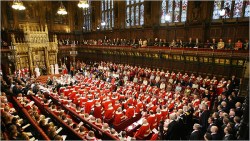
The fall-out from last night’s vote by MPs to insist that Parliament has the final say on whether to accept whatever Brexit deal the government finally negotiates will be extensive.
This has further weakened Theresa May’s already fragile government, possibly hastening us towards a general election in early 2018.
The prospect will grow more likely once the House of Lords gets its hands on the enormous Brexit Bill.
So far, relatively little has been said or written about how far the over-whelmingly pro-EU peers might push the government on this controversial bill which threatens to remove Parliamentary scrutiny from so much of the Brexit process. But after Christmas the spotlight will fall on the Lords and when it does we are likely to find it emboldened by last night’s vote.
The decision of the elected House of Commons to insist that the terms of the final deal are brought back to Parliament rather than just signed off by ministers will encourage the unelected Lords to be bolder in their attacks on the Bill than they might have been. It offers them a significant degree of political cover for amending the Bill. They aren’t going to vote it down in its entirety – that would clearly be a step too far for an unelected body and would hurl us into a major constitutional row – but they are likely use a sort of Parliamentary guerrilla warfare to pass amendments that will make the government very uncomfortable.
If the government cannot get these amendments reversed in the Commons, something it has surely made harder for itself by its bullying of rebel Tory MPs yesterday, then the possibility of May being forced to the country grows stronger.
The best one can say about the stage one Brexit deal hammered out in Brussels in the small hours of Friday morning is that it has pulled us back from the cliff-edge of a hard, no deal Brexit – at least for the time-being.
It has also made it less likely that Brexit will not go ahead.
Of course, there is a vast torrent of turbulent water yet to flow under this particular bridge but, even those of us who opposed Brexit, must cautiously welcome this modest progress. The prospect of an acrimonious no-deal Brexit is not one anyone should desire as it will be hugely damaging to the UK and to our friends in Europe. Let’s be clear: no-one would benefit from that and it is irresponsible of people like John Redwood and Ian Duncan Smith to keep touting it as a possible option.
We need to leave on the best possible terms and Friday’s fudged deal makes that more likely.
May bolstered by deal
The “who blinked first” debate will rumble on for ages but it is remarkable how the once-divided Cabinet has swung behind Theresa May on this, backed by the European negotiators. Donald Tusk’s rather sentimental contribution on Friday morning displayed something of the new desire among the EU negotiating team to keep May in power. Whether this is because they view her as a soft touch – as some British and European newspapers are doing – or because they fear the possible chaos of a collapse of her vulnerable government is by no means clear. But they have done their best to bolster her position.
The deal is either cleverly drafted or badly fudged depending on your viewpoint, especially on the vexed question of the Irish border. This should never have been given such a prominence so early in the negotiations. The issues are too complex, too sensitive and too bound up in a bloody history that few Europeans understand. How it should be dealt with will become clearer once we know what the trade deal looks like. If the UK signs up for a Norway-style arrangement with the EU – which all the talk of “alignment” suggest could now be back on the agenda – then the border issue will largely drop away. Anything short of that will put it back on the agenda, albeit without any obvious solution.
Real progress on citizenship
The deal on citizenship is much better than most people expected and represents genuine progress. It should go along way to easing the concerns of EU citizens in the UK and British citizens in the EU. The most remarkable aspect of it is the extended period of jurisdiction for the European Court of Justice. This bodes well for the trade negotiations as it is hard to see how it can be peremptorily cast aside from the complex world of European directives and how they will be applied after Brexit.
The Brexit settlement bill does look to have involved compromises on both sides although there seems to be rather a lot of detail missing from the agreement published yesterday. Divorce is never cheap so we should accept that and move on.
The acceptance of a two-year transition period is another welcome injection of common sense, although it is still too short. it is quite possible it might get extended further especially if the negotiations are going well on both both sides.
Leaving now more certain
Despite the noises from hard-line Remainers, this stumbling step forward does make it more likely that we will reach the sort of trade deal that will satisfy sufficient numbers of people to push the prospect of a complete volt-face in public opinion to the margins of probabilities. We are leaving the EU.

It was interesting to hear the City Minister Stephen Barclay tell MPs, peers and industry representatives at the All Party Parliamentary Group on Insurance and Financial Services this week that it had a key role in educating politicians and the public about some of the key issues facing the sector. This was precisely the sort of role we envisaged for the Group when I helped get it established way back in 1991.
With challenges such as the impact of the discount rate on premiums, travel sickness claims, financial exclusion and Brexit swirling around the industry it finds itself firmly implanted in the political agenda. The communication channel that the All Party Group provides is vital in ensuring that these debates are well informed and have a clear understanding of the insurance and retail financial services sector perspective.

Barclay: APPGIFS has key role
Read how social media covered the meeting with Stephen Barclay on Storify.
While the industry has improved its own communication with politicians and government departments immensely since the Group was founded, there is still a role for a genuine All Party Group that is open to backbench members of both Houses of Parliament that holds meetings in public that anyone can attend. Usually there is an opportunity for the public to ask questions too.
The administration of the Group is still provided by Insurance Post which ensures it is a neutral platform, not a lobbying group. Nowadays it is in the very capable hands of the content director Jonathan Swift who is always keen to hear from people who want to present to the Group or just be kept up-to-date with news on its meetings.
The current chairman, former insurance broker Craig Tracey, is always keen to hear direct from people in the industry or from outside about issues they think the Group should be addressing. He can be contacted at craig.tracey.mp@parliament.uk.
The Group continues to attract support from new Parliamentarians with new MPs from both the 2015 and 2017 General Elections joining the Group. The full list of members is here APPG members Oct 2017
The Group has three further meetings arranged for this session
Tuesday 31 October
What will Brexit mean for the UK insurance and financial services sectors?
This session will look everything from existing regulation such as Solvency II to future trading opportunities and recruitment in a Post-Brexit Britain.
Confirmed speakers:
Chris Beazley, chief executive, London Market Group
Jonathan de Beer, EU-exit co-ordinator, Association of British Insurers
Michael Tripp, partner, Mazars
Erik Vynckier, board member, Foresters Friendly Society and former chief investment officer – insurance, Alliance Bernstein
Tuesday 21 November
Making insurance more affordable and transparent
This session will look at everything from the progress of Flood Re to recent criticism of dual pricing and use of jargon, to see what can be done to improve the reputation of the UK insurance and financial services sector.
Confirmed speaker:
Andy Bord, CEO, Flood Re, More TBC
Tuesday 12th December:
Subject TBC
All these three meetings will be at 4.30pm in Committee Room 17 of the House of Commons. It is advisable to allow at least 30 minutes to access the Palace of Westminster via the public entrance as this can be very busy when Parliament is sitting and operates airport style security checks.

Another day, another speech full of wishful thinking on Brexit from our lame-duck Prime Minister.
Negotiating our departure from the European Union was never going to be easy, let alone constructing a new relationship with the EU once we leave. These are statements of the obvious. Obvious that is to most informed observers: not, it seems, to our crippled, fractious government which, despite giving itself almost nine months before pressing the Article 50 button, has been woefully ill-prepared, making it easy for Michel Barnier and his EU negotiating team to ridicule our deeply flawed strategy at every turn.
Barnier is not the ideal choice as the lead EU negotiator. He is notoriously inflexible and deeply committed to the long-winded, bureaucratic procedures that the EU favours. These leave no detail overlooked and have enabled the EU to dismiss the UK’s feeble attempts to devise a coherent negotiating strategy. This hasn’t been hard as we have a government that is still negotiating with itself and has no idea of where it wants to get to by March 2019, let alone how it is going to get there. The EU team, however, is looking dangerously stubborn and inflexible.
It could have been different.
The UK could have grabbed the moral high ground and re-shaped the agenda early on by addressing the three main areas identified by Barnier as his priorities. In doing so, the negotiations might – I stress might – have taken on a more fluid, constructive tone.
Moral high ground
We should have made a generous and wide-ranging declaration regarding EU citizens already resident in the UK. Morally it is the right thing to do and economically we need them. By addressing this straight away we could then have demanded the EU respond with similar generosity towards the British citizens living in the EU. Thousands of people are still facing an uncertain future as a result of both sides using them as political pawns.
Future liabilities
The EU was always going to present a large, very detailed estimate of what it believes the UK’s future liabilities to the EU are. We appear to have been taken by surprise and have stumbled blindly towards making a back-of-the-envelope counter offer. What was David Davis and his team doing for nine months? Why didn’t that have a counter-offer ready or, better still, have a properly costed, defensible offer ready on day 1 of the negotiations?
Irish border question fraught with danger
The third of Barnier’s initial hurdles is the Irish border. The moment he flagged this up alarm bells should have been ringing in Whitehall because EU politicians do not understand the fragility of the peace in Northern Ireland. The European Parliament’s chief Brexit co-ordinator Guy Verhofstadt betrayed the extent of their ignorance during his recent visit to Belfast when he said he was shocked by the walls dividing the Catholic and Unionist communities. Nobody who knows the first thing about the long, troubled history of Ireland would have made that comment.
The future of the Irish border is obviously a key issue but it should never have been made such a high-profile issue at the start of the negotiations. It needs handling with much more care than it is now receiving. We should have made clear that it is an issue that needed to be taken out of the headlines for as long as possible with the opportunity for those who live in Ireland and represent the different communities to shape their future.
Not only should more attention have been paid to the sensitivity of the Irish question but it is also clearly premature to attempt to resolve it.
What sort of border we have between Northern Ireland and the Irish Republic depends entirely on our future relationship with the EU. If we stay in the Single Market and accept a reasonable degree of free movement of EU citizens then the border can stay very much as it presently is. The harder the exit of the UK from the EU then the more attention has to be paid to a new border settlement. To make a decision at the outset of the negotiations is to almost pre-judge the outcome.
Cliff edge Brexit will damage everyone
Unfortunately, it looks increasingly likely that the outcome will be a hard, hastily patched-together Brexit, the so-called cliff edge feared by businesses here and across the EU. It will be the most damaging for everyone.
With the UK government crippled by infighting and the EU team stubbornly refusing to come down from its lofty perch, the next round of negotiations offer little prospect of progress. The best we can hope for is some sort of messy transitional deal with some sensitive high profile sectors such as agriculture and fisheries excluded and the rest left to muddle along for a few years until the politicians come to their senses. That’s the best but neither Theresa May nor any of the inadequate pretenders to her soon-to-be-vacated throne seem remotely capable of achieving even that.

The growing realisation in the City of London that the multi-billion Pound business of clearing Euro transactions through London’s financial system is going to come to an end with Brexit really shouldn’t be the shock some think it is.
Since Jeremy Browne, the former Liberal Democrat minister now acting as the City of London’s Brexit envoy, came back from visiting Paris and Luxembourg last week, the City has been panicking about the threats to its role, especially Euroclearing. It shouldn’t panic. It should resign itself to losing that lucrative business.
This really shouldn’t be a surprise to anyone.
It took the intervention of the European Courts in March 2015 to ensure London could continue to have a role in clearing Euro-denominated transactions after the European Central Bank tried to restrict that role to countries within the Eurozone. The court said that it had to be open to all countries within the European Union, not just those in the Eurozone. Obviously once we leave the EU this protection no longer applies and it would be extremely naive not to expect the ECB and other Eurozone countries to move to take back this business.
Certainly leading pro-leave economists were not naive about that, nor were they shy about telling us it would happen.
I chaired a roundtable in the City a few weeks before last year’s referendum attended by Gerard Lyons, one of the Economists for Brexit and a former adviser to Boris Johnson. He was clear in his view that if we voted to leave we would lose the Euroclearing role the UK government had fought so hard to win.
It is almost impossible to construct a argument for London retaining the role that goes beyond pointing to the expertise and systems that London has built up as it created a major role for itself in this business. Unfortunately, expertise and systems in the world of financial services are relatively easy to move, especially when there is regulatory and governmental backing for doing so.
It is an argument that was lost the day we voted to leave the EU. The City has to let it go and concentrate on the battles around access to European markets that can be won and which could be even more damaging if they are not.
This election is not turning out as anyone planned or predicted. Who would have thought less than a week from polling day Theresa May would be fighting desperately to drag the campaign focus back to Brexit only to find Jeremy Corbyn swooping in to grab the headlines on the issue that was meant to be her strongest card?
A month ago most people didn’t give Labour a chance: now no-one is laughing when Corbyn talks of what a progressive Labour government might do if it wins. He is a formidable campaigner as his two victories in the Labour leadership elections show and this was the one factor I thought might save the Labour party from the oblivion predicted for it at the start of the campaign.
How do we find ourselves contemplating a Labour revival, at least in England and Wales, and where might we be when we wake up a week today?
It undoubtedly starts with the Tory campaign which must be one of the worst run by any major party for over 30 years. This was meant to be the Brexit election with May sweeping back into Downing Street in total command of the domestic political landscape. That is one scenario we can dismiss and the responsibility for that has to lie with May herself.

May personalised the campaign and now it is backfiring. It is her poor leadership that is under scrutiny
The moment she published her manifesto – she reminded us it was “my manifesto” several times at the launch – the wheels started to come off her campaign. The shambles over the ill-thought through proposals on social care exposed her weaknesses and, crucially, meant the Tories lost control of the campaign agenda. It allowed Labour and the other opposition parties to focus on domestic issues, a much stronger policy area for them. As the Tories floundered in the wake of the social care chaos they were able to mock her claims to be strong and stable: weak and wobbly quickly became common currency.
Little has gone right for the Tories since then.
Corbyn’s last-minute decision to appear in the BBC television debate was clever and further strengthened his position. He probably didn’t make quite as big an impact as he hoped but it certainly didn’t backfire on him and it has definitely further damaged May in the eyes of most of the electorate.
How will this play out over the next week?
We can be certain that the Tories will throw huge resources at the campaign but that will not help them much unless they can find a weakness in the Labour campaign to exploit in the same way as opponents have exploited their social care blunder. Will that happen? Who knows? As we all know a week is a long time in politics.
The entire focus now is on the extent and impact of the Labour revival. It has pushed the other parties to the relative periphery.
We all knew UKIP was as good as dead before the campaign started and so it has proved. The Greens just haven’t shown up, although they should hang on to their one seat.

Farron has struggled to make an impact
The failure of the Liberal Democrats to build any momentum has been one of the surprises of the campaign. On paper the promise of a second referendum should have been more attractive to many of the 48% who voted to remain in the EU last year. It hasn’t and the Lib Dems haven’t been able to re-focus their campaign strategy. Tim Farron has also struggled to develop the sort of gravitas that third party leaders need if they are to capitalise on the additional media coverage an election campaign brings. Think Grimond, Thorpe, Steel, Ashdown, Kennedy and even Clegg – Farron pales beside them.
The Lib Dems will do well to come out of the election with 10-15 seats, a long way below their expectations at the start of the campaign.
As to the overall result, a lot now depends on Scotland. If the Labour revival takes hold north of the border then the Conservative majority could be under threat – the polls suggest they could edge ahead of the Tories as the main challengers to the SNP. Couple that with any hint of a late Lib Dem uplift and we will be heading for a hung Parliament. Without that combination we will probably be more or less back where we started with a modest Conservative majority but with a hugely damaged Prime Minister who many in her own party will have lost confidence in.
May’s opportunistic election has damaged her and damaged the country and, above all, showed that the Brexit negotiations are far from safe in her hands.

The proposals to pay for residential and home-based social care by taking a charge against the value of people’s property above a floor of £100,000 are so poorly thought through they are almost embarrassing.
We all know there are serious problems in paying for social care and that we have to find ways of funding it that are fair, effective and workable. The Conservative proposals are none of those things.
All the way through their manifesto it shows signs of having been written in haste (which we know it was) with little real debate or discussion and absolutely no sense-checking. It was written by a small group close to May who clearly reflect her own chronic inability to take advice or listen to alternative points of view. No-where does this serious flaw reveal itself more than in the proposals for paying for social care.
They tell us nothing about how the scheme will work. Simple questions about how properties will be valued can’t be answered by anyone. Will it be the value at the start of social care or at the end (which could be years apart)? How will disputes about valuation be dealt with?
People paying thousands, tens of thousands or even hundreds of thousands of pounds towards their care will expect a much greater choice and higher standards. Providers – local councils – will need to engage with people who will see themselves as customers in a much more enlightened way. Already many local authorities are shying away from the consequences of this by turning their backs on the existing system, as former pensions minister Steve Webb explained to the BBC this morning.
Could they launch an Equity Release boom?
Crucially, they say absolutely nothing about how this new scheme would cope with existing charges on a property and what there is to stop people using a first charge to shield the value of their property from social care charges. If people see the equity in their property as being the prime source of a generous inheritance for their children what is there to stop them taking out an large equity release plan, drawing down the money, and putting it in a trust for their children? Provided they live for seven years and the trust is properly constructed this will even be free from Inheritance Tax.
We all know that property values continue to be a huge distorting factor in our economy but many people have taken that into account in planning their own finances, including how they will cope with lower pensions and pass on money to their children. You can’t rip that up in their faces and expect them to meekly accept it.
As a consequence, the Tories may be about to spark a huge boom in equity release schemes.
There are no case studies, no details, no clarity about how the social care plans will work which is why they have been so easy to attack and dub the “Dementia Tax”.
The similar lack of detail about the plans to means test the Winter Fuel Allowance has also made that proposal easy to turn into a millstone around the Tories’ necks.
This isn’t just about the detail of particular proposals. It is also highly revealing of the style and competency of Theresa May and the small team around her. This is how they work: superficial thinking not shared with people, tested by experts and announced as take-it or leave-it choices. That will really work well in the Brexit negotiations.
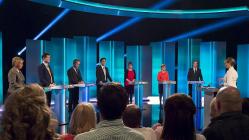
The televised debates between the party leaders introduced in 2010 and repeated in 2015 could fall by the wayside this time as a result of Theresa May’s refusal to participate.
Is that necessarily a bad thing? If you think elections should focus on policies rather than personalities then perhaps we are better off without them.
I accept that the personality of the person who going to be Prime Minister is not without some importance. However, we already know who that will be and if some political earthquake does occur between now and polling day and Labour emerges as the largest party is there really much we don’t already know about Jeremy Corbyn?
The relentless focus on party leaders – of which the TV debates have become a significant element – also shifts the culture of our politics further towards a presidential system and away from the Parliamentary system we are meant to cherish. This relentless focus on one person in each party leaves too much undisturbed in the policy undergrowth. As we are living in an age when policy matters more than usual it needs to be vigorously explored. The TV debates have never done that effectively.
The first set of debates in 2010 were interesting, partially because of their novelty and partially because they put the three main party leaders on an equal footing but they didn’t really help the electorate understand the policies the parties were likely to pursue once in government. There was a perception at the time that they helped Nick Clegg, the least well-known of the three, although people seem to forget the Lib Dems lost seats at that election. They still emerged as a large enough force to form a coalition with the Tories but were their policy objectives in a hung Parliament ever exposed in the TV debates? Not to my recollection.
By the time we got to 2015 the format had fragmented and just about everyone had successfully grabbed a lectern in the studio with seven leaders taking part in the main debate, some themselves not even contesting seats in the election. Other debates went ahead without David Cameron and some were reduced to solo appearances. It was highly unsatisfactory.
It was hard to escape the feeling that they had turned into a circus, carefully managed and done more for the benefit of TV ratings than voter enlightenment. With the huge army of spin doctors trying desperately to put their gloss on their leaders’ performances we moved even further away from focusing on people who were actually standing for Parliament. That isn’t healthy.
I won’t be sad to see them disappear and really hope that the TV companies don’t try to go ahead with a debate among opposition leaders with an empty chair for May, the rather childish suggestion of Nicola Sturgeon and others.
I don’t blame the opposition for trying to make some capital out of May’s refusal to take part but she may be doing the whole electoral process a big favour with her stance.


