
The fear of public speaking has been in the headlines again recently.
A London tourist attraction – Ripley’s Believe It or Not! – was trying to drum up business by highlighting people’s fears of some of the scarier exhibits in its Piccadilly Circus galleries and carried out a survey of over 2000 people to find their biggest personal phobias. It seems to have backfired a little as the top two were Losing a Family Member and Public Speaking, neither easy to put into an exhibition.
These two were followed by Buried Alive and Death. This puts public speaking right up there with life’s biggest horrors – and it is markedly worse for women than men.
Why is this?
Having trained a lot of people to become better public speakers over the years I believe that it is fear if being judged that lies at the heart of it. The thought of dozens, maybe hundreds, of pairs of eyes looking at you, judging your every word and gesture unnerves many people. Often, the first advice given to people on public speaking courses is to think of the audience: most of them would rather do anything but.
Of course, the audience is all important but rarely something to be feared as much as most people imagine.
For most business presentations the audience wants the information the speaker has so they want them to succeed. That is a pretty encouraging start. If you add to that mix the thought that the overwhelming majority of people in the audience would rather be sat where they are than on the stage and the novice, fearful speaker should start to feel a little better about the challenge ahead of them.
Much the same applies to speeches at social events – often very intimidating because of the expectations that some people heap on them. Mostly, those people would run a mile rather than put themselves in the position of having to make a speech at, say, a wedding. Ignore those people and focus on the fact that most people just want something that is gently entertaining and not embarrassing: they want the speaker to succeed.
None of this, or all the brilliant, tried and tested techniques in the world, will take away the nerves. Anyone who says they can do that for you is, at best, misguided. But good training should go someway to harnessing the nervous energy that the prospect of performing live generates to help the speaker lift their performance to another level instead of feeling crushed by fear. It isn’t a case of getting rid of the butterflies but of getting the butterflies flying in formation.
Check out the training courses in presentation skills I have to offer if you need help to become a better, more confident speaker.
Just what is the Association of British Insurers up to? We know the headlines – senior departures, 7% cut in spending, major departments merged – but what do we know of the reasons behind them? Very little.
The statement on the ABI’s website and which was issued to the press is cursory, almost to the point of being dismissive of anyone who might have the temerity to inquire further. Perhaps the ABI feels that only its board and a privileged few among its members need a proper explanation. It has never published a formal annual report of substance and does not reveal how much it raises from its members, so we shouldn’t be too surprised that the association feels it does not owe the world a fuller explanation of why it has so suddenly dispensed with the services of such high profile figures as Nick Starling, Maggie Craig and Stephen Gay.
There has long been a feeling that the ABI is tightly controlled by a small group of the largest insurers who bankroll the organisation. It only needs one of two of these to turn around and say they want to pay less to the ABI and the axe has to fall. With several of the key firms, Aviva in particular, experiencing their own management upheavals and cutting hundreds of jobs it isn’t too hard see why the ABI sprung its surprise announcement on the market on Wednesday afternoon.
Money has to be the rationale for the changes because they make precious little sense otherwise.
If it isn’t true that the ABI has to dance to the tune of just a couple companies then publish the figures to prove myself and many who believe likewise wrong. And shed the arrogance that says the wider insurance market isn’t owed an explanation of the reasons for and implications of these major changes at the top of the industry’s dominant trade body. The ABI does owe a duty to the market as a whole and when the market has lost confidence in the ABI or its predecessors before then the whole industry has suffered, especially in the public policy arena.
What, then, of the implications of the changes? Merging general insurance and pensions seems just bizarre. They have so little in common that it is hard to see how it makes sense in lobbying, representational or media terms. It probably means very little beyond how two disparate departments will be managed internally, although it will be almost inevitable that the manager – new deputy director general Huw Evans – will veer more towards one market than the other.
This has its dangers for the ABI, often criticised by people in the general insurance market as the Association of British Life Insurers. Despite the life assurance and financial services backgrounds of chairman Tidjane Thiam and director general Otto Thoresen, this criticism has been harder to sustain over the last few years with the ABI’s successes in lobbying on issues such as flooding, road safety, uninsured driving and fraud. There will, however, as other commentators have observed, be plenty of critical eyes watching the impact of these changes carefully, ready to resurrect proposals for a separate body to represent general insurance.
 If the current weather forecasts for the next few days bring the severe winds and heavy rain predicted we might see sooner than anticipated just how well the slimmed-down ABI will manage without Mr Starling’s trusty Wellington boots. I expect it will fall to Otto Thoresen to be the face of the market if required as he has been closely involved in the flood insurance debates.
Some of the other changes make more sense, such as merging responsibility for financial conduct regulation into Hugh Saville’s current directorate covering prudential regulation.
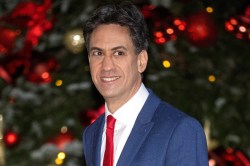
The dust has settled on the party conference season, the reshuffles have been played out and the first batch of autumn opinion polls are out. Who are the winners and losers?
Before the parties headed off for their conferences I wrote a piece suggesting that all three leaders were playing for high stakes and that if one of them got things wrong they could find themselves out of a job in advance of the 2015 General Election. This looks less likely now the politicians are back at Westminster but by no means impossible.
Ed Miliband has come out slightly in front, not because his over-rehearsed conference speech made anyone sit up and look at him afresh, although the attack on energy prices was effective, but because of the way he responded to the Daily Mail’s bizarre attack on his father. This over-shadowed the Tory conference and showed that Miliband is a fighter and not afraid to take on a powerful enemy, earning greater respect across the political spectrum. It will help him convince people that he is prepared to take on the difficult challenges such as capping energy prices. This crude red-baiting by the Daily Mail could well turn out to be an even greater mis-judgement in the longer term than it looked on the day it was published if it helps propel the very man they were trying to smear into 10 Downing Street.
David Cameron and Nick Clegg also came through their respective conferences unscathed. Many commentators rightly observed that Clegg, in policy terms, unusually had it all his own way at the once notoriously rebellious Liberal Democrat conference. This is more a reflection of the changing nature of the party’s membership than any new found authority on Clegg’s part. The big drop in membership of the Liberal Democrats since the 2010 election has been concentrated among the old radical left of the party, making the policy upsets of the past much less likely.
Clegg’s tough reshuffle
Once back at Westminster, it was Clegg who was the more brutal with his reshuffle, ditching several relatively popular ministers such as Michael Moore and David Heath. He does seem to be the master of his party but he isn’t carrying the voters with him in the same way according the most recent opinion polls. The huge challenge looming on the horizon for the Lib Dems is the European Parliament elections next year. They do not do well in European elections because their strong pro-European stance is not popular. If they start from a base of 10% to 12% in the opinion polls the elections could turn into a disaster for them, especially if there is a strong showing from UKIP and the Greens. Clegg should still be nervous.
UKIP makes Tories nervous
The Tories are playing the slow economic recovery very well and certainly the once vulnerable George Osborne looks secure as Chancellor for the rest of this Parliament. As for David Cameron, he had a decent conference and hasn’t created any significant enemies with his reshuffle (a constant problem for Margaret Thatcher). Like Clegg, his big danger point is the European elections where a strong showing for UKIP could unnerve Tory MPs. However, if UKIP continues to wilt under the increased scrutiny – it had a very poor conference – then maybe that won’t be such a problem.
The challenge for the Tories is to keep Labour within touching distance in the polls – 5% or less – so that the gathering strength of the economic recovery and a well-financed election campaign give them hope of at least remaining the largest party in 2015.
Overall, I think is less likely that any of the major parties will change leader before the next election than I did before the conference season: I do not think it is impossible, however.
I was recently asked to write an article on Brentwood Cathedral and its parish community for Oremus, a very good quality magazine produced by Westminster Cathedral. This is part of a series it launched earlier this year on sister cathedrals.
It proved quite an interesting moment to review what has been happening at Brentwood Cathedral as it awaits the appointment of a new bishop, now expected before Christmas. It has been a long time coming as the current incumbent, Thomas McMahon, announced his retirement in June 2011 on his 75th birthday. A combination of his willingness to stay in post, the very long list of new bishops needing to be appointed in England, Wales and Scotland plus the minor hiccup of the sudden resignation of Pope Benedict (all Roman Catholic bishops are appointed by the Vatican) have conspired to delay the appointment of a new Bishop of Brentwood.
You can download a pdf of the article here.Pages from October 2013 – No 185 Oremus
There isn’t a publisher in the world who isn’t wrestling with the challenge of managing the accelerating migration of readers and advertisers from print to the myriad of digital platforms. It is real and it is not going to go away, whatever the dwindling band of blinkered digital-deniers hopes for.
 The announcement today that the 279 year old Lloyd’s List will not be seeing out 2013 with its daily print edition came just as Telegraph Media Group executive director Lord Black of Brentwood was reminding everyone of the decline in newspaper readership. He was speaking at the Wine and Spirit Trade Association conference (a slightly odd place to make a major speech on the future of the press) where he spelt out the challenge facing publishers: “Sixteen years ago 14 million papers were sold every day, now the figure is 6.6 million…People are stopping reading print titles and advertisers are following them. We have had to adapt and become multi-platform”, he told his audience.
Personally, I haven’t bought a printed morning newspaper for over two years, preferring instead the App editions of The Times and The Guardian, supplemented by a range of news websites, especially the BBC and the Telegraph. After that, social media becomes my news feed.
I start with the App editions, however, because I like what it is now fashionable to call curated content. I like to read a package of content that has been chosen, written, edited, ordered and presented by a strong editorial team in touch with its readers. That is what print offered and that is what digital editions offer too but with the added richness of multi-media content and links to greater depth and background where I want it. They also occasionally remind one of some of the limitations of curated content that is produced to specific deadlines and has various production and publishing processes to go through. On Tuesday The Guardian still recorded the result of the League One match between Brentford and Leyton Orient as a late result just as it did in the bad old days of print.*
A well-presented and designed App edition also provides an excellent vehicle for longer content such as major features, columns and background articles. Amazingly, I still come across people who try to tell me that long-form content doesn’t work digitally – have they not noticed the number of people on the train in the morning reading books on the ever-widening variety of digital devices?
So, is there a future for print?
Personally, I think there is but it is an increasingly specialist, high value future.
Print does have its strengths. It is a tactile medium that with good design and high production values can present certain types of content in especially appealing ways. My former colleagues on the British Journal of Photography – now published by Apptitude Media – have shown how that dynamic can be exploited. They took an ailing but nicely produced weekly and reinvented it. In its place they put a beautifully designed monthly, invested in better quality print and paper and put alongside it an innovative digital strategy that included a superb app that has rightly won a string of awards. It has worked for them and it will work for a handful of others.
Many people will still want to own printed books if they offer something that is good to look at, touch and hold and has content that they a likely to want to return to many times. What’s more they will probably be prepared to pay a premium for it. The paperback novel you read once, take on holiday or read on the train doesn’t have a print future.
Add into this mix the economic arguments – the savings on paper, print and distribution – and the fantastic immediacy and measurability of response and engagement that publishers and advertisers get from digital publications and websites and the debate starts to look very one-sided.
For most publishers who are alive to the reality of the digital age it is no longer a question of if print will survive but when it will go. The brave ones are already facing up to that. The big question now is which will be the first national newspaper in this country to blink and stop publishing a daily print edition?
••••••••••••
* Just in case the importance of the Brentford v Leyton Orient result has eluded anyone it was a 2-0 win the unstoppable Os, maintaining their eight game winning start to the season. I didn’t need the result as I was at the match but I was hoping for a line or two of acknowledgement. Instead, they didn’t even have the result.
If one of the key challenges facing the Liberal Democrats as they meet in Glasgow this week is to start setting out a distinctive manifesto for the next election, then why is leader Nick Clegg winding up the economic debate today?
The economy and the potentially decade-long erosion in living standards for most people – which we are five years into – will be the defining issue at the next election, not plastic carrier bags. The Lib Dems have been chanting the Cameron/Osborne ‘There is No Alternative’ mantra since day one of the Coalition: understandable in the early days but surely now is the time to start creating an alternative economic narrative?
If the Lib Dem leadership still believes that the economic recovery is so fragile and that there is no viable alternative as yet and that rocking the Treasury boat too hard this autumn could destabilise it, then it would be better to let the Treasury team led by Danny Alexander defend it. By choosing to wind-up the most high profile debate of the week Clegg has left himself very little room for manoeuvre with his leader’s speech later this week.
His key challenge for this conference was to come out of it having set his party on an independent course that started to put some distance between them and the Tories. He has now made that task almost impossible.
• I expect many Lib Dems – and former Lib Dems – will have noticed the irony of the party voting to support nuclear power for the first time on the same day that Japan – once great nuclear enthusiasts – shut down its final operating nuclear generator. I expect the Green Party will now be getting ready to welcome a few more disillusioned Lib Dems into its ranks.
This promises to be one of the most dramatic political party conference seasons for many years. These events have been hijacked and neutered by an army of spin doctors over the last 20 years and nowadays rarely manage to raise the political pulses.
2013 could be very different.
It is quite likely that one of the three main party leaders will stagger out of their conference fatally wounded, destined to be dumped by their party before the next General Election in June 2015. For David Cameron, Nick Clegg and Ed Miliband the stakes are high as none has anything like the full confidence of their party, all have made serious mistakes in recent months and none of them has won over the wider public beyond Westminster.
Miliband, of course, gets two throws of the dice as he will be speaking at the Trades Union Congress conference in Bournemouth this week as well as at the Labour conference along the south coast in Brighton a couple of weeks later.
Ed was able to defeat his brother David in the leadership election because the trade union vote swung behind him. I don’t think there is much doubt that if that election was re-run today his brother would win as the trade unions feel deeply betrayed by Miliband Junior. So, his first task is to convince them that they didn’t make a mistake by putting him in charge.
His troubles stretch well beyond the Labour movement, however, despite consistent leads for his party in the opinion polls.
Miliband has not engaged the wider public and there is simply no enthusiasm around the country for a Miliband premiership. I think this is partly because he doesn’t always seem terribly engaged with the job of leading the Labour Party. It is almost as if he stood against his brother because he knew he could beat him, not because he had any real vision for the Labour Party or a strong anti-austerity narrative.
The sense of dithering over the government’s attempt to bounce Parliament into backing an attack on Syria sums up his problems to me. His lack of engagement with the general public left him hesitant over what he should do when what was needed was a strong, principled argument against precipitative action. Instead he stumbled into taking up a position that broadly reflected the popular mood on Syria and seems unable to take much credit for it.
For Nick Clegg, who takes to the stage at the Liberal Democrat conference in Glasgow next week, the problems are mounting fast, vividly underlined by the decision of one of his most popular MPs, Sarah Teather, to announce she will be standing down and firing a broadside at the Coalition’s record.
His party membership is plunging and is widely thought be down to under 40,000 from its peak of over 100,000 in the Ashdown years. Since 2010 the Lib Dems have lost over one third of their members, throwing it into a financial crisis. This will be exacerbated if the reports of low delegate numbers and poor commercial support for its conference turn out to be correct.
So far, very few senior Lib Dems have rocked the boat despite the massive decline in the party’s support. Perhaps they know this is their one opportunity to enjoy government office and so want to make the most of it, caring little about the prospect of many of them losing their seats in 2015. Perhaps it is the case that the party has lost its left wing (which seems to have been one of Clegg’s aims) and that those who are left really are very comfortable in coalition with the Tories. If either of these analyses is near the truth than we might be heading for a more permanent agreement between the Tories and the rump of the Lib Dems led by Clegg, rather as we had the National Liberal and Liberal Party split during the 1930s.
It is getting increasingly difficult to see how the Lib Dems will be able to fight the next election as an independent party, especially if Clegg is at the helm. If he doesn’t manage to address this at his conference then he could find his leadership under increasing pressure. If he ducks this challenge and his leadership survives then that is probably an indication that many Lib Dems are now prepared to contemplate a longer term relationship with the Tories, possibly even starting with co-operation on fighting seats at the 2015 General Election.
The final leg of the party conference season (apart from some of the minor parties) is the Conservative conference, which takes place in Manchester at the end of the month. Somehow, David Cameron has got to reassert his authority over his party, following the chaos of the Syria vote which reflected the growing disaffection with his leadership among his MPs.

Cameron: assert authority
Cameron does have some decent cards to play, not least the first genuine signs of economic recovery. Also, on many domestic policy issues – gay marriage notwithstanding – he has taken a much more traditional Tory stance recently which should help him with the grassroots of his party, although whether such an approach has a strong appeal beyond that narrow base is open to doubt.
I am not expecting any of the three leaders to go within weeks but I can see at least one coming out of the conference season just hanging on with the future of their leadership out of their hands. Several things might finish them off: a poor autumn in Parliament, events conspiring to expose their weaknesses, the ambition of colleagues overtaking their previous loyalty and, slightly further ahead, a poor set of results in the European elections.
The Euros could throw domestic politics into turmoil, especially if UKIP and/or the Greens do particularly well. It will be panic button time by then if one of the parties wants to change leader as the General Election will be less than a year away.
I can foresee a variety of scenarios that could see at least one of the leaders being axed but, at this stage but I can’t decide which way it will go and who is most vulnerable. I expect things to be quite abit clearer in a month’s time.
People often complain that social media diminishes human contact and will, one day, turn us all into recluses, trapped in front of a computer screen. I have never bought into this depressing, slightly Orwellian view as it seems most frequently to come from people who do not use social media or, if they do, do not fully understand its potential.
The truth is quite the opposite.
Right from the infancy of social networking I have found it to be a great tool for fostering face-to-face interaction beyond the limiting medium of the computer screen. I have rekindled old friendships, found useful business contacts and gained introductions to local and national networks that I would probably never have discovered otherwise.
I come from a generation that was raised in a world where online networks were little more than a science fiction pipe dream. It was all too easy to lose contact with people as you moved from school, to university and into the world of work, something today’s young people often find difficult to understand. Through Friends Reunited initially and now with Facebook, I have found people I regretted losing touch with and thought I might never find. Many of these online reconnections have produced some memorable meetings over the last few years, usually involving not a little alcohol and plenty of reminiscing.
In my business life, Twitter and LinkedIn have produced a wealth of virtual connections that go far beyond the old, ‘real’ networks that I was in. On many occasions I have found myself sharing a cup of coffee with one of these new virtual connections as we realised our common interests went well beyond what 140 characters can embrace.
People are social beings and online networking can only satisfy so much of that need. Don’t let anyone tell you that the big social networkers are some sort of nerd, a breed apart that doesn’t value human contact because that simply isn’t true.
I’ll give you one more example that illustrates my point.
In Brentwood, where I live, there is a very active Twitter community. Local politicians, small businesses, the local media and arts groups in particular have realised the value of Twitter in helping connect with people in a small town like Brentwood. Out of this virtual network has grown a face-to-face monthly Brentwood Tweet-Up at which a healthy cross-section of the Brentwood Twitterati meet for a drink and a chat. This social gathering has blossomed so much that there is now an annual Brentwood Twitter awards night. Brentwood isn’t alone in finding that virtual networks can grow into something much more tangible and mutually beneficial.
If you are from Brentwood and want to see what a virtual network looks like in the flesh why not pop in to one of the monthly Brentwood Tweet-ups at the Hutton Junction from 7pm to 9pm? There won’t be a nerd in sight.
What do you do when you are made redundant after 35 years continuous permanent full-time employment?
That is the question I have been facing up to since learning just over a month ago that Incisive Media no longer required my services as Group Editorial Services Director as it pursues a programme of decentralisation, sweeping away several group-wide roles. Understanding the painful logic of the position Incisive finds itself in is one thing but realising that it directly and abruptly affects you is quite another.
So, what do you do? Sulk? Get angry? Feel sorry for yourself? Look for people to blame?
Most of those things are far too negative and look like a waste of energy to me. I am pretty sure I know who and what to blame but that is a story for another day.
My response to this unexpected and daunting challenge? Take a deep breath, consider carefully what I am good at and will make me get out of bed every day and then ask myself the difficult question: will people want what I have got to offer?
With the encouragement of Incisive Media quickly offering me the opportunity to return from next week as an independent trainer and several offers from various publications to write for them I decided that it was definitely worth making a serious attempt to set myself up as a freelance journalist, trainer, presenter and consultant. From Monday that is what I will launch myself as through the company I have set up – Worsfold Media Services.
Creating a website for the company has been a great first step, partially because it was something constructive and forward-looking to do from day one but mainly because it has made me refine my thoughts on what I can do for people and companies. On more than one occasion I wrote a page for the website one day and re-visited it the next day only to think no-one, just no-one would want to buy that lot.
Fortunately, a lot of people have been very encouraging and supportive and I already have a long list of people to see and pitch ideas to over the next month or so. The blank pages in the diary after October look abit scary at the moment but people tell me not to worry too much about those. I hope they are right
On Monday, I will ‘launch’ Worsfold Media Services via social media (how else) and an associated email campaign so watch this space.
As for this new blog, I will use it to cover a wide variety of topics, including some of the political issues affecting the financial services sector that I used to cover in my Parliamentary Connections blog. I look forward to engaging with many of you on this blog and on your own.
Redundancy may have been an unwanted challenge but, so far, it doesn’t feel unwelcome: quite the contrary. Here’s to the future.


 David Worsfold