
Ed Miliband’s foray onto the battleground of banking reform was carefully judged to capture the public mood of hostility towards the banking sector but he actually committed a future Labour government to very little. And was commitments he did make do not seem very well thought through.
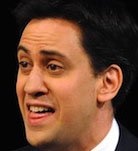 As far as I can see, the only real action he proposed in his carefully rehearsed speech is to ask the new Competition and Markets Authority to investigate and report on a suggestion that banks should be subject to a cap on the proportion of the market they control and how this can be achieved by making the existing players sell-off branches to create ‘challenger banks’. This CMA enquiry should take just six months, he says.
That’s it. Nothing about what these banks will do, how they will be structured, owned, managed or staffed, let alone what new products they will sell and how those products will address the needs of customers in a way the present banking product set doesn’t. Nothing on how Labour will get the CMA to take on a enquiry of which the outcome is already pre-judged – surely outside its legal remit – or how it will get it to complete an enquiry in just six months when it usually take two years on such reports.
Public anger and resentment of banks
The banking sector clearly still requires further reform. It still doesn’t seem to properly acknowledge the extent of its culpability for the financial crisis that we can all see is taking us a decade to recover from. The boards of the major banks do not understand the public anger and resentment – which will take a generation to fully subside – at their excessive remuneration and obsession with paying themselves bonuses regardless of corporate performance, let alone by any reference to public benefit. Where Miliband is so disappointing is that he offers no real reform at all and what little he does offer won’t even see the light of day until 2020 at the earliest.
In particular, he said nothing about how these new banks should be owned: this is where he could have been radical.
Why no mention of mutuality? Or, even a staff owned bank, importing the John Lewis model into the financial services sector. There is simply no point in creating new banks that look like the existing banks, have the same culture, management and corporate priorities. There will also be little point by 2020 in making decisions about the size and structure of banks by reference to the number of branches they own: this is the internet age Mr Miliband. The bricks and mortar of the huge bank branch network are increasingly irrelevant.
These more radical options should be on the political agenda today, not 2020.
The unraveling of the state ownership of two of the largest banking groups is an ideal – but almost certainly lost – opportunity to inject real innovation into a more customer centric banking sector. The best we have got is an EU-enforced re-emergence of TSB, a once great name from the mutual past of the banking sector but which is destined for a conventional share flotation later this year. Of course, using the state ownership to initiate reform of the banking sector would mean Labour having to face up to some of its own mistakes, not least the panic-stricken enforced merger of HBOS with Lloyds.
We are better off with mutuals than without them
Mutuality and other forms of mass ownership may not have an unblemished past but what I do know is that the financial services sector didn’t so routinely feather its own nest at the expense of its customers when there was a strong mutual sector among banks and insurance companies. I do not think it is any coincidence that the huge mis-selling scandals of the last two decades followed the rush to demutualise promoted by the Tories in the late 1980s and 1990s.
Mr Miliband said much but proposed very little.
As Environment minister Owen Paterson sits down this morning with government colleagues at the COBRA emergency committee to discuss the 10 day long battle against storms and floods, he should reflect on the need to clarify exactly when and how government should step in to deal with the consequences extreme weather incidents.

Paterson: time for a stiff dose of realism and honesty
I have said several times that one of the greatest weaknesses in the current Flood Re insurance scheme being debated alongside the Water Bill is the government’s refusal to be honest about the need for it take control – and pay – when 1-in-200 year weather catastrophes strike. This shortcoming has been raised during the debates on the Water Bill but has so far been shrugged off by ministers who seem more concerned about grabbing any surplus money in the Flood Re fund should it ever find itself in that fortunate position.
The fear about the extreme weather incidents which renders an insurance industry-led response inappropriate, if not impossible, is the potential for significant infrastructure damage and the need to protect life ahead of property. The current storms fall well short of the 1-in-200 year measure but have nevertheless vividly illustrated my concerns.
Sadly, we are hearing almost daily of more loss of life as a result of falling trees and flooding: the government’s first concern has to be to protect people and it needs to look very carefully at how it could do this when faced with vastly more severe weather.
Our infrastructure is fragile as it wasn’t built to cope with the more intense weather extremes we experiencing with increasing regularity. The response of power companies and local authorities over the last week has been appalling. Thousands of households left without power over Christmas and whole communities apparently abandoned by councils is a chilling glimpse of the crisis we will face when a real 1-in-200 year weather incident hit us. By all accounts, the response of the insurance industry has been as good as anyone could expect in the circumstances but there is only so much they can do when the public and infrastructure services are failing.
This is why the government must be honest about its role which clearly needs to be greater, better co-ordinated and far more comprehensive with a proper set of emergency powers put in place – which should extend well beyond calling a few COBRA meetings and sending the Prime Minister out on a botched PR mission.
Hopefully, when Parliament returns to debate the Water Bill and the proposed flood insurance scheme it will do more to get the government to face up to the need for greater honesty and realism about when it needs to step in even if the potential cost might frighten the Treasury horses.
Martin Wheatley, chief executive of the new financial watchdog, the Financial Conduct Authority, is setting the bar for judging the effectiveness of his new regulator very high. Well, a lot higher than most of the previous incarnations of financial regulation. In many people’s minds that won’t be saying much.
The news yesterday of yet another massive fine being levied on a financial institution for fleecing its customers is especially depressing. The fine levied on Lloyds wasn’t for anything in the distant past but for actions since the banks screwed up the world and, what’s more, since it was bailed out by public money and became state-owned but, crucially, not state controlled. Perhaps those who said we didn’t want civil servants and political nominees on the board of the bank will now admit they were wrong. They couldn’t be more venal than the bankers.
Anyway back to Mr Wheatley.

FCA boss Martin Wheatley
He was speaking to an ICI Global conference this week and told the audience that challenging the culture that has led to the constant stream of scandals was his key priority: “If you are looking for a useful bell-weather of FCA direction this is it: a more probing analysis of culture and ethics versus rules. A more assertive focus on wider markets as opposed to picking off individual firms one-by-one”.
This is a theme that has been prominent in Mr Wheatley’s recent speeches and which he elaborated when speaking at the All Party Parliamentary Group on Insurance & Financial Services last week. He was at pains to stress to MPs that the FCA will be different: “We want to be forward-looking as opposed to relying on backward looking, box ticking compliance…This will mean a willingness to engage early and give our views on what is right and what is wrong”.
While being questioned by MPs he revealed more of his distrust of a purely rules-based approach: “Under previous regimes we saw firms that were fully compliant were still delivering lousy outcomes. We need to challenge that”. One of his key tasks as the FCA beds down is to reach out to a wider range of organisations such as consumer groups, the Financial Ombudsman, Money Advice services and so on: “this will help us spot problems that are not going to come through the routine regulatory monitoring”, he said.
Any hint of trouble in a sector will see the FCA launch a “themed review” which he wants to take no more than six months from start to finish (typically similar exercises undertaken by the old Financial Services Authority took up to 18 months). He already has several topics on his list such as comparison websites, general insurance add-ons and mobile phone insurance, not to mention payday loans.
All of this sounds very fine, especially the focus on cultures and outcomes for the customer. Also, the willingness to be pro-active is very welcome at least until you find yourself caught up in a pro-active strike on a sector by the FCA. This will require nerves of steel on the part of Mr Wheatley and his team. They will frequently be accused of damaging successful markets, stifling innovation, undermining the financial services industry and jeopardising the City of London’s position in global markets.
One hopes that the FCA will often be proved right in the areas is chooses to investigate with this much needed pro-active approach. However, there are bound to be times when it will go wading in and find little, if anything wrong. The industry is going to have to be very grown-up to cope with this. Is it ready to display such maturity? The signs are not good.
The news that urgent consideration must be given to need to restore the Palace of Westminster – which houses the chambers of the Commons and the Lords – is very welcome for anyone interested in bringing our national Parliament into the 21st century.
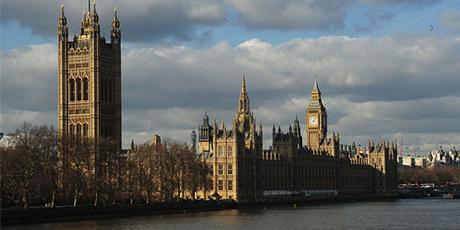
I have been a long-time advocate of building a new Parliament and turning the present Palace of Westminster into a Museum of Democracy with a residual function for state and other ceremonial occasions.
Sadly, I doubt it will happen.
This is 2012, not 1812
The present building is inadequate and ill-suited to the demands of a modern legislative assembly. Take the House of Commons itself. It is far too small as even when they are crammed shoulder-to-shoulder it can accommodate little over 450 of the 650 MPs we elect to it. Only ministers have somewhere to put their papers when speaking and no-one has a table or desktop. When you consider the hundreds of pages that modern Bills often run to and the background material you might need to have to hand when participating in a debate this is just absurd.
 Then there is the shape. Once we had two parties, Whigs and Tories, and before they were formed you were either a government supporter or you were opposition. This made a chamber originally based on the layout of a collegiate chapel (its first home) with rows of benches facing each other perfectly sensible. Now, we have a multi-party system with 12 parties currently represented and many subtle cross-party alliances on specific issues that make a nonsense of the “them or us” layout. Horseshoe or similar layouts are much more common throughout the world and can be seen in the new buildings for the Scottish Parliament (right) and Welsh Assembly.
This is all before you start to consider the role that technology might play in making the running of Parliament more efficient, with proper IT support for MPs while they are in the chamber. You could have individual built-in screens which could, say, display all the relevant background material for debates, have a news feed and so on. Maybe we could even look at electronic voting instead of having to have 15 minutes of wandering around everytime a vote is taken. Someone might even suggest that we could look at using technology to create opportunities for direct engagement with voters. Many MPs are quite good at using Twitter and Facebook to engage with the wider world so you might imagine they would welcome the opportunity to modernise their workplace. That is far from the case.
I am the first to acknowledge that the Charles Barry and Auguste Pugin building that constitutes most of the present Palace of Westminster is a wonderful building, full of history. I have loved going there ever since I made my first visit back in the early-1970s and frequently wonder at the history that has been made within its walls. But let’s be ruthlessly sensible for a moment.
It is not what it seems
First, the present House of Commons is a replica. The 19th century chamber (itself a replacement for the earlier chamber destroyed in a huge fire in 1834) was completely destroyed in May 1941. After that, the Commons met in Church House and later on in the House of Lords until 1950. So, Churchill’s wartime speeches were not made in the present chamber, the NHS was not born in debates there and going further back, Gladstone, Disraeli and Lloyd George never graced its benches.
Where the real history is
The oldest part of the building is Westminster Hall which you now walk through when visiting the Palace. It is over 900 years old and was the location for the trials of Thomas More and Charles I as well as the lying in of state of many monarchs and great statesmen. Nowadays, it is used when a visiting head of state makes an address to both Houses of Parliament, as our own Queen did at the start of the Jubilee celebrations last year. There is no reason why Westminster Hall could not continue to be used for such occasions.
MPs already know what modern looks like – and they like it
Second, many of the most significant Parliamentary occasions of the past couple of years have taken place in the modern committee rooms of Portcullis House as the key Select Committees have abandoned the traditional meeting rooms in the Palace of Westminster. This is not surprising as they are cramped and ill-equipped to cope with the demands of the modern media. The popularity of Portcullis House demonstrates that MPs acknowledge the need for better, more modern facilities.
People don’t want crude confrontation anymore
Third, the confrontational culture of the present House of Commons repels many people from politics. The weekly Prime Minister’s Question Time is often acutely embarrassing despite the best effects of the present Speaker, John Bercow, to get MPs to clean up their act. I think he will never succeed in that worthy mission in the present chamber with its architectural invitation to think in crude them or us terms and the associated legacy of hundreds of years of rowdy behavior, once accepted but now seen as wholly inappropriate.
Once you start to look at the problem in this more dispassionate way it becomes clear that a move to a new chamber – even temporarily – has both logic behind it and many potential attractions.
The question then becomes, where?
Could it be in Docklands?
Years ago I always thought the answer was a completely new Parliament built in Docklands. This would have instantly solved the problem of trying to establish the viability of Docklands but forgetting to put in a proper transport infrastructure: MPs and senior civil servants would have ensured that the roads, trains and buses were put in place for them. The moment for a move to Docklands has probably passed, however.
Must be London
I am not in favour of a move outside London, especially as we have now established parliaments in the constituent nations of the United Kingdom. London is our capital city and I can’t think of other national parliaments that are not in their country’s capital.
This probably leaves the QEII Conference Centre or the Olympic Park at Stratford as the front-runners.
QEII Centre has plenty going for it
The QEII Centre just across the other side of Parliament Square would certainly work as an interim measure – as was suggested last year – if the case for shutting down the Palace of Westminster for the repairs becomes unanswerable but it might even be the best permanent option. It is a relatively modern building with plenty of adaptable space, it is very near to all the present MPs offices, government departments and Downing Street. It would also mean that it would be easy to continue use of the present Palace of Westminster for ceremonial occasions.
The Olympic Park could work even better
 A move to Stratford could be perfect. It would ensure that plenty of money is spent on maintaining the new transport infrastructure, that the Olympic Park itself becomes a daily hive of activity and, crucially, money flows into businesses and office properties in Stratford, Hackney and Leyton. This would be a great legacy for that part of London. The huge international media centre already on the site could be a useful focal point
A move to a new chamber has so many advantages that you may think it surprising that it doesn’t have more supporters. Over the years whenever a temporary or permanent move has been mooted, Labour and Tory MPs alike have grumbled at the prospect, with their objections rising to a crescendo as soon as any suggestion of a horseshoe-shaped chamber creeps into the conversation. The institution has taken them over.
So, it doesn’t look likely to happen too soon or be born out of anything other than last minute necessity. The repairs to the present building will have to continue to be done on a make-do-and-mend basis until it reaches a crisis point which could, according to Richard Ware quoted in The Independent story, be as early as 2020.
Are there any real reformers left at Westminster?
The latest set of recommendations on greater financial transparency for All Party Parliamentary Groups will go some way to tackling the worst abuses but they just don’t go far enough. More needs to be done beyond just “opening the books”.
I have been involved in helping the All Party Parliamentary Group on Insurance & Financial Services for over 20 years and so can write with some knowledge on this. Throughout that time there have been periodic concerns – scandals is largely too strong a description – about the operation of APPGs and I have often responded to them:
All Party Group value in danger of being thrown out with the murky bathwater
New ways need to be found to ensure fair access
 What is clear to me is that transparency is the right way to go and those APPGs that offer a valuable service in legitimately connecting a wide range of interest groups with Parliament have nothing to fear from this. There are many organisations, such residents’ associations, consumer groups and small businesses, as well as individuals, such as those who have been let down by financial services companies, who cannot afford expensive lobbyists and PR firms but have as much right to speak to MPs as those with deep pockets. The Equitable Life scandal was a good example of how APPGs create access to policymakers for those who would otherwise be disenfranchised.
In an ideal world MPs would run such groups themselves. You could argue that if they are sufficiently interested in a topic they could get together, set-up a group and invite people to come and meet that group. This isn’t going to happen for a variety of reasons. Probably top of the list is that MPs (even more so Peers) simply do not have the administrative resources to take on something like this. We underfund our Parliamentary representatives and expect them to do far too much with very limited resources. They also do not have the depth and range of contacts with an industry that an organisation that is part of that industry has.
So, you inevitably end up with external support for groups. The challenge is to stop that being provided by firms, trade associations or lobbyists pressing just a narrow range of views on the relevant issues.
The answer lies in a major overhaul of the rules. This overhaul was proposed by a working party set up by the Speaker of the House of Commons last year and which was chaired by Jack Straw. Its recommendations went alot further than the limited financial transparency now suggested by the Standards Committee. I don’t really know why the Standrads Committee was wasting its time on this when there was already a very good report waiting to be debated – and implemented.
The cynical journalist in me might suggest that Mr Straw’s group’s recommendations were abit too scary for some of those inside and outside Parliament who have manipulated the APPG system and that the job of the Standards Committee has been to water them down: it has certainly been successful in that regard.
Its key proposals were reasonable and a well-thought through response to the problems we have all witnessed with the current operation of groups:
• A panel of members of both Houses should advise on the formation of new APGs to ensure groups are not formed which duplicate each other’s work;
• APGs should be required to prepare an annual income and expenditure statement. The threshold should also be lowered for the registration of benefits. External funding should be permissible but a strict obligation should be placed on APGs to be transparent about the resources provided;
• The “Associate” Parliamentary Group category should be abolished;
• A table listing the number of Groups for which every MP and Peer is a qualifying member should be included in the APG register;
the portcullis should not be used by APGs on reports, websites, or correspondence to ensure APGs are not confused with official Parliamentary Committees and every APG report should carry a statement that the group is not an official Parliamentary body.
I would add a few additional ones of my own:
• Full membership lists should be published, not just the lists of 20 “qualifying members” required by the current rules
• A requirement for a minimum number of open meetings per session should be introduced
• Meetings should be minuted and the minutes published
• Details of all administrative support and the basis on which it is provided should be published, if appropriate with an estimate of the cost of providing that support
• Full details of additional benefits available to members of the group should be published
• A mechanism for independent review of any decision by a group to limit access to its meetings should be set-up.
The point about Associate Parliamentary Groups is important. These allow external members, often on payment of a subscription, and to my mind are responsible for alot of the confusion and suspicion surrounding APPGs. It is interesting to see that the recommendation in Mr Straw’s report that this status should be abolished finds no place in the proposals from the Standards Committee.
We need reform and we need it it urgently if the work that the best APPGs do is not to be discredited further. The Standards Committee’s recommendations are a start but I would urge everyone with an interest in this to ask why Jack Straw’s report has apparently been buried.
There was a paucity of detail about how Flood Re – which is meant to solve the crisis over the lack affordable flood insurance for high risk properties – will operate in the Water Bill that had its second reading in the House of Commons yesterday. However, there was sufficient cross-party consensus to allow us to say with some confidence that it is the only show in town when it comes to finding a solution.
 There will be some tricky arguments to come over key details but those arguments will be conducted in the context of what Flood Re should look like. Not one MP who spoke during the in a five hour debate mentioned the possibility of any viable alternative scheme being considered. This suggests that the lobbying of some brokers to resurrect the Flood Mutual idea has fallen on deaf ears. It is dead in the flood water.
Some MPs were still concerned about affordability, especially when it comes to excesses, but perhaps they hadn’t had a chance to read the DEFRA response to the consultation on flood insurance. This makes it clear that compulsory excesses will be capped at £500. It also sets out the projected premiums for flood insurance by Council Tax band. These figures seemed to satisfy most MPs.
So where will the arguments come once the government publishes the expected additional 20 clauses for the Water Bill covering insurance?
It was clear from the debate that one of the most contentious areas is the arbitrary 2009 cut off for inclusion in the scheme. MPs from highly flood prone areas such as Hull, backed by the chairman of the All Party Insurance & Financial Services Group, Jonathan Evans, forcefully made the point that this cut-off would leave too many people unfairly exposed to the risk of not being able to obtain insurance. The pressure will be on DEFRA to drop this retrospective date, use more up-to-date mapping data and set a date more in line with implementation of the new scheme.
Other proposed exclusions were also challenged by several of the MPs who spoke in the debate, especially the as yet undefined category of “uninsurable properties” and properties in Council Tax band H. As Mr Evans pointed out, in Wales this isn’t even the top Council Tax band: clearly, some refinement will be needed here.
There was also concern across the political spectrum about the total exclusion of small businesses from the new scheme and this will also be a key point of debate during the committee stage of the bill, although there was little in the way of consensus about how that could be addressed.
The final area that DEFRA will come under pressure to clarify is exactly when the government will step in to deal with catastrophic flooding incidents and the possibility of there being a shortfall in the reserves held by Flood Re. This was raised both by Anne McIntosh, who chairs the Environment, Food and Rural Affairs Select Committee, and Jonathan Evans.
Whatever arguments lie ahead we have taken a big step towards a resolution to the challenge of providing affordable flood insurance for (almost) everybody.
The fear of public speaking has been in the headlines again recently.
A London tourist attraction – Ripley’s Believe It or Not! – was trying to drum up business by highlighting people’s fears of some of the scarier exhibits in its Piccadilly Circus galleries and carried out a survey of over 2000 people to find their biggest personal phobias. It seems to have backfired a little as the top two were Losing a Family Member and Public Speaking, neither easy to put into an exhibition.
These two were followed by Buried Alive and Death. This puts public speaking right up there with life’s biggest horrors – and it is markedly worse for women than men.
Why is this?
Having trained a lot of people to become better public speakers over the years I believe that it is fear if being judged that lies at the heart of it. The thought of dozens, maybe hundreds, of pairs of eyes looking at you, judging your every word and gesture unnerves many people. Often, the first advice given to people on public speaking courses is to think of the audience: most of them would rather do anything but.
Of course, the audience is all important but rarely something to be feared as much as most people imagine.
For most business presentations the audience wants the information the speaker has so they want them to succeed. That is a pretty encouraging start. If you add to that mix the thought that the overwhelming majority of people in the audience would rather be sat where they are than on the stage and the novice, fearful speaker should start to feel a little better about the challenge ahead of them.
Much the same applies to speeches at social events – often very intimidating because of the expectations that some people heap on them. Mostly, those people would run a mile rather than put themselves in the position of having to make a speech at, say, a wedding. Ignore those people and focus on the fact that most people just want something that is gently entertaining and not embarrassing: they want the speaker to succeed.
None of this, or all the brilliant, tried and tested techniques in the world, will take away the nerves. Anyone who says they can do that for you is, at best, misguided. But good training should go someway to harnessing the nervous energy that the prospect of performing live generates to help the speaker lift their performance to another level instead of feeling crushed by fear. It isn’t a case of getting rid of the butterflies but of getting the butterflies flying in formation.
Check out the training courses in presentation skills I have to offer if you need help to become a better, more confident speaker.
Just what is the Association of British Insurers up to? We know the headlines – senior departures, 7% cut in spending, major departments merged – but what do we know of the reasons behind them? Very little.
The statement on the ABI’s website and which was issued to the press is cursory, almost to the point of being dismissive of anyone who might have the temerity to inquire further. Perhaps the ABI feels that only its board and a privileged few among its members need a proper explanation. It has never published a formal annual report of substance and does not reveal how much it raises from its members, so we shouldn’t be too surprised that the association feels it does not owe the world a fuller explanation of why it has so suddenly dispensed with the services of such high profile figures as Nick Starling, Maggie Craig and Stephen Gay.
There has long been a feeling that the ABI is tightly controlled by a small group of the largest insurers who bankroll the organisation. It only needs one of two of these to turn around and say they want to pay less to the ABI and the axe has to fall. With several of the key firms, Aviva in particular, experiencing their own management upheavals and cutting hundreds of jobs it isn’t too hard see why the ABI sprung its surprise announcement on the market on Wednesday afternoon.
Money has to be the rationale for the changes because they make precious little sense otherwise.
If it isn’t true that the ABI has to dance to the tune of just a couple companies then publish the figures to prove myself and many who believe likewise wrong. And shed the arrogance that says the wider insurance market isn’t owed an explanation of the reasons for and implications of these major changes at the top of the industry’s dominant trade body. The ABI does owe a duty to the market as a whole and when the market has lost confidence in the ABI or its predecessors before then the whole industry has suffered, especially in the public policy arena.
What, then, of the implications of the changes? Merging general insurance and pensions seems just bizarre. They have so little in common that it is hard to see how it makes sense in lobbying, representational or media terms. It probably means very little beyond how two disparate departments will be managed internally, although it will be almost inevitable that the manager – new deputy director general Huw Evans – will veer more towards one market than the other.
This has its dangers for the ABI, often criticised by people in the general insurance market as the Association of British Life Insurers. Despite the life assurance and financial services backgrounds of chairman Tidjane Thiam and director general Otto Thoresen, this criticism has been harder to sustain over the last few years with the ABI’s successes in lobbying on issues such as flooding, road safety, uninsured driving and fraud. There will, however, as other commentators have observed, be plenty of critical eyes watching the impact of these changes carefully, ready to resurrect proposals for a separate body to represent general insurance.
 If the current weather forecasts for the next few days bring the severe winds and heavy rain predicted we might see sooner than anticipated just how well the slimmed-down ABI will manage without Mr Starling’s trusty Wellington boots. I expect it will fall to Otto Thoresen to be the face of the market if required as he has been closely involved in the flood insurance debates.
Some of the other changes make more sense, such as merging responsibility for financial conduct regulation into Hugh Saville’s current directorate covering prudential regulation.
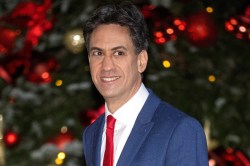
The dust has settled on the party conference season, the reshuffles have been played out and the first batch of autumn opinion polls are out. Who are the winners and losers?
Before the parties headed off for their conferences I wrote a piece suggesting that all three leaders were playing for high stakes and that if one of them got things wrong they could find themselves out of a job in advance of the 2015 General Election. This looks less likely now the politicians are back at Westminster but by no means impossible.
Ed Miliband has come out slightly in front, not because his over-rehearsed conference speech made anyone sit up and look at him afresh, although the attack on energy prices was effective, but because of the way he responded to the Daily Mail’s bizarre attack on his father. This over-shadowed the Tory conference and showed that Miliband is a fighter and not afraid to take on a powerful enemy, earning greater respect across the political spectrum. It will help him convince people that he is prepared to take on the difficult challenges such as capping energy prices. This crude red-baiting by the Daily Mail could well turn out to be an even greater mis-judgement in the longer term than it looked on the day it was published if it helps propel the very man they were trying to smear into 10 Downing Street.
David Cameron and Nick Clegg also came through their respective conferences unscathed. Many commentators rightly observed that Clegg, in policy terms, unusually had it all his own way at the once notoriously rebellious Liberal Democrat conference. This is more a reflection of the changing nature of the party’s membership than any new found authority on Clegg’s part. The big drop in membership of the Liberal Democrats since the 2010 election has been concentrated among the old radical left of the party, making the policy upsets of the past much less likely.
Clegg’s tough reshuffle
Once back at Westminster, it was Clegg who was the more brutal with his reshuffle, ditching several relatively popular ministers such as Michael Moore and David Heath. He does seem to be the master of his party but he isn’t carrying the voters with him in the same way according the most recent opinion polls. The huge challenge looming on the horizon for the Lib Dems is the European Parliament elections next year. They do not do well in European elections because their strong pro-European stance is not popular. If they start from a base of 10% to 12% in the opinion polls the elections could turn into a disaster for them, especially if there is a strong showing from UKIP and the Greens. Clegg should still be nervous.
UKIP makes Tories nervous
The Tories are playing the slow economic recovery very well and certainly the once vulnerable George Osborne looks secure as Chancellor for the rest of this Parliament. As for David Cameron, he had a decent conference and hasn’t created any significant enemies with his reshuffle (a constant problem for Margaret Thatcher). Like Clegg, his big danger point is the European elections where a strong showing for UKIP could unnerve Tory MPs. However, if UKIP continues to wilt under the increased scrutiny – it had a very poor conference – then maybe that won’t be such a problem.
The challenge for the Tories is to keep Labour within touching distance in the polls – 5% or less – so that the gathering strength of the economic recovery and a well-financed election campaign give them hope of at least remaining the largest party in 2015.
Overall, I think is less likely that any of the major parties will change leader before the next election than I did before the conference season: I do not think it is impossible, however.
I was recently asked to write an article on Brentwood Cathedral and its parish community for Oremus, a very good quality magazine produced by Westminster Cathedral. This is part of a series it launched earlier this year on sister cathedrals.
It proved quite an interesting moment to review what has been happening at Brentwood Cathedral as it awaits the appointment of a new bishop, now expected before Christmas. It has been a long time coming as the current incumbent, Thomas McMahon, announced his retirement in June 2011 on his 75th birthday. A combination of his willingness to stay in post, the very long list of new bishops needing to be appointed in England, Wales and Scotland plus the minor hiccup of the sudden resignation of Pope Benedict (all Roman Catholic bishops are appointed by the Vatican) have conspired to delay the appointment of a new Bishop of Brentwood.
You can download a pdf of the article here.Pages from October 2013 – No 185 Oremus


