
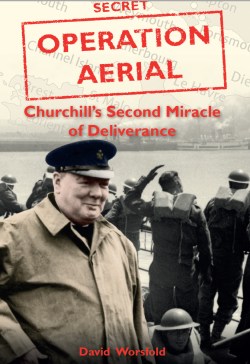
When I tell people my new book on the post-Dunkirk evacuations from France in June 1940 is now out they often look slightly bemused, as if to say: What evacuations?
When Dunkirk fell on 4 June, tens of thousands of troops and British civilians were still in France. By the end of June, a further 250,000 people had been brought back to the United Kingdom.
This is a story of incredible resourcefulness, simple courage and remarkable heroism – spiced up with controversies and cover-ups – that has never been fully told and that is what Operation Aerial: Churchill’s Second Miracle of Deliverance is all about.
I don’t blame anyone for knowing little about it.
My late father, a driver with the British Expeditionary Force, went to France in the autumn of 1939 and returned to England through Dunkirk a little more than six months later. Like many Brits, that gave me a fascination with Dunkirk and Operation Dynamo. It also led me to fall into that trap of thinking it marked the end of large-scale British involvement in France until the D-Day landings four years later.
It is a misconception widely held and reinforced every time an episode of Dad’s Army is shown, with its opening graphic that ignores the huge numbers of troops still in France when that little Union Jack arrow defiantly retreats across the English Channel. There should still be another Union Jack firmly planted in France, south of those lines showing the German advance.

This book is about that Union Jack and how the people – troops and civilians – it should have represented, escaped from France.
It is about the thousands of ordinary soldiers and civilians who struggled through the chaos, confusion and disintegration of France to get back home so they could continue the battle against Hitler. It is about the nurses on board hospital ships, the demolition teams that stayed and those who never made it, such as the thousands who died when the Lancastria was sunk at St Nazaire, or those who surrendered with the Highland Division at St Valery. It records the role of the Polish and Czech troops still fighting in France in June 1940 and the spiriting out of the world’s supply of heavy water from under the noses of the Nazis by an eccentric British aristocrat.
It is a complicated story but a very human story and it is the voices of the people involved that bring it alive.
It is my attempt to fill a gap in the history of the Second World War. I hope people will find it as rewarding to read as I did to research and write.
• Operation Aerial: Churchill’s Second Miracle of Deliverance, published by Sabrestorm.
Hardback, 270pp
ISBN 978 1781220221
RRP: £20.00
• I am available for talks – in person on online – on any aspect of the story of Operation Aerial. Please get in touch if you are interested.

The barrage of briefings over the weekend from senior Conservatives against the Bank of England and its Governor, Andrew Bailey, over the Bank’s role in the inflationary crisis that is buffeting the UK economy seem to have little to do with economics and a lot to do with politics. It will certainly make for an interesting session of the Treasury Select Committee today.
Is the criticism fair?
Some of it can be easily dismissed.
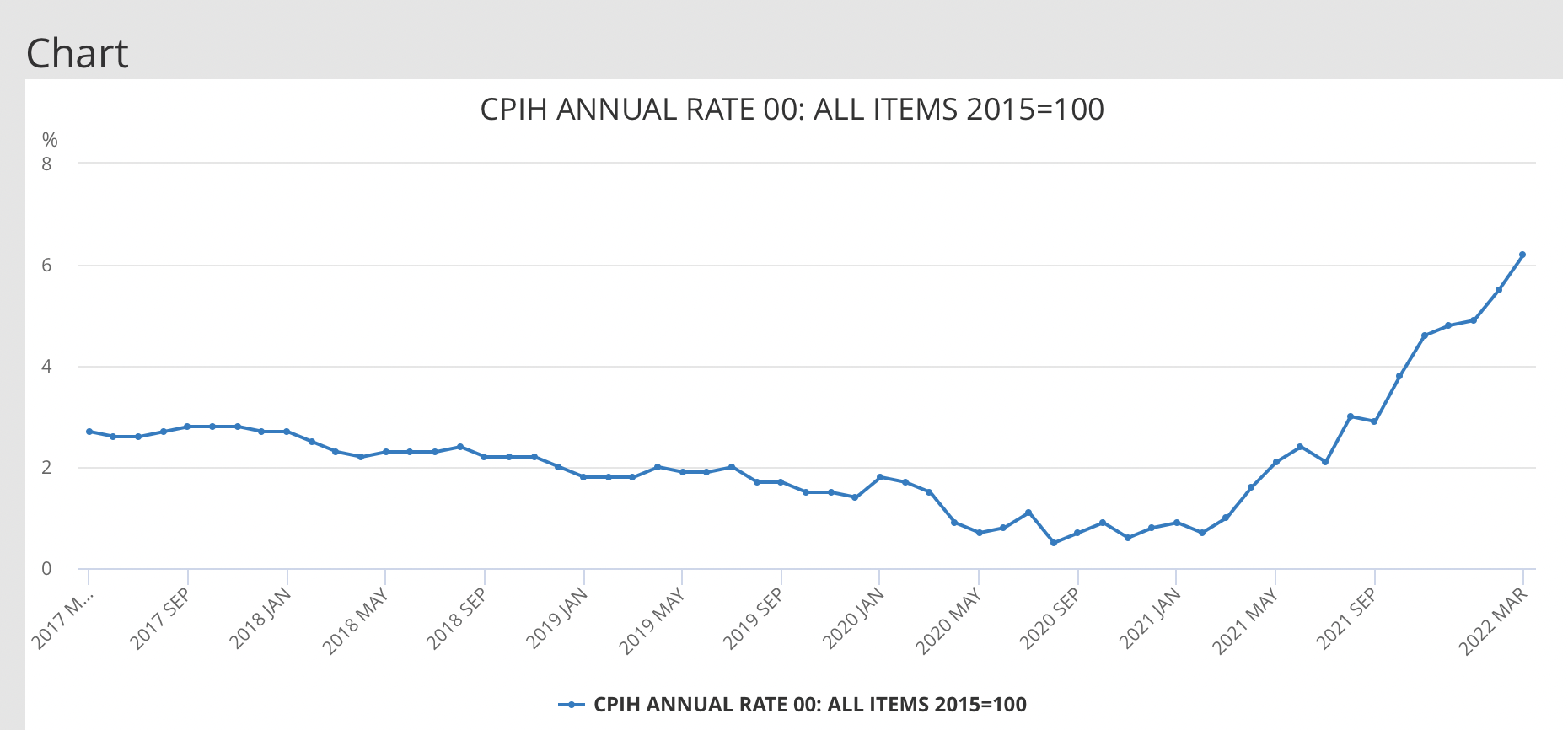
If, as The Sunday Telegraph reported, a Cabinet minister really said of the BoE “It has one job to do — to keep inflation at around 2 per cent — and it’s hard to remember the last time it achieved that target” then it is hard not to despair. Is there really someone sitting round the Cabinet table whose memory about such key economic data really does not extend further back than nine months? Inflation was just 2.1% last July, having been below 2% all the way through the long months of pandemic lockdowns (see graph).
Central bankers are certainly in difficult position as they have boxed themselves into a monetary policy corner in the wake of the Global Financial Crisis, now over a decade ago. The slashing of interest rates and the pumping of billions into financial markets via the quantitative easing programmes saved the financial system from collapse, but many economists have been warning for a few years that the banks were being too slow to move back to normality so that they would have room for manoeuvre when the next crisis struck.
Inflation has caught them on the hop and some have been complacent in their analysis and response. Others have been wiser.
Jerome Powell, chair of the US Federal Reserve, was striking a gloomy note in the late autumn. He said using the word “transitory” in conversations around inflation should be retired, when he appeared before the US Senate’s Committee on Banking, Housing, and Urban Affairs. For Powell inflation was being driven by a range of factors, the push of rising raw material and energy prices and the pull of consumer demand: “Pandemic-related supply and demand imbalances have contributed to notable price increases in some areas. Supply chain problems have made it difficult for producers to meet strong demand, particularly for goods. Increases in energy prices and rents are also pushing inflation upward.” And this was before Russia launched its assault on Ukraine and China effectively closed one of its largest ports.
Powell’s assessment was not shared by European Central Bank president Christine Lagarde who told a Reuters event a few days later that inflation was transitory, playing down fears that it would continue to rise well into 2022: “I see an inflation profile that looks like a hump,” Lagarde said. “And a hump eventually declines. We are firmly of the view, and I’m confident, that inflation will decline in 2022.” The ECB still hasn’t made a move of interest rates, suggesting Lagarde is stubbornly sticking to this belief, despite the powerful global trends to the contrary.
Bailey, an instinctively cautious man, positioned himself somewhere between these two views when last appeared before the Treasury Select Committee in December. He was not shy about the problem inflation poses but offered few firm commitments on interest rate policy: “I’m very uneasy about the inflation situation. I want to be very clear on that. It is not, of course, where we wanted to be, to have inflation above target.”
Central banks are fearful about being manoeuvred into a situation where interest rates are increased but inflation does not respond. This is a seminal moment for them as one of the cornerstones of monetary policy in the 21st century, controlling inflation through interest rates, is put to its first real test. The policy has worked because most inflationary – and deflationary – pressures over the last 25 years have been caused by fluctuations in consumer demand – the pull factors.
If central banks raise interest rates or curtail their bond purchase programmes and the impact that has on demand is minimal, people will start to lose faith in their ability to control inflation. The longer higher rates of inflation prevail, the more they become part of a new normal which could add fuel to the push factors by unleashing demands for higher wages and making regular price increases more acceptable. the wage-price spiral that dogged the 1970s.
If you accept that inflation is being driven by push factors rather than surplus demand then it points to a need to return to economic management through fiscal policies and that turns the spotlight on governments, which gives you a clue as to why Tory MPs are looking to put Bailey on the spot. The government seems to be like a hapless rabbit caught in the spotlight. It is doing next to nothing to address the powerful push factors such as rising energy prices and food price increases. Indeed, it has added to the cost-of-living pressures by increasing National Insurance (although this will not show in inflation data).
The problem for Mr Bailey today is that he will not feel it is his job to turn the spotlight back on the government – that would be political dynamite – but, at the same time, he does not want to admit that the monetary weapons in his armoury are potentially ineffective against the powerful push factors driving inflation.
It will be interesting viewing.
The UK, European Union and USA might not be directly involved in the war on the ground in Ukraine or in the air over its shattered, beleaguered cities, but we are on the frontline in a new type of hybrid warfare. There is the war being fought with troops, missiles and bombs and then there is the war being fought with economics: that is our war.
All wars have consequences and inflict casualties on both sides and the economic war being fought over Ukraine is no different. Those consequences will inflict economic pain on the western liberal democracies as well as on Russia. We are already feeling that pain with the sharp uplifts in gas prices and prices at the pumps when we fill up our cars. That will be just the start, as the businesses owned by now sanctioned Russian oligarchs are also showing signs of strain.
The enforced sale of Chelsea football club has grabbed the headlines but other firms are reeling too. Last week Holland & Barrett, the health food chain whose owner is sanctioned, found it could not pay its debts. Many more will follow.
Countries have been choosy over the sanctions they have imposed, trying to pick those that will inflict the maximum economic pain on Russia and the oligarchs they believe have Putin’s ear, while not impacting their own economies too harshly. This has led to an uneven, patchy approach.
At the end of last week, there were signs that some countries like Germany and Italy, highly dependent on Russian gas, were growing nervous about the impact the sanctions are having on their pandemic ravaged economies. This morning all the talk is of tougher sanctions in the face of the chilling reports of massacres in Bucha.
Banning the import of all Russian gas and oil – for which the west is still paying billions each week to Russia – will hit hard. In Germany, it could quickly lead to gas rationing. Here, it will hit motorists as 13% of diesel is still imported from Russia, according to the latest government figures. Prices will go up and we may see shortages, potentially leading to rationing at the pumps. Domestic energy prices are already causing hardship and can only go in one direction if even tougher sanctions are imposed.
These are the hard consequences of our war on Russia. And it could be a long war.
The big question is: do we have the national and individual resilience for that long haul?

Stuffy Essex tourist bosses have decreed that the county needs a rebrand to shed what it rather insultingly dismisses as TOWIE – The Only Way is Essex – stereotypes. What it ignores is that these stereotypes have brought a lot of money into the county, especially Brentwood, the town where I live.
Just as provincial high streets like Brentwood’s were taking a nose-dive, TOWIE rode into town and saved it from the grim spectre of empty shops.
The fans of TOWIE – which I have never watched – flocked to Brentwood to see where the stars of the show were filmed and the night clubs and restaurants they frequented. TOWIE tours and hen parties arrived in such numbers that the TOWIE stars, led by Amy Childs, started to open shops in Brentwood. In no time there were around 14 shops owned by participants in the show, together with several new restaurants that opened to serve the new visitors.
The response of the local council and most residents was straight out of the same patronising play book that seems to have fallen into the hands of Visit Essex. Instead of welcoming these new visitors spending money in our town most people looked down their noses at them. While TOWIE was at its peak it was if the town centre inhabited two parallel, disconnected universes.
I know some people point to the occasional Friday and Saturday night disturbances down the High Street and blame them on the TOWIE visitors but almost every town and city centre suffers the same blight. It is just another manifestation of the English disease we export to holiday destinations across Europe most years and we saw all too vividly at last year’s European Championship final at Wembley.
We should have been laying on town centre entertainment for our new visitors, encouraging more of the retailers left in the town to stock merchandise of appeal to the TOWIE generation and making them feel more welcome. A few may even have taken an interest in some of the other shops and features of the town and the locality. I am not naive. I know that 99% would have only been interested in TOWIE but at least they wouldn’t have gone away feeling unwelcome.
It seems very strange for a tourism organisation to be sending out a message to a large group of people that can only be interpreted as “we don’t want you” – or your money.
Essex is a very large county and offers some wonderful countryside and coastlines but the powers that be have a habit of falling into this snobbish trap from time-to-time. For years it was Southend they used to look down on, now it is Brentwood. It is simply not good enough. Why can’t they be proud of the diversity the county enjoys and promote all of it equally? I am not surprised that the TOWIE cast feels offended.
If Visit Essex has £300,000 to spare it should be embracing TOWIE, using that as a platform to promote the rest of the county and its attractions. A re-think is needed.
• Image By ITVBe, Jump – https://www.jumpdesign.co.uk/towie/
First it was the Department for Levelling-Up. Now we have the Department for Brexit Opportunities. Or, is it the Department for Government Efficiency?
Jacob Rees-Mogg barely knows which century he lives in and now he is expected to juggle two new government departments with fatuous, empty slogans as their names. It sums up so much that is wrong with this government and why Johnson is totally ill-equipped to be Prime Minister.
Johnson lives in a world of superficiality where slogans and throwaway remarks seem to him to be the answer to everything. He has no depth. This government has no depth.
Governing a country requires substance, hard yards of solid administrative grind and a serious sense of purpose. Slapping stupid slogans on the names of government departments – two of which do not even exist yet as far as I can see – it the exact opposite of good government, regardless of the politics that lies behind it. It exposes the critical fault lines in Johnson’s character that make him spectacularly ill-suited to be Prime Minister and shows he has no grasp of what he needs to do to pull himself clear of the chaotic, dysfunctional mess he has created.
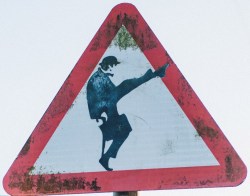
This is a time for serious government, applying itself to the huge challenges facing the country. Instead, we get a panicky reshuffle and the Ministry of Silly Walks. There is only one walk Johnson should take – and that is straight out the door of 10 Downing Street, never to return.

All journalists know that covering China presents challenges. One of the most pervasive is the extensive self-censorship that makes striking a balance between many strong opinions when writing about China very hard to achieve.
I was shocked recently to find out how far this malaise has gripped businesses in the UK’s financial services sector.
I was asked by the leading insurance industry publication Insurance Post to provide an analysis of how businesses with Chinese clients or operations in China are dealing with the many critical uncertainties surrounding the country. Good business continuity planning demands these issues are addressed. The growing threat of Communist China to Taiwan, China’s human rights record and the expanding influence of the Chinese Communist Party over businesses have made robust scenario planning for firms with interests in the region more important than ever.
The potential consequences for the insurance market of any escalation of tensons between the major western democracies and China are huge. Global brokers have very significant footprints in China and deep relationships with Chinese businesses around the world, many major insurers have spent decades courting Chinese regulators to establish a presence in the country and Chinese money has flowed into the London insurance market in premiums and direct investment.
In short, China matters.
Take any other major risk or geo-political threat to the insurance industry and the wider financial services sector and there would be regular discussions, joint market committees and conferences. People would talk and share intelligence to help everyone understand the issues and the risks better. Resilience is a popular buzzword among business planners and they are usually keen to talk about how they can withstand all manner of shocks. Not when it comes to China.
The silence from the market on the risks China poses was deafening. No-one would talk about it.
Never in almost 40 years of writing about the insurance industry have I come up against an issue no one in the market will discuss. There is a palpable sense of fear when it comes to China. People fear for their hard-won business relationships. They fear for their staff and their families. Many firms I spoke to cited genuine concerns for the safety of their staff in China or the families of London-based Chinese staff if they were seen to venture opinions that might be interpreted as hostile in Beijing.

I did find people to talk to me but they were all from outside the market and could nearly all be considered critics of China. One of them was economist George Magnus, an associate at the China Centre, Oxford University and author of Red Flags: Why Xi’s China is in Jeopardy.
“It tells us that the political sensitivity and the risks that insurers face are political risks and they are very difficult to evaluate. The reluctance to discuss these issues is predicated on fear and self-censorship”, said Magnus.
“Businesses are increasingly coming up against political decision making and they are not very comfortable in that space. Regulations and laws implemented by China are starting to conflict with laws here. They do not want to have to choose whose laws to follow and whose laws to flout.”
Not alone
I am not alone. At the end of last week there was a report on BBC World Service News about how the corporate sponsors that pour millions into the Olympic coffers have been strangely reluctant to promote the Winter Olympics in Beijing. The top level partners include major financial institutions such as Visa and Allianz. The reporter approached all of them for comment: all of them refused.
This deafening silence leaves the crucial question at the heart of the article unanswered: how do financial institutions plan for the worst while hoping for the best when it comes to China? The failure of anyone to answer that raises an even more disturbing question: are they planning at all or is open, honest discussion of China within firms prohibited?
I appended an author’s note to the article, something I have never done before:
“To anyone who finds the absence of market voices in this article makes it unbalanced, I agree. But no-one – no insurer, no broker, no lawyer, no market association and no service provider – would speak to me. It is their silence that is to blame for any lack of balance.”
Normally, such criticism of a market within its leading publication would provoke robust responses. You’ve guessed it: more silence. That has become the story.
• China – Implications of uncertainty, Insurance Post, 10 January 2022
• China business – a great wall of silence. Association of European Journalists – UK
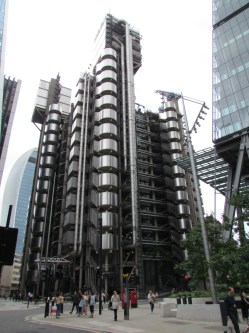
The news that Lloyd’s is reviewing its future occupancy of the iconic Richard Rogers building in Lime Street is no surprise. Although it commissioned the building on the site of an older Lloyd’s building from the 1920s, it no longer owns it. It was first sold to Commerzbank for £231m in 2005 before Chinese insurer Ping An paid £260m for it in 2013. Lloyd’s is a tenant in its own building.
Crucially, the lease from Ping An comes up for renewal in 2031 with a break clause available in 2026. These dates are starting to come into focus and weigh on the minds of senior management at Lloyd’s.
Digitisation of the way business is placed at Lloyd’s started to make serious progress at the end of the last decade after years of stuttering false starts. This came just in the nick of time as the Covid-19 pandemic closed the market building for months. All the sceptics who dismissed the prospects for digital placement were instantly proved wrong and the market adjusted to the sudden end of face-to-face discussions between brokers and underwriters in the Lime Street building.
Of course, some in-person business has returned spasmodically as the world emerges from the pandemic but everyone knows it will not be the same and that we will certainly not see a return to the queues of anxious brokers hoping to get the signature of a prized underwriter on their clients’ policies.
The drive to digitisation, better use of data and artificial intelligence continues unabated as Lloyd’s has confirmed over the last couple of weeks.
The future could look like the past
There has already been much talk of how to make best use of the building. Back in the autumn of 2020 I wrote a piece for Insurance Post, imagining how the market might look in 2030:
“The sight of brokers scurrying around EC3 with bulging leather folders is now a distant memory and the complete pedestrianisation of the City, brought forward to 2023 by the Corporation, helped transformed the historic financial centre. Only the quite hum of the driverless electronic pods allowed along Upper and Lower Thames Street reminds us of the once traffic-choked roads.
“Gradually, the iconic Richard Rogers building in Lime Street found a new purpose. The old underwriting boxes became fewer and new, collaborative meeting spaces emerged in their place. Many say it has taken the market back to its roots in Edward Lloyd’s 17th century coffee house.”
This has already started to happen but is it really the solution for the Lime Street building? Clearly, with some imagination it can work for the underwriting floor and the open galleries but what about all that office space above them? This is what must be concerning Lloyd’s bosses.
The big question is what would become of it if Lloyd’s throws in the lease?
It is seen the world over as the Lloyd’s building, the only truly distinctive building associated with the insurance industry in the City of London. Although people may argue that a physical presence in the City is less important in this digital age, it still sends out a clear message about the importance of the insurance industry to the fortunes of the City and, in turn, the UK economy.
We need some imaginative solutions to ensure it retains an association with the insurance industry should Lloyd’s decide to vacate it. There is an Insurance Museum looking for a home but that alone would never be able to fill it or meet the rental expectations of its Chinese owners. Some serious collaboration across the market is required and Lloyd’s needs to initiate that.

The sight of Boris Johnson fighting for his political life is not pretty. He will sacrifice anything and anyone to save his own skin. The blizzard of reports about Operation Save Big Dog and Operation Red Meat should strike fear into the hearts of any reasonable, responsible citizen of this country.
Of course, once the childish names given to the panic-stricken manoeuvring in Downing Street hit the weekend papers it was quickly denied that such plans existed or that they had silly names. No-one believes anything that comes out of the Ministry of Lies at Downing Street anymore.
What is in those plans should concern us all.
Another brutal attack on the BBC, motivated by all the ugly paranoia that was on display throughout the Brexit campaign and beyond. The polarised nature of political discourse today does not allow much room for an independent broadcaster. Unless people hear only an echo of their own voices they automatically think it is against them. They cannot grasp the concept of independence in the media. Such ignorance is rampant among senior ministers.
Even more shocking is the proposal, confirmed this afternoon, to deploy the Royal Navy against refugees trying to cross the English Channel in totally unsuitable inflatable boats. This is an act of heartless brutality. It will do nothing to address the refugee crisis that grips the whole of Europe. It is another demonstration of the alarming lack of ability in this government.
Nothing we do to try to stop these poor people fleeing war, poverty, famine and oppression from reaching the UK will work. The pull of the UK for many is certainly very strong, although only for a minority that reach Europe’s southern shores, but it will never outweigh the push of what they are trying to escape. That is why the only humane and practical solution is to create safe routes.
Safe routes have many obvious advantages, not least that they would sideline the people smugglers. If you can reach the country of your choice and apply for asylum or residence in an orderly and efficient manner why would you need a criminal gang to transport you?
I often walk past the two Kindertransport memorials at London’s Liverpool Street station. We were proud to reach out to those fleeing oppression in 1938. What has happened to our values and our sense of a common humanity?
The policy consequences of Operation Save Big Dog are appalling. But so is Johnson’s willingness to throw anyone under the bus as he flays around looking for people to blame for his own failings. Apparently, everyone else at Downing Street apart from him is responsible for the drinking culture that carried on unabated while the rest of us were trying hard to obey the rules we thought were necessary to protect ourselves and other people.
I even read a suggestion over the weekend that the drinking culture pre-dates Johnson’s time at No 10. Now we know he has taken leave of his senses. Nothing could ever convince me that the joyless Theresa May presided over Westminster’s Party Central.
Big Dog? More like Mad Dog.
Pic credit: Andrew Parsons, CC licence

I share the shock of many people at the tone of the coverage of the conviction of Ghislaine Maxwell by some media, most notably the BBC.
In a series of serious errors of editorial judgement the BBC have had a procession of Maxwell apologists on radio and TV, including an interview with her brother Ian, striving to put some sort of positive gloss on her appalling crimes.
It prompts me to share one small story about my encounter with the biggest Maxwell crook of them all, her father Robert.
When he was in his pomp in the mid to late 1980s I was due to attend the Labour Party conference as a journalist. Maxwell always hosted an extravagant party at the annual Labour bash by the seaside to which all the great and good of the Labour Movement were invited. Most usually accepted.
I received an invitation to this event which I politely turned down – by letter in those pre email days.
A few days before the conference, the phone rang at my desk overlooking Fleet Street and it was some lackey from Maxwell’s office expressing surprise that I had declined the invitation. I explained it was not a mistake and that I did not want to come to which he said “You do realise that if you turn this down you’ll never be invited to another event hosted by Mr Maxwell”.
I replied “That suits me fine” and put the phone down.
Perhaps a few BBC journalists need to start doing the same.
If he does, then we should all be worried.
Boris Johnson has blustered his way through the Conservative Party conference, dismissing concerns about the broken fuel supply chain, chronic job shortages in a range of key sectors and the spectre of inflation as he trumpets some hastily concocted nonsense about it all being part of a grand plan to end “decades of drift and dither”.
Does he really expect people to believe such nonsense? Where was this grand plan to reset our economy during the Brexit referendum? So much of what is happening now looks more like the Project Fear Johnson, Gove and Farage were so fond of characterising the pro-EU lobby’s warnings as in 2016.
Perhaps it was part of the “oven ready Brexit” that swept him into office? Except he forgot to tell anyone.
His attempt to take ownership of the crises that seem to be ripping through our economy from every direction by claiming it is part of some long envisaged plan and that this is just a transitional phase is simply delusional nonsense. There is no plan. According to Johnson this transitional phase is proving so challenging because every business in the country wasn’t ready for it. Maybe that is because, before this week, the strategy did not exist.
“Drift and dither” is an apt description of Johnson’s time in office. There is no leadership. There is no sense of being in control of events. There is no competence at any level of this government.
The Tories in Manchester will lap it up. We have to hope that the rest of the country sees through this latest rhetorical smokescreen and realise that unless Johnson is consigned to the history books soon the damage this government is doing will take decades to repair.


 David Worsfold