

“Brexiters outraged after crowds wave EU flag at Last Night of the Proms”, screams a headline on The Guardian website this morning.
You have to weep at the ignorance and stupidity of these brain-dead Brexiters. They pretend to care about freedom but when people exercise their own individual freedom of choice over which flag to wave at a concert they foam at the mouth with outrage.
Nobody was forced to take a flag. It was a matter of personal choice. I think it says a lot for the sort of world these right-wing fanatics want us to live in that this offends them so much. Perhaps they ought to contemplate what “Britons never shall be slaves” or “Land of Hope and Glory, Mother of the Free” really mean.
They also profoundly misunderstand the Last Night of the Proms. It is a party at the end of a two-month long season of music concerts, the longest, and widely acknowledged as the greatest, classical music festival in the world. For many years I went to the Proms every summer and you make some great friends there – indeed, it is where I met Mariette, my wife of over 40 years. The Last Night is a farewell to many of those friends for another year, an opportunity to let one’s hair down and have a sing-song together with people you have shared the most wonderful musical experiences with night-after-night for those two months. Even in the 1970s it was never, for the Promenaders, a festival of patriotism, beyond the pride of being part of a great music festival.
Even back then flags of other nations were mixed in with the Union Flags, and EU flags have been growing in number over the last decade. The fact that so many people took them when given the opportunity yesterday is a commentary on where music lovers, always internationalists, now stand on one of the great debates of our time. I expect many people were waving both an EU flag and a Union Flag: I know I would have been.
The trouble is that those now so upset about one concert in a season of over 80 events see it in isolation, having no understanding of its context. They are also no defenders of the sort of freedom I treasure.
• (Of course, there are some flags that you would not expect see there and which would be antithetical to the values of an international and increasingly diverse music festival. The EU flag is certainly not one of those. That is a wider debate for another day)

The letters column of The Guardian has been carrying several comments from readers about the media owner’s decision to block Open GI, which powers ChatGPT, from harvesting its content. Many of these correspondents argue that The Guardian should set aside its commercial interests and concerns about intellectual property and allow developers of artificial intelligence tools to use its content to “train” its own content generating machines.
The Guardian is not alone in taking this approach. Other reputable media outlets on both sides of the Atlantic are doing the same.
They are right to do so.
The argument that if you do not allow AI developers to exploit quality content then the output of their products will be poor quality because it must draw on less reputable sources is deeply flawed. Of course the developers want to be able to draw on a wide variety of sources, especially those that have invested time, money and skills in producing top quality content. It is in their commercial interests to do so. If their products produce rubbish then people will not want them – once they realise they are not reliable. It is not the job of The Guardian and the content creators that work for it and other media outlets to boost the profits of AI developers.
If the developers of AI products want to use content created by others they should negotiate proper terms and offer appropriate payment for doing so.
This seems very reminiscent of the early days of the internet when some people threw their hands up in horror at the idea that they might actually have to pay for some online content. Many argued that the internet was an open shop where anyone could use anyone else’s content – be that words, images, illustrations – without having to pay the creators. Of course, those same people would never contemplate working for nothing themselves.
We seem to be allowing artificial intelligence to drag us back into that dismal space where people think it is OK to rip off other people’s work and not pay for it.
It is not the job of content creators or media owners to polish up AI products. That is the job of developers. They will have to work much harder in vetting sources, checking facts and editing the output. Just like the rest of us who have ever worked in publishing, journalism and the creative industries do.
In the meantime, that old adage “Buyer Beware” must be first and foremost in the minds of the users of generative AI tools.

There is no end to Tory sleaze. Johnson’s shameful Resignation Honours List, Nadine – Give me a Peerage – Dorries, Sunak’s feeble excuses for not declaring huge shareholdings and soon we will have Liz Truss’s Resignation Honours List.
All of these scandals have things in common: a complete disregard for rules and conventions, unparalleled arrogance and a deep sense of unearned entitlement.
Truss dishing out honours for 49 days of unmitigated disaster as Prime Minister embodies and magnifies all these deeply corrosive faults. Corrosive because they undermine respect for public service and further lower all politicians in the public’s minds. Those are not ingredients for a healthy democracy and public space.
You have to applaud the decency of the two people rumoured to have declined to be named in this list of shame. Perhaps they realised the association with Truss would haunt them for the rest of their lives, much as people will forever question those on Johnson’s list, especially his new Peers.
This will only heighten the need for a complete overhaul of our honours system, although there is no chance of that happening under this Tory government. It knows its days are numbered and is determined to milk the system for all it is worth, diminishing the value of honours for all those wonderful people who dedicate their lives to genuine public and community service. Of course, they are largely the very people Tories care nothing about, except when it comes to empty election slogans.
Most countries have a system for honouring people who deserve public recognition for their service. Many prohibit the award of any honours to serving politicians. That would be a start.
Much else needs fundamental reform before we end up with an honours system fit for the 21st century, starting with the House of Lords. If the next non-Tory government wants to be seen as progressive, sweeping away the 18th century anachronism at the heart of our Parliamentary system is essential.
Further down the honours ladder more needs to be done to make them inclusive. The mostly widely awarded honours retain a heavy legacy of Empire. I have long thought that a simple change from Order of the British Empire to Order of British Excellence would be a seamless transition to the more inclusive era we now live in.
And one of the simplest reforms would be to scrap the privilege granted to Prime Ministers to create their own honours lists. Truss certainly doesn’t deserve one.

When Twitter was launched in 2006 it quickly became a social media phenomenon. Its brevity, ease of use and sheer novelty saw it surge past other social media platforms in popularity and usage.
Now, under the ownership of Elon Musk, with the cack-handed re-branding to X, it is in decline, with long-term users deserting it in droves. Every decision Musk makes seems to accelerate this downward trajectory.
As someone who joined Twitter over 14 years ago, has used it extensively and helped many organisations establish their own Twitter presence, this is not something I relish. However, it cannot be ignored.
Almost from the day he walked into the Twitter boardroom, Musk has seemed bent on its destruction. The savage cutbacks in staff meant that offensive, inaccurate and outrageously false content found its way back onto the platform. The ending of the blue tick verification and its replacement with a worthless paid for option was another blow to those of us who wanted to use Twitter responsibly and engage with others of a similar disposition.
Musk has also ended the ability of many other apps to display Twitter/X content, including WordPress which this site uses. The Twitter feed that was such a familiar feature of so many websites has disappeared. In many ways, this is the most baffling of Musk’s decisions. The Twitter feeds were a showcase for the platform, inviting people, including non-users, to engage with it. Surely, it was a useful marketing tool?
The cumulative effect of these changes has had a negative impact.
Decline in engagement
Over the last few months, I have noticed a sharp decline in engagement on Twitter, even before its rebranding to the sinister looking black X. The same type of content has been getting far less response, sharing and comment than previously. I have also seen less and less content of interest to me in my timeline. This suggests the new algorithm relegates content that interests me to the fringes or that people who posted that sort of content have deserted the platform. I suspect it is a combination of the two.
I was already questioning the value of Twitter, on which I have a modest following of just over 5000, but have despaired over the last two weeks as Musk has continued with his bizarre campaign of wonton destruction of the platform.
The withdrawal of Tweetdeck and its replacement with an inferior paid for option is among the worst of the many poor decisions Musk has made. It was a fantastic tool for organising accounts and content into manageable groups, sharing those communities with others and quickly focussing on the specific content that was of interest to you just when you needed to. Without it, my timeline has become almost unmanageable.
Yes, there are other tools – communities, hashtags and so on – but they do not offer the same control, ease of use and focus that Tweetdeck offered.
Contempt for customers
The way Tweetdeck was canned also laid bare Musk’s contempt for his customers. No warning, no explanation, no incentive to explore his new alternative: it was just turned off one morning.
Now, comes the announcement that the ability to block accounts is being withdrawn. This cancels the basic right to chose who you engage with and who you want to see your content. Leaving the option to mute accounts is hardly an adequate substitute.
It is a further step into the sort of unfettered anarchy that many imagined Twitter was previously. It might have been messy, occasionally leaving you open to seeing content you would rather avoid and being on the receiving end of unwelcome engagement but you had a range of tools available to help you deal with that. Whittling away those tools will drive away more professional users, businesses and responsible organisations. It is a trend that is already powerfully in motion. I know people who left Twitter when Musk took over, many more who have lost interest in it and use it less. I will join the latter group. I will not be casting anything more that the occasional glance at it, adding far less content than I have done over the last 14 years, all while I watch Musk bury a once thriving social media platform – X marks the spot.

Mike Bright, who died from sepsis last week, aged 78, was a polarising character. It was impossible to be neutral in your response to him in life, and so it is in death.
The comments from those who knew him, worked with him and for him captured in Jonathan Swift’s report of his death in Insurance Post give an accurate flavour of how the insurance world viewed Bright. The comments on the LinkedIn post of that story go even further in exposing the respect and affection he inspired, and the contempt and hate he provoked.
I have written many times about the legacy of Bright and Independent Insurance, having been at the editorial helm of Post and Insurance Age while he was in his pomp at Independent and, before that, Lombard Elizabethan/Continental.
Here is my summary of that legacy from 2011, with thanks to Jonathan Swift and Insurance Post for allowing me to reproduce it here.
•••••••••••••••••
From the day a group of insurance journalists found themselves huddled on windswept airfield [in July 1987] waiting for an airship to emerge from a hanger, which it never did, we knew Independent Insurance was going to be different.
I had followed Michael Bright’s career since his early days at Lombard Elizabethan so I knew that his transformation of Allstate into Independent would be done with some panache and genuine sense of purpose. He had plenty of outspoken views on the insurance market, especially the relationship between insurers and brokers, so it was no surprise to see this as one of the key focuses. Its broker clubs transformed the market, as did its fresh, modern approach to branding and advertising.
Hospitality was big with Independent, whether it was the Royal Philharmonic Orchestra or its box at Wembley. Accepting it often came at a price, however, as on more than one occasion I was chided by Mr Bright for something I, or one of my colleagues on Post, had written. Indeed, this stormy relationship stretched back to the Lombard days, when I was once greeted at a cricket match by the booming Mr Bright announcing to a tent full of brokers: “Worsfold, I don’t know how you have the cheek to show your face here after what you have written.” That said, he could be very entertaining and engaging as a host when he wanted to be.
Mr Bright has often been cast as a bully but there was much more to him than that. He once invited a long-serving very junior member of staff to the box at Wembley for an FA Cup final because he was a Liverpool fan, who were in that year’s final. It wasn’t his fault they lost to Wimbledon that day. He was genuinely upset for the guy that his gesture had backfired.
Despite all the outward success of the company, there were always tensions right at the heart of Independent. The departure of senior directors such as Robert McCracken, Keith Rutter and Alan Clarke always left one nervous about what it was like right at the heart of Independent, although the bluff and loyal — disastrously loyal as it turned out — Phil Condon always offset some of those concerns. Questioning Mr Bright about this at a press conference rendered me virtually persona non grata as far as he was concerned for the last three years before the firm’s ignominious collapse. [It also left Post considerably poorer as, having failed to get lawyers to bring me to heel, he withdrew Independent’s substantial advertising and sponsorship from Post. The upside of this was that when Independent went down it owed Post virtually nothing, unlike other publications he threw money at].
Independent always did everything with a certain style and lavish, if not always classy, luxury. At the Monte Carlo Reinsurance Rendezvous you met everybody else in one of the bars or cafes where brokers, insurers and reinsurers buzz around with a manic sense of purpose. You met Messrs Bright and Condon in their shorts and t-shirts sitting at a beach table under a bar umbrella with Del Boy-sized cocktails in hand. That was the same Mr Condon who claimed at his trial that he knew nothing about reinsurance and never had anything to do with it.
Independent Insurance was Michael Bright, and in the end it was his ego that brought it down. He really believed he could buck the market and spin a deal or six to get through the downturn without sacrificing his promises to grow and grow.
•••••••••••••••••••••••
There is more background on the demise of Independent and the trial of Bright, Condon and Lomas in the piece I wrote in 2007 in the wake of their conviction, From Pomp to Prison

One of this government’s most dishonest policies is the Voter ID scheme which obliges people wanting to vote to arrive at polling stations with a form of photo ID chosen from a cynically constructed list.
Superficially, it looks like a solution in search of a problem. That is where the dishonesty comes in.
The weak, disingenuous arguments put forward by the Tories that it was to stop voter fraud, where someone impersonates a registered voter, were simply lies. Voter fraud is an insignificant, almost non-existent, problem. The real reason was a crude, misdirected attempt at voter suppression. Armed with their highly selective list of acceptable ID they hoped to bar many young people – far less likely support the Tories at the best of times, let alone this corrupt shambles – from voting.
Did it work?
Only up to a point. The report from the Electoral Commission says 14,000 people were officially recorded as being turned away from polling stations in the local elections in May and did not return. That is 14,000 too many, especially as many were identified as being from disadvantaged groups. Added to that has to be the number of people who did not even get into a polling station as they were met by “greeters” who asked if they had ID, turning away those without it before they had a chance to have their presence at the polling station officially recorded. 40% of polling stations used this system.
I certainly saw this happen at my own polling station in the Brentwood Borough Council ward of Shenfield. Some of those I saw who were put off at this stage came back later but, although I wasn’t outside the station for more than a couple of hours, I suspect many did not.
I had to smile at some of the findings in the Electoral Commission report which suggested that the elderly – who are usually more likely to vote Tory – were disproportionately represented among those 14,000 disenfranchised voters.
Some research has suggested that as many as 400,000 people could be put off from voting at a General Election because of the hassle of finding suitable ID, or because they do not have something that is on the list and do not know about the ways of obtaining acceptable identification from their local council. That is a shocking number.
Turnout in elections has been steadily falling over the years. That is not good for democracy. Let’s not mince words: anything that makes it less likely citizens will vote is an attack on democracy.
This policy needs to be scrapped as part of a wider reform of electoral law in this country. This should include lowering the voting age to 16 and introducing proportional representation for all elections. The latter could have an explosive impact on democracy in the UK as it would remove the need for the awkward permanent coalitions we call the Conservative and Labour parties. Both would fragment as the pressure to form large parties uncomfortable in their own skins would be removed.
- I am happy to record that, despite the new impediments to voting, the good people of Shenfield still produced one of the largest ward turnouts in the recent local elections, 41.4%.
- To those who throw their hands up horror at the thought of coalitions running national and local government, I can report that the Joint Administration we – the Liberal Democrats – have formed with Labour in Brentwood to wrest control of the Council from the Tories has hit the ground running and has all the hallmarks of a successful partnership. It can be done.

The UK government this week started to deliver on its promise to rein in SLAPPS (Strategic Lawsuits Against Public Participation) but its proposals do not go far enough.
SLAPPS are a major challenge for the media. They are used to bully journalists and publishers and deter genuine investigative journalism. They are a worldwide phenomenon and are often accompanied by serious threats to the safety of journalists. The people who use SLAPPS have few scruples.
The scope and scale of SLAPPS varies enormously but usually feature a barrage of flimsy claims for defamation or breach of privacy from wealthy, powerful individuals seeking to prevent investigation of potential wrongdoing. They were especially popular among Russian oligarchs but by no means limited to them.
Now, the UK government has announced that the Economic Crime and Corporate Transparency Bill, currently going through Parliament, will be amended to provide judges with greater powers to dismiss lawsuits relating to economic crime that are designed to evade scrutiny and stifle freedom of speech.
The limitation to economic crime is disappointing. The government says around 70% of SLAPPS are related to economic crime and corruption and will be caught by the new rules. That still leaves many important areas of investigative journalism exposed, especially where the issues are reputational and not economic.
For instance, the initial exposure of Harvey Weinstein as a serial sexual predator was subject to a barrage of legal threats in an attempt to close down the investigation. That was a reputational issue, not an economic one.
The proposals have other weaknesses.
The amendments to the Bill propose allowing judges to apply a two-part test. First to determine whether a case meets the definition of an economic crime and, second, whether it has a reasonable chance of success. The scope for protracted and expensive arguments about whether a particular case falls within the definition of economic crime is especially worrying. It is just the sort of uncertainty that law firms love.
There is also the suggestion that a case must get as far as the courts before any action to curtail a SLAPP can be taken. The damage is often done long before a case gets near a court: that is the purpose of most SLAPPS.
The users of SLAPPS are frequently making claims that could never realistically be pursued but have the sole purpose of deterring investigation. They are taking advantage of the fact that investigative journalists often do not have access to the sort of very expensive legal advice needed to defend these claims, so they give up at the first hint of trouble. It is unclear how the government proposals will stop this happening, although there is mention of introducing limits on costs.
Campaigners for free speech, the media and many legal professional bodies have advocated a much broader three-fold test to be applied:
• The investigation that has provoked the SLAPP has to be in the public interest.
• There must be some “abuse of process”.
• The complaint must be of insufficient merit to require further judicial investigation.
The other weakness is that the proposals only apply in England and Wales. There is nothing in the pipeline for Scotland and Northern Ireland.
The UK government has at least moved faster than the European Union which is still deliberating on how best to clamp down on SLAPPS. The longer the EU takes, the greater the scope for the unscrupulous to indulge in a bit of forum shopping and find a jurisdiction that allows them to bully and harass.
We need more comprehensive and speedier action to end this menace.

A week ago we were being reassured by regulators and an army of experts that the collapse of Silicon Valley Bank was an isolated case and that there would be no contagion across the banking and global financial system. Those reassurances look rather futile and misplaced today, as we wake up to the news that another bank, First Republic, has had to be rescued, following the dramatic intervention of the Swiss Central Bank to stabilise Credit Suisse.
How has it come to this just 13 years after the last crisis in the global banking system?
Of course, it is different this time. In 2008 it was the failure of banks and regulators to spot the risks bubbling up in the US sub-prime mortgage market and the implications for a range of financial instruments built on those shaky foundations. This time it is the rise in interest rates as major economies try to put the brakes on inflation.
Just stop for a moment to think about that.
If banks cannot identify and manage interest rate risks what is going on? Surely, this should be a core skill. What appears to have happened is that the years of cheap money and rock bottom interest rates have so distorted business models and blunted risk management skills that we now find ourselves teetering on the brink of another global banking crisis.
You may ask where have the regulators who promised tougher regimes, better monitoring and forensic stress testing been?
There is an ugly war of words brewing among global financial regulators with the principal European regulators pointing angry fingers at their US counterparts for watering down some of the safeguards put in place after the Global Financial Crisis at the behest of many banks, including SVB. There is a lot of truth in this accusation but the UK and Europe is not without its share of blame in relaxing their scrutiny of bank’s business models and asking searching questions about their ability to respond to changing market conditions.
We must pause solvency reforms in UK
While the world’s financial markets look around nervously to see whether the contagion will spread further, there needs to be a rapid reassessment of the various plans in the pipeline to relax solvency rules for banks, insurance companies and pension funds, especially in the UK where the reform agenda has been hijacked by Brexit zealots. Their desire to portray the UK as an easier place to set up and do business in the financial services sector is fraught with danger and the planned watering down of the solvency rules for insurance companies and pension funds needs to be reined back and paused so its impact can be reassessed in the light of the latest wave of instability whirling around the global financial system.

Sport has an uneasy relationship with politics. Those who run international sport live in a bubble in which they convince themselves that sport stands above conflict, tyranny and appalling human rights abuses. On the one hand, they refuse to acknowledge a connection between sport and politics but in the next breath they spout pious nonsense about being able to build bridges and promote peace: that’s called politics. They cannot have it both ways.
Since Russia’s brutal assault on Ukraine most major sports have banned Russian and Belarusian athletes and teams from international competition. The outlier has been tennis which continues to allow them to compete, although British tournaments, including Wimbledon, banned them last year but are now under enormous pressure to let them in. I hope they stand firm in the face of the threats to strip British tournaments of their status.
Why does this matter?
It matters to us because it matters to the Russians. Sporting sanctions related to geo-political issues only work if sport is important to the regimes you are targeting. This is why the isolation of South Africa during the apartheid era was important and effective – because sport was such an important part of Afrikaner culture.
Similarly with Russia. We know how important sporting achievement on the international stage is to Russia. They have been serial cheats for generations and are already suspended from many sports because of a government-backed doping programme. Winning is everything to them, no matter the means by which they achieve it. Every victory will be cheered in the Kremlin and ruthlessly exploited as propaganda.
Fencing lines up with tennis as a Russian ally
With the next Olympics due to take place in Paris next summer, the International Olympic Committee is suggesting it will allow Russia and Belarus to compete. Russia is working hard to build momentum towards persuading the IOC to capitulate and let them in. This week, it persuaded the International Fencing Federation to let them back in despite desperate Ukrainian pleas not to do so. Perhaps it is not surprising that fencing should join tennis as a sporting pariah as it has been bankrolled by Russian money for years. It reluctantly parted company with its president, the widely sanctioned Russian oligarch Alisher Usmanov, when the war broke out last year.
There will be those who say a boycott punishes individuals, not nations. This is a flimsy argument at best as most of the Russians who compete at international level have been generously supported by the Russian government, often to the extent of willingly using illegal methods to boost performance. Many are members of the Russian military.
Compare that to Ukraine where Russia has destroyed endless sporting facilities and where training is impossible. Where do the rights of the hundreds of Ukrainian athletes who have died or been injured courageously defending their country sit in this debate?
Neutrality is meaningless in this conflict
There will be talk of allowing Russians to compete under a neutral, white flag. Tennis has indulged in this pretence but saw it exposed for the deceit it is at the Australian Open when Russian spectators displayed Russian flags with the now sinister Z emblem.
Neutrality is not a defensible stance in the face of tyranny and brutish unhumanity. It is often a sham, hypocritical at best, deceitful at worst. Switzerland – ironically where the International Fencing Federation and many international sporting organisations are based – has practised this hypocrisy for years. It pleads neutrality, yet it hid the plunder of Nazis for generations and now does the same for Russian oligarchs. That is lining up on the side of evil, not neutrality.
The white flag is also the flag of surrender: surrender of principles, surrender of integrity and surrender to tyranny.
Olympics: Russia or Ukraine
The focus will soon switch to the Olympics, raising the prospect of boycotts.
Ukraine has already said it will not go to Paris if the Russians are allowed in. Nobody can blame them. You cannot ask Ukrainians to compete against Russians. Admitting Russians would mean effectively banning Ukraine from the Olympics. If those Russians who really decry the Russian regime and its brutal war want to compete they can renounce their Russian cititzenship and ask to compete for another country.
If Russia is in and Ukraine is out, we have a simple question to answer: whose side are we on? Do we stand with Ukraine or do we stand with Russia? There is no middle ground. To send GBR teams to an Olympics with Russia represented and Ukraine absent would be a betrayal of Ukraine and its people.
Slava Ukraini
One of the most rewarding aspects of writing two military history books has been bringing alive the stories about the people whose lives were shaped – sometimes broken – by great events beyond their control. Military history is not just about powerful leaders, great armies, strategic vision and bloody battles. It is about the people who find themselves part of history without ever seeking to do so.
With my recent book on the post-Dunkirk evacuations from France in June 1940 – Operation Aerial: Churchill’s Second Miracle of Deliverance – I very early on in my planning and researches decided to tell the story of the dramatic escapes from the advancing German armies through the voices of those those who were involved, always taking care to establish the context. The reader has to be able to understand why they were there and what they were being asked to do for their responses to the situation to make any sense.
Sometimes taking these individual stories and putting them into their full context answers long-unanswered questions for relatives and descendants.
I was reminded of this by a recent family anniversary.
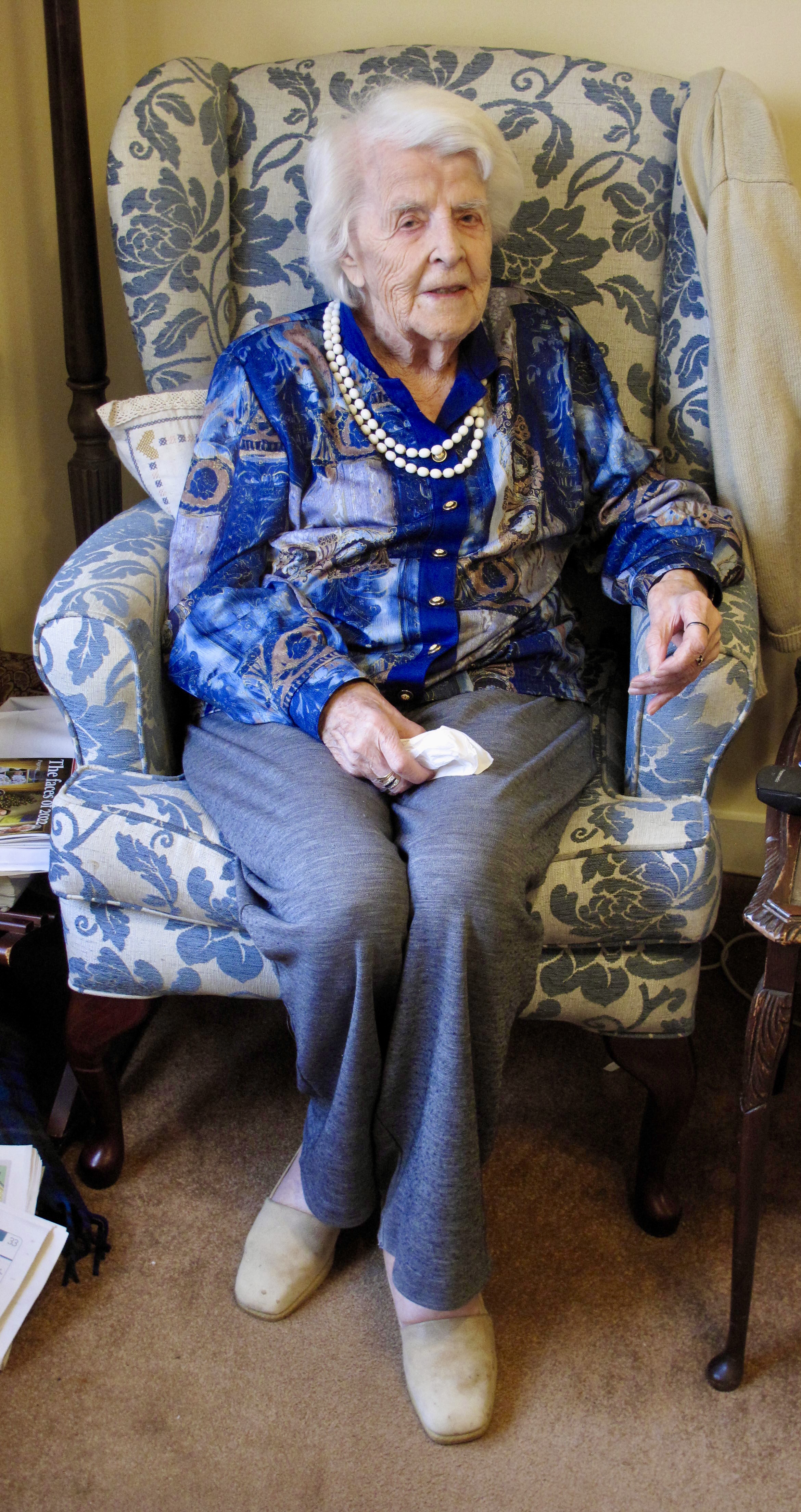
Earlier this month, my mother-in-law, Rosemary Mason (left), celebrated her 102nd birthday. The same week would have been her 80th wedding anniversary, as she was a wartime bride, and war left its mark on her wedding and her relationship with her father.
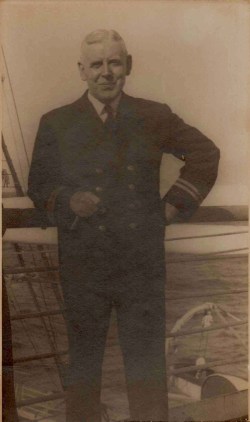
Her father, Thomas Kelly (pictured above), was an Irish doctor, who had served in the Indian Medical Services for 30 years and in World War Two was, in his 70s, a ship’s surgeon in the Merchant Navy. His remarkable story is told in Fighting for the Empire. He missed his daughter’s wedding in January 1943 and she never knew why until I pieced together the events of late 1942 and early 1943 for Fighting for the Empire.
This edited extract from the book takes up the story.
“Back home Kelly’s two daughters were by now both engaged to young doctors and weddings were being planned. The challenge was to fit the weddings in around the times when their father expected to be in the UK. This was only a partial success.
Both men, Tom Foot engaged to Brigid, now almost 22, and Adair Stuart Mason engaged Rosemary, 21, had trained at the London Hospital.
So at the end of July 1942 it was Brigid and Tom who married first at the Catholic church of Our Lady of the Rosary not far from St Mary’s Mansions with a reception at Lord’s Cricket Ground, Kelly was there, having returned to England on the Ruahine just 10 days earlier.
By mid-August he was bidding his family farewell again to join another New Zealand Shipping Company vessel, the Rangitata at Liverpool, ready to sail to the Clyde to form part of convoy WS22 to take the 56th(London) Division to Iraq (the former Mesopotamia), a huge complement of 50,000 military and support personnel.
After disembarking its military contingent in October, it had a routine return journey planned, crossing the Atlantic to collect food cargoes from Buenos Aires and La Plata, arriving back in the UK just in time for Christmas 1942. More importantly for Kelly to be in good time for Rosemary’s wedding now set for mid-January. Almost immediately the plans started to change. Rangitata was sent with additional troops to reinforce Diego Suarez on Madagascar, which had recently been seized from the Vichy French to prevent it being used as a base by the advancing Japanese forces. While there it collected a troop detachment to take to Mauritius, the only ship from any of the 30-plus Winston Special convoys – each consisting of dozens of ships – to visit Mauritius. Having done this it headed off to South America where it collected its cargo of meat but was diverted again, this time to New York where it was asked to pick up US troops coming to Europe. It docked in New York on 4 January 1943 and by then Kelly must have realised he wasn’t going to make his younger daughter’s wedding planned to take place on 11 January. Wartime secrecy meant that he was unable to send a message home to tell them of the delays.
Gertrude [Rosemary’s mother] had been calmly reassuring her daughter that her father would be home in time for the wedding, and even when Christmas came and went without any word from him she remained convinced he would arrive in time. He didn’t.
On her wedding day Rosemary was accompanied down the aisle in the grand setting of St James’s, Spanish Place by an uncle she hardly knew, convinced that her father [with whom she had never enjoyed the best relationship] couldn’t be bothered to get to her wedding, a resentment that festered for more than 70 years until the research for this book revealed the truth of why he wasn’t there. She never raised the matter with her father and saw relatively little of him after her marriage, not least because in early 1946 she followed her husband, by then serving with the RAMC, to India. Equally, he never made any attempt to explain what had happened: it was for him a simple matter of duty calls. He docked in England on 24 January, nearly two weeks after the wedding.
He was quickly back on the Rangitata this time to Algiers and Oran where it was attacked by German planes on 26 March.”
This explanation, accompanied by my discovery of a tea spoon from the Rangitata at an antique fair, provided some closure for her.
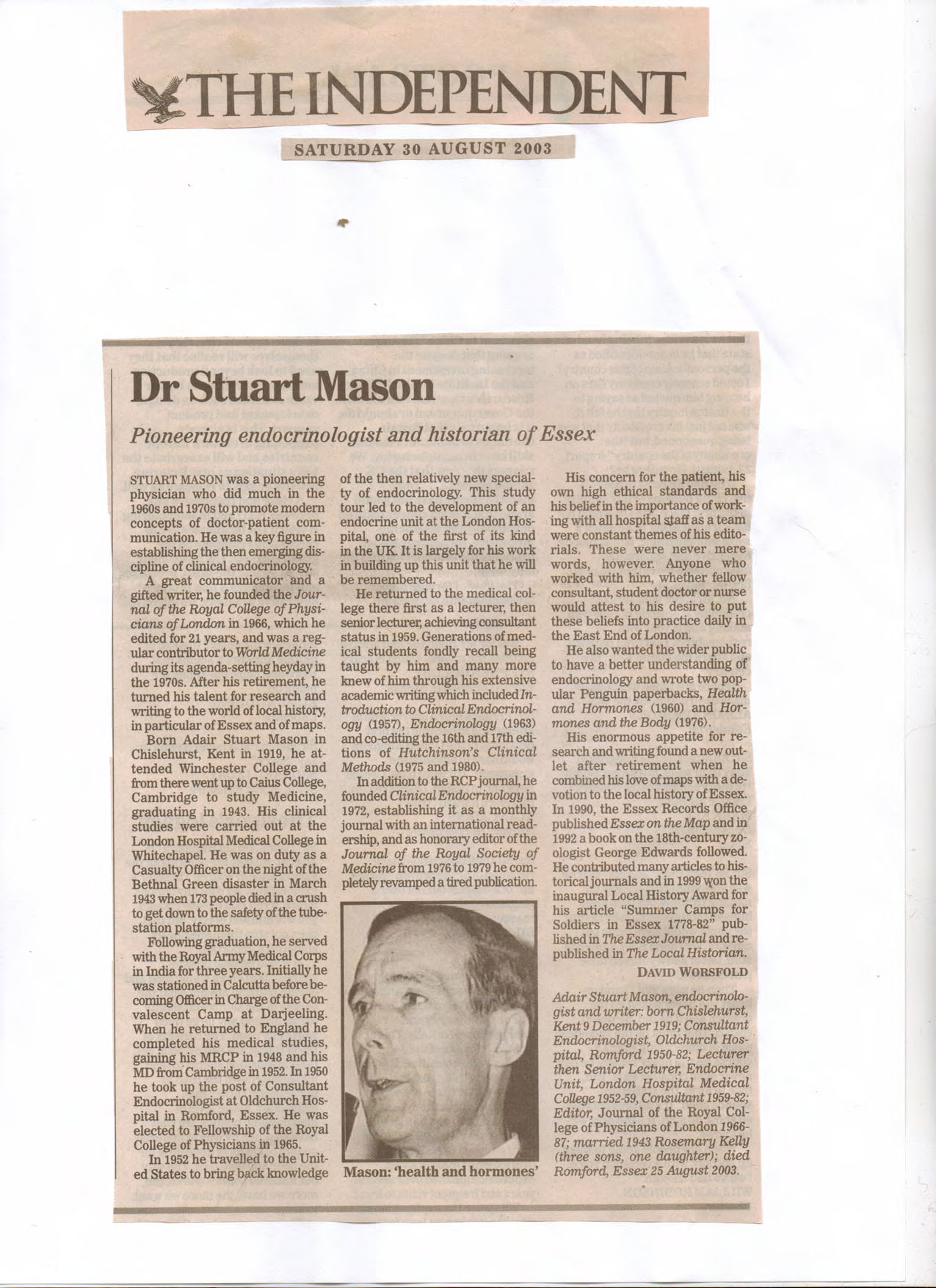
• Rosemary’s husband, Dr Stuart Mason, passed away nearly 20 years ago and his obituary appeared in The Independent (right), The Times and the British Medical Journal.


