

The main UK party manifestos were launched this week amid much fanfare and hype but how much substance is there when it comes to policies on the media and press freedom?
Labour’s manifesto was carefully crafted to avoid too many specific policy commitments. When it comes to the media there is virtually nothing, apart from a token mention of protecting people from harm caused by social media. They are offering us few clues as to what they might do in this crucial area in government after 4 July, assuming the current opinion poll trends hold.
Gone are its previous commitments to implement Section 40 of the Crime and Courts Act. This was the post-Leveson proposal for a state-backed press regulator with the power to impose costs on media organisations that refused to join by allowing courts to award all costs against the media in cases even when they were successful. It was opposed by most major media organisations. The clause was repealed – without opposition from Labour – in the Media Act that was rushed through its final stages as Parliament was dissolved when the General Election was called.
The Liberal Democrats and the Greens remain committed to reviving the second part of the 2012 Leveson enquiry with the Liberal Democrats saying they “support independent, Leveson-compliant regulation”.
SLAPPS not forgetten entirely
The bill to extend the protection against SLAPPS (strategic lawsuits against public participation) to non-economic crime did not survive the legislative cull at dissolution. This was promoted by Labour backbencher Wayne David, who is not re-standing, and had attracted all-party support.
There is no mention of SLAPPS in the Labour manifesto, although Shadow Foreign Secretary David Lammy is on record during the campaign as saying a future Labour government would take further action to curtail the use of SLAPPS. The Liberal Democrats included a commitment to back anti-SLAPPS laws in their manifesto.
The Conservative manifesto contains the usual sabre-rattling at the BBC, saying it “should represent the perspectives of the entire nation with diversity of thought, accuracy and impartiality as its guiding principles. We will carefully consider the findings of the Funding Review ahead of the next Royal Charter and ensure it upholds these principles”.
The Green Party raised concerns about media ownership saying it would put forward measures to prevent any one company or person from owning more than a fifth of the media market.
Artificial intelligence looks to be in the ‘too hard’ tray
All the parties dance around the subject of artificial intelligence, especially the potential impact of large language models and generative AI on copyright and the quality of digital information.
Labour proposes a Regulatory Innovation Office, a sort of super-regulator that would ensure other regulators keep pace with changes in technology and market practice. It would have a brief that would stretch well beyond the media, taking in financial services among other highly regulated sectors.
The Liberal Democrats have more to say on the digital world than other parties, saying they “support modern and flexible patent, copyright and licensing rules” as part of a reform of copyright. They also propose increasing the Digital Services Tax paid by big tech firms from 2% to 6%
On misinformation, the party said it would push “for a global convention or treaty to combat disinformation and electoral interference, supplemented by an annual conference and Global Counter-Disinformation Fund”.
It also proposes a Digital Bill of Rights, which it says would cover rights to privacy, free expression, and participation and include powers to prevent harassment and abuse online.
The Conservatives can point to the Digital Markets Act, which was passed as Parliament was dissolved, with new powers to regulate big tech and create a new regulator – the Digital Markets Unit – which can compel tech companies to pay for news content which appears on their platforms and also fine them for abusing their market position.
Comes down to votes
The overall conclusion has to be that the policies on the media put forward by the main UK parties are patchy, perhaps surprisingly so given how much people discuss the press and media and how fast the worlds of news, information, artificial intelligence and social media are changing. It probably comes down to the first question parties ask themselves at election time when compiling their manifestos: “Are there any votes in it?”
• Reform UK has yet to produce a detailed manifesto and its website is pretty threadbare. It says it will publish a “Contract with the People” next week.
• Press Gazette has a more detailed review of the media policies of the main parties and additional commentary.

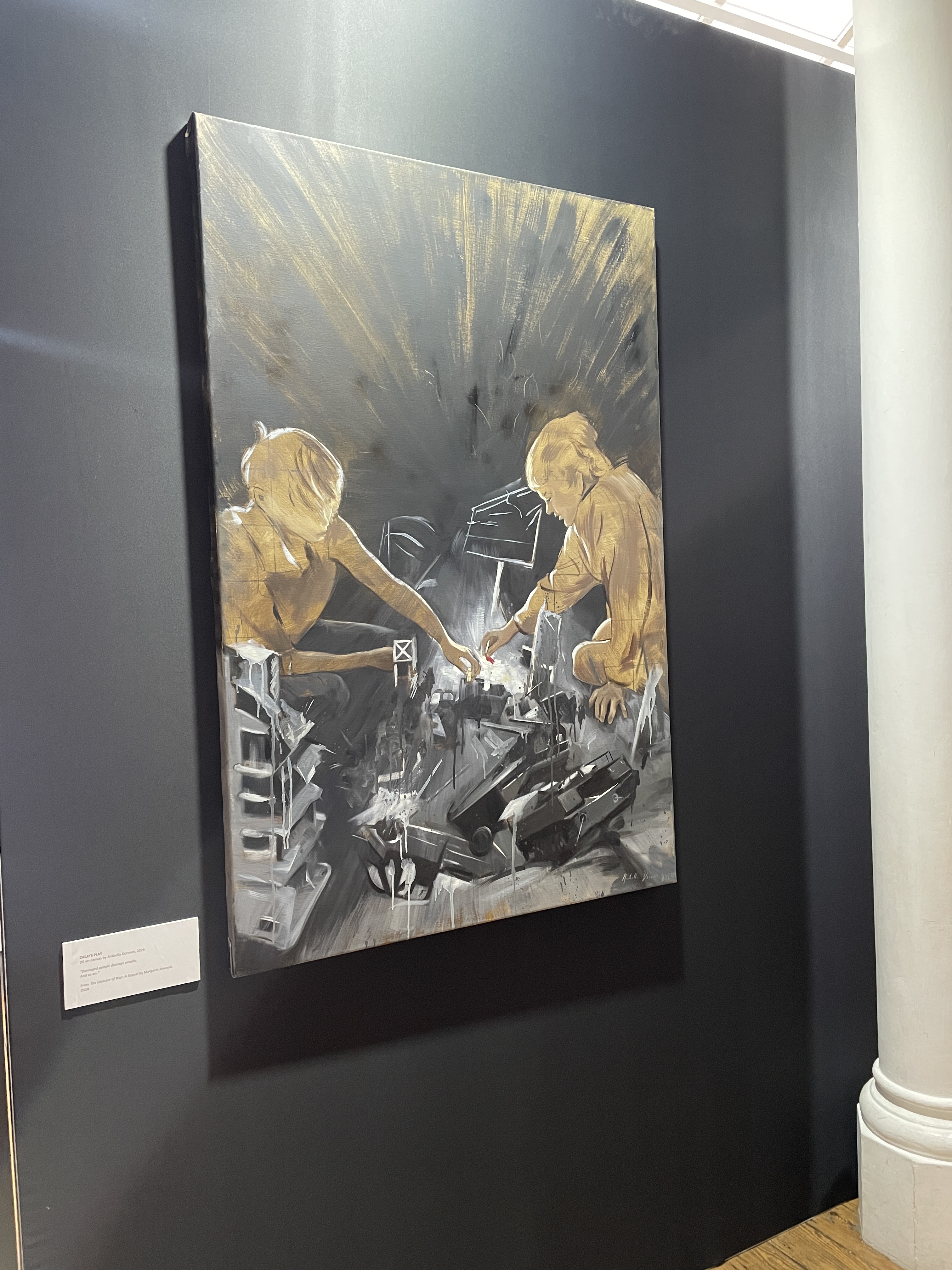
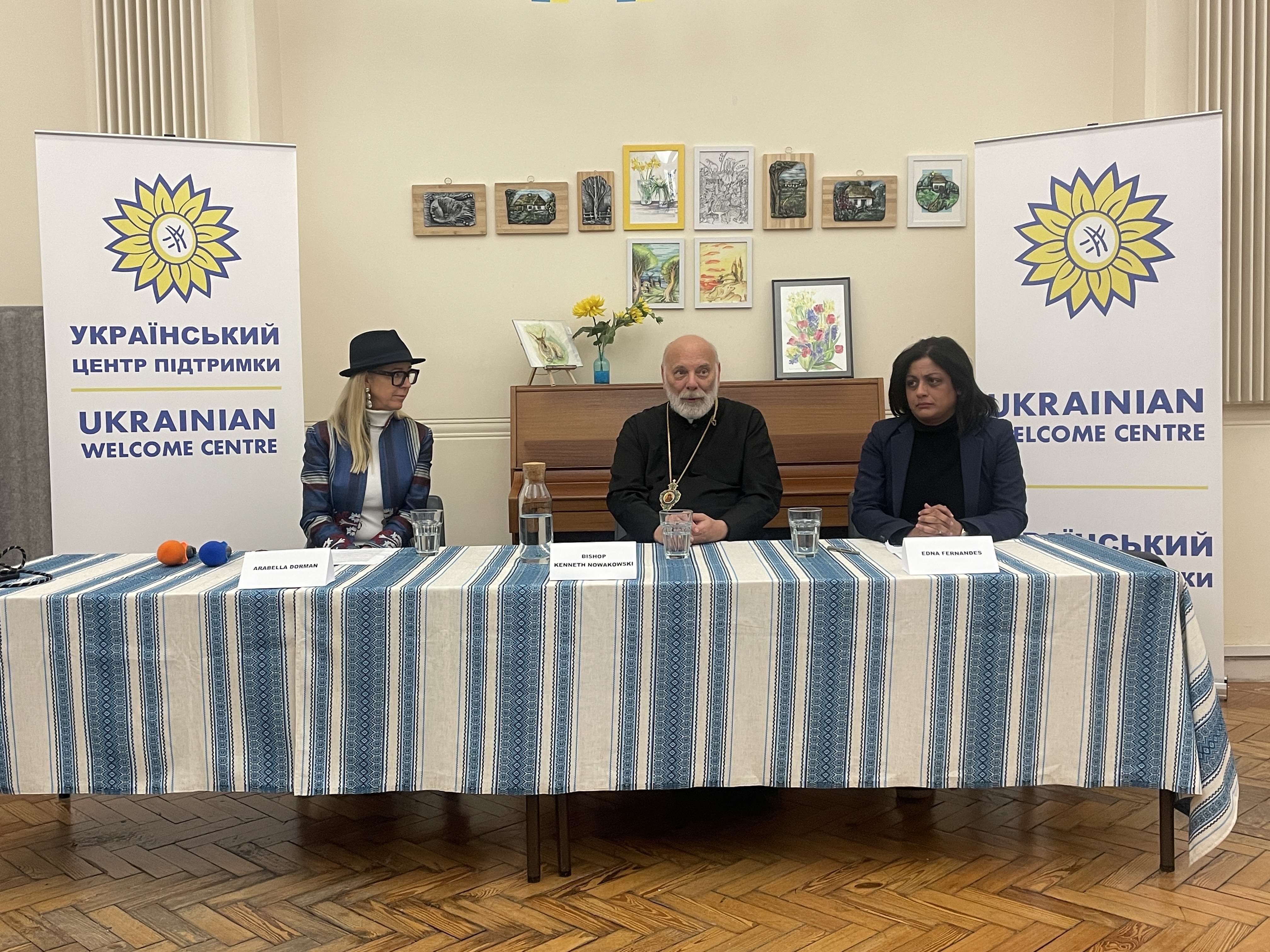
War artist Arabella Dorman called for more to be done to protect children caught up in war and conflict when she launched her exhibition ‘Child of War’ at the Ukrainian Catholic Cathedral in London this week.
Her powerful images, together with children’s paintings and the artefacts of war that make up the exhibition, present a grim picture of the suffering of children caught up in conflicts in Ukraine, Gaza, the Middle East and elsewhere: “In modern conflict children stand on the frontline … but it is not just about the trauma children suffer in war but also about the long term effects of that violence”, said Dorman.
“The suffering of children of children in war goes to the very heart of our humanity. It is time to heed that pain and act”.
She said the children’s paintings “offer a ray of hope”
“Children have this innate sense of dignity and strength … They dare to hope.”
The implications of the lasting impact on children were highlighted by Edna Fernandes, Co-founder of the charity Beyond Conflict, which is promoting the exhibition.
“Children can be condemned to repeat the cycle of horror they have experienced. This danger will reverberate through their lives and possibly be handed onto their own children.
“How can you rebuild peace if so many children are damaged in this way?”, she asked.
She called for tougher international action to safeguard children in war: “It almost seems that the targeting of children has become acceptable”.
Bishop Kenneth Nowakowski, the head of the Ukrainian Catholic Church in Great Britain, said being moved by the images of suffering is not enough: “It should not remain at the emotional stage but it should make us ask what else we in the UK can do to help these children.”
He said the UK had a proud record of welcoming people and highlighted the 220,000 plus visas issued under the Homes for Ukraine scheme: “This should be an example of best practice of how we can welcome strangers to the country.”
Dorman visited the area around Bucha, scene of some of the worst atrocities committed by the Russian forces during their initial assault on Kyiv in the spring of 2022, collecting stories from children which she has represented in many of her paintings. In addition, she brought back some of the lethal shards of shrapnel from a school in Hostomel, together with a collection of children’s shoes just abandoned in a classroom as the shells rained down and which now feature as part of the exhibition.

One of the most chilling paintings in the exhibition was inspired by a letter a nine year old girl, Galya, wrote to her mother who she had seen shot and killed in their car as they tried to escape the advancing Russians. Galya was hidden in the back of the car and was miraculously rescued by neighbours. This what she wrote:
“Dear Mama,
This is a present for you for the 8th March [International Women’s Day which was popularly celebrated as Mother’s Day in the Soviet Union].
If you think that you wasted your time bringing me up, then you are wrong.
Thank you for the best 9 years of my life.
Thank you very much for my childhood
You are the best Mama in the world. I shall never forget you. I wish you happiness in heaven! I wish you to go to paradise.
We shall meet in the paradise.
I shall try to behave well in order to get to the paradise.
I kiss you. Galya.”
Bishop Nowakowski recently returned from a visit to Ukraine and said he came back with a message for everyone in the UK: “When you go back tell people about us. Pray for us. And when we are no longer in the headlines do not forget us”.
• Child of War is on at the Ukrainian Catholic Cathedral, 21 Binney Street, London W1K 5BQ until 6 June. It is open from 10am to 5pm and is free of charge.
• Following its London debut, the exhibition will move to Berlin before returning to various locations in the UK.


About Arabella Dorman
Arabella Dorman is an award-winning, internationally renowned artist and one of Britain’s leading portrait painters. Dorman has painted members of the Royal family, senior military personnel and other high profile individuals.
As an officially accredited British war artist, Dorman has worked across the Middle-East since 2006. She has been embedded with the British Army in Iraq (2006) and Afghanistan (2009 – 2013). Her humanitarian work has taken her to Gaza, Palestine & Israel (2017) Lebanon, Syria (2018) and most recently, Ukraine (2023).

A few weeks ago I was privileged to be able to interview Alina Golubieva (pictured), who has spent the last four years establishing an insurance broking business in Kyiv. The interview was published in Insurance Post and they have been kind enough to allow me to publish it here so that more people can read it as it tells a powerful story of how resilience and hope are so much part of the Ukrainian DNA. The full interview can be downloaded at the bottom of this page.
It goes without saying that the war has hugely disrupted business in Ukraine, as Alina explained to me:
“We had a few clients in Kharkiv, we had clients in Kherson and in Mykolaiv, which wasn’t invaded, but still badly affected. And we had a lot of clients with employees in Mariupol as well. So basically, they relocated to either other parts, or we just saw the numbers there drop drastically.
“So, for example, one of our clients, they had about like 600 people in Kharkiv. Now it is only 50 people and 200 people are in other parts of Ukraine. Some of the people are relocated outside of Ukraine, but the war affected business immensely.
“There were layoffs. Some businesses couldn’t survive, because it affected them so much. And a lot of businesses now are moving their hubs outside of Ukraine, so they can support the business and support Ukrainians who want to relocate and still work for that company.”
You can read how this impacted her business and her predominantly female staff and how they have re-established a physical presence in Kyiv in a co-working office (see picture below). In a typical show of Ukrainian defiance the office complex is symbolically named Перемога (Peremoha) which means Victory in Ukrainian.


Much is being written and said about the potentially malign influence of artificial intelligence on elections, some of it very alarming. The main focus is on deepfakes – artificially generated pictures, audio and video – that are exactly what they say on the label: fakes and forgeries. Just how concerned should we be?
Some experts are keen to play down the threat, including Ciaran Martin, founding chief executive of the UK National Cyber Security Centre, part of GCHQ and is currently professor of practice in the management of public organisations at the Blavatnik School of Government, who I heard speak at a recent Association of European Journalists briefing.
He tried to be reassuring.
“A lot of this is not completely new. It is just that the technology has made it easier and it enables to spread faster … electoral interference in its current form has been going on for some time. It pre-dates AI by a hundred years.”
He cited the example of the notorious Zinoviev Letter which was published by the Daily Mail during the 1924 General Election campaign. It purported to show proof of connections between the Soviet Union and the British Communist Party and, by implication, the Labour government. It was later proved to be a forgery but its publication just four days before the election contributed to the Labour government’s substantial defeat.
He examined various recent examples from the UK, Europe and United States of attempts to interfere in elections, highlighting where several interventions, in his view, had failed.
The deepfake audio of the Mayor of London Sadiq Khan that was circulated around Remembrance Sunday last year was one example. This did not get much traction, argued Martin, primarily because his principal political opponents – The Conservative Party – and all responsible media outlets were not taken in by it and did not circulate it. That is true but perhaps a trifle naïve in assuming that significantly diminishes the risk of harm from deepfakes.
Given all political parties and their leading figures are vulnerable to this sort of attack there is a mutual interest in being very cautious about latching on to anything that looks or sounds suspect and exploiting it. The mainstream media is also learning quickly to greater care in verifying anything that does not come from an identifiable reputable source. That leaves plenty of scope for concern.
What about when social media is the dominant news outlet?
The growing proportion of people who rely on social media channels for their news is alarming. Several recent surveys have identified TikTok as the top source of news for Gen Z. In America it is increasingly popular as a news source for all generations, perhaps going some way to explaining the insanity of the US Presidential election race.
This brings us right back to the role of social media and the failure of all the major platforms to take responsibility for what is published on their platforms. They are publishers but have escaped nearly all the responsibilities that go with that role. It is fashionable to deride the “MSM” (mainstream media) but it is one of the key pillars of free, democratic societies. It is flawed. It is diverse. It does not always get things right or go about its role in ways that people find acceptable. But it is subject to the law and that law makes it ultimately responsible for what it publishes. Why are social media platforms not similarly regulated?
Recent moves such as the UK’s Online Safety Bill go some way but fall short of creating a mechanism powerful enough to stop the harm from deepfakes and other malicious online content, which goes far beyond the political sphere.
Of course, it would undermine their business model if they were treated as publishers as they would suddenly have to employ vast numbers of people to scrutinise and check content. Pre-publication verification would cripple them. That does not mean we should not be moving in that direction. Protecting society is far more important than protecting the business interests of the tech and social media giants.

Alongside that the MSM has to raise its game. Initiatives such as BBC Verify are a big step in the right direction. They bring to the fore what most media outlets have been doing for a very long time, helping reinforce the message that in this age of AI and social media you cannot always believe what you see and hear.The debate about the place of AI in society has only just started and we must not let its darker applications obscure the good it can do. Neither must we dismiss its potential to be used for nefarious purposes. Take away the outlets and you take away the incentives to use AI to cause harm and undermine our democratic processes.
• The images used in this article were generated using the AI tools in the Adobe Stock media library.

Two years since bombs and missiles started raining down on Ukraine and we are still waking up to reports of yet another bombardment of Ukrainian cities. People talk about the western democracies wearying as the war enters its third year. Think about how the people of Ukraine feel, both those still in their country – perhaps on the frontline – and those who have sought refuge elsewhere. They cannot afford the luxury of questioning the stubborn resistance to the Russian invasion: it is their country, their way of life, their culture that is a stake.
We have much at stake too. Democracy, freedom and the right of nations to determine their own future free from the threat of tyranny and repression. These are the values that are the foundations of western democracy. If we weary of standing by Ukraine and its people as it defends those values then we put our own way of life at risk, if not by way of brutal physical assault but through a degradation of everything good we stand for.
For some in our European family the threats are more physical and they know it. Look at the defensive lines the Baltic states are building along their borders if you want proof of the fear that stalks Europe as the spectre of Russian brutality casts its darkening shadow across our continent.
This is a European war and one that Europe may have to learn to fight alone, without the military might of the United States. Just when it is needed, America is becoming an unreliable ally, in danger of lurching back to the isolationism of the 1930s that Nazi Germany saw as a green light to invade its neighbours. Under a Trump presidency it could be even worse. He has already cast himself as Putin’s cheerleader. Far from being great again, America will be reviled by western democracies if it abandons them as Trump urges.
We are remembering Ukraine today because it is an anniversary but with the appalling conflict in Gaza hogging the headlines it has become easy to forget the suffering of the people of Ukraine. We must not let that happen.
• I was privileged to be part of a special Vespers for Ukraine at Brentwood Cathedral last night to pray for peace in Ukraine. It is a small contribution to supporting those, mainly mothers and children, displaced by the war and now part of our community, but one that is important nevertheless.
There were many Ukrainians in the congregation, some of whom read and said prayers in Ukrainian. We included several Ukrainian pieces of music in the service and the Ukrainians afterwards paid us the great compliment of saying we sounded like a true Ukrainian choir, mastering the sounds of their language and the deep feeling that the music embraces. I hope that gave them comfort in their fragmented lives far from home.

Photo: Graham Hillman
Slava Ukraini
This question has been gnawing away at me ever since the flurry of excitement across the London insurance market in the wake of Chancellor Jeremy Hunt’s promise to consult on the possibility of creating a special regulatory regime to attract captive insurance companies to London. I think we might be edging nearer getting an answer.
This week’s Labour charm offensive to the business community and financial services sector has offered a myriad of clues as to what their approach might be.
The promise by Labour’s shadow chancellor Rachel Reeves to “unashamedly champion” the financial services sector was rather overshadowed by the accompanying announcement that Labour would not reintroduce the cap on bankers’ bonuses. I am not sure what Labour thinks it has to gain by this. The ditching of the cap was one of the many controversial decisions made by the short-lived and disastrous Truss government. Reinstating it would be an obvious easy win for any party looking to place itself on the side of ordinary people battered by the endless waves of financial crises.
Championing the City of London and the key financial services sector makes more sense. Labour needs to keep capital and the business it generates in London if it is to deliver the financial stability lacking under the Tories in recent years and finance its commitment to restore public services.
This should mean that the captive insurance proposals developed by the London Market Group get a fair hearing if Labour forms the next government.
Where are the staff?
To deliver the huge benefits LMG and its supporters claim will take more than the creation of a more appropriate regulatory regime, however. That should be the easy part as there are plenty of models nearby. Luxembourg, Ireland and recently France have all shown how regulatory regimes for captive insurers can be accommodated within the rigorous European Union insurance regime. In the United States, Vermont has a thriving captive sector living alongside domestic insurers.
A key challenge so far little remarked upon will be staffing.
The London insurance market already describes itself as being in the midst of an escalating war for talent. The arrival of captive insurers will exacerbate the already alarming skill shortages across the market. It will also push up wages, blunting some of the appeal of London as a new captive domicile.

Of course, one solution that could ease that would be to restore the free movement of people across the EU. This would probably have to be part of setting the UK on a trajectory to rejoin the Single Market which would never be acceptable to a Tory Party still blighted by deep splits over Europe but could find more favour with an incoming Labour government. This would not be undoing Brexit as the extremist anti-EU elements inside and outside the Tory Party claim. The Single Market was not on the Brexit referendum ballot paper and leaving it should never have been part of the Brexit settlement.
To make the captive insurance market plan work is going to require an engagement with bigger issues than tweaks to the City’s regulatory regime.

This is the year of the ballot box. Over 50 national elections involving a potential 4 billion voters going to the polls are due to take place this year. They could leave the world looking rather different by the end of the year.
The potential of one set of elections to influence the next is endless, especially as they are taking place at a time of heightened geo-political tensions.
United Kingdom
Of course, for us in the United Kingdom we are most focussed on our own General Election which must at least start in 2024, although it could still be running in January next year. That prospect seems unlikely. The big question is: will it be May or will it be in the autumn?
That this is the dominant political story in the UK, exposes one of the huge shortcomings of our political system – placing the power to determine the date of the General Election in the hands of the Prime Minister. The corrosive impact of the uncertainty this creates has long been recognised but the attempt to introduce fixed term, five year Parliaments did not outlast the Coalition government of 2010-15.
We have now entered a phase where every political decision, every utterance by party leaders and every policy announcement is judged in terms of its impact of the potential date of the election and its outcome. This does not make for good government, although that is something the Tories abandoned long ago amid the post-Brexit chaos of five Prime Ministers in seven years.
The choice for Sunak seems to be about choosing a date that causes the Tories the least damage in terms of lost seats, as any prospect of holding on to power finally vanished when his hapless predecessor crashed the economy in September 2022. It is also being heavily influenced by the open manoeuvring around the Tory leadership after the anticipated defeat.
The UK election might be important to us: however, it is a sideshow when it comes to world politics.
Taiwan The first date on this roller-coaster of what could be a series of epoch shaping elections is 13 January, when Taiwan – the Republic of China – goes to the polls. There the battle between the ruling Democratic Progressive Party (DPP) and the main opposition Kuomintang (KMT) is about more about tone when it comes to the all-important subject of Taiwan’s independence and its future relationship with the increasingly aggressive People’s Republic of China. Under Xi Jinping, China has made what it sees as the reunification of China a priority despite the overwhelming majority of Taiwan’s 23.5 million people rejecting the idea.
The DPP has a more forceful approach to Taiwanese independence than the KMT and a maverick third party, the Taiwan People’s Party. China’s notorious propaganda machine has flooded the country with fake news, deepfake videos and wave after wave of disinformation primarily aimed at undermining the DPP.
If there is one theme that links all these elections it is the potential of disinformation campaigns, fuelled by the lax policies of the main social media platforms, to undermine democratic processes.
Should the DPP’s candidate Lai Ching-te succeed despite China’s disruptive efforts then we can expect an escalation in tensions in the South China Sea with Communist China stepping up its military aggression towards Taiwan. The world could quickly find itself balanced on the knife-edge of a wider conflict, testing America’s policy of “strategic ambiguity” to its limits.
Russia
The one so-called election that we can be certain of the outcome is the Russian Presidential election in early March. Putin will win by a landslide majority. He has murdered, exiled or imprisoned the opposition but will still claim the election result as a rousing endorsement of his attack on Ukraine.
Ukraine This is the election that will probably not happen. A week after Putin is carried back into the Kremlin in triumph, Ukraine was due to hold a Presidential election. All elections in Ukraine are currently suspended under the martial law imposed when Russian forces rolled across the border in February 2022.
There is nothing unusual about countries suspending elections in wartime. The UK did it twice in the last century and it is hard to see how fair and free elections can be held when Russia occupies part of the country and much of the essential infrastructure of elections has been damaged or destroyed, but Russia and its supporters will be bound to exploit this for their own propaganda. Hardliners in the US Republican Party opposed to supporting Ukraine are already making noises about the cancellation of the elections as being another reason to abandon Ukraine.
Europe The European Parliament elections will take place in mid-June and are currently predicted to see a strong showing among far-right parties across the continent. This will probably not be enough to depose the centre-right European People’s Party grouping as the largest party in the Parliament but will tilt the balance in the Parliament in a strongly rightward direction, giving a much enlarged platform to parties with strong neo-fascist elements in their ranks.
This, in turn, will influence to complexion of the European Commission at a time when the EU faces crucial issues around enlargement and continued support for Ukraine. It will also feed through to important national elections in subsequent years, not least the next French Presidential election in 2027.
United States of America By the time America goes to the polls in November, the impact of the elections in the first half of the year will have fed through to its highly polarised politics. This far out it is hard to predict what the impact of that might be, especially as the identity of the Presidential candidates is not certain, although most commentators still predict a re-run of the Biden v Trump contest of four years ago.
The world will be watching nervously as the Presidential election progresses as outside of Republican America and the Kremlin the prosect of a second Trump Presidency is almost unthinkable and certainly highly undesirable.
The Rest
There are plenty of other national elections due to take place next year, not least in the world’s largest democracy, India. As we have recently seen with Argentina, populations are so disillusioned with mainstream politicians that they are sometimes inclined to make bizarre and disruptive choices. Add to that volatile mix the possibility of unscheduled elections in countries like Israel and we can see why the ballot box will be so important this year.
I was delighted recently when the distinguished Washington correspondent Llewellyn King asked me to join him and his fellow presenter, Adam Clayton Powell III, on their popular White House Chronicle programme to talk about what happened in France in June 1940 after Dunkirk fell to the Germans on 4 June.
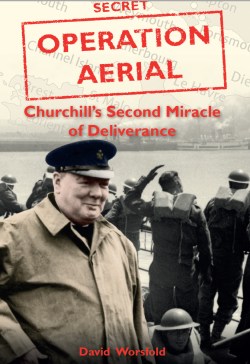
This, of course, is the subject of my recent book – Operation Aerial: Churchill’s Second Miracle of Deliverance.
The challenge was to pick out some of the stories in the book that would be most likely to appeal to a North American audience. Fortunately, there are several angles that are either universal, such as the sinking of the Lancastria at St Nazaire, feature America journalists, such as the redoubtable Virginia Cowles, or regiments from Canada.
You can watch the result as White House Chronicle kindly gave me permission to share it widely.
The book would make an ideal Christmas present for anyone interested in WW2 history. The complex – and previously untold story – is made accessible by telling it through the voices of the people who were involved.
It is available in hardback or paperback from the publisher Sabrestorm, all good bookshops and on Amazon.

Lloyd’s announcement this week that it is going invest £12m in a series of initiatives to support recruitment and career progression for black and minority ethnic staff, in a programme called Inclusive Futures, as part of its response to the market’s historic involvement in the slave trade has been met with a mixed response.
This follows extensive research by Black Beyond Data, funded by the Mellon Foundation, a project based at Johns Hopkins University in Maryland, USA, which was initiated just over three years ago when the Black Lives Matter movement cast new light on the involvement of London’s powerful financial institutions in financing, supporting and perpetuating the slave trade.
To no-one’s surprise it found that Lloyd’s played a significant role in that vile, brutal and inhumane trade.
In addition to £12m going into Inclusive Futures, Lloyd’s says US$50m (£40m) will be invested globally through the African Development Bank and Inter-American Development Bank focused on “regions affected by historical enslavement”. We await greater clarity on what that means.
Other initiatives include establishing a permanent memorial at Lloyd’s to remember the victims of transatlantic slavery, sponsoring a requiem by composer David Önaç to memorialise enslaved Africans, and inaugurating an annual lecture to be given by speakers on diversity and history – the Flint Lectures – named after the first black broker to work at Lloyd’s.
This is good as far as it goes.
It has run into predictable criticism from some campaigners who want institutions that benefitted from slavery to pay reparations directly to the descendants of slaves. This sounds laudable in principle but would be fraught with difficulties and could see a lot of money spent on administering what would inevitably be a highly complex scheme. The passage of time, coupled with the patchy historical records would mean that identifying the right people and fairly allocating money would be almost impossible.
Is £12m enough? I don’t know the answer to that. It seems a very modest sum considering the extent of its involvement in the slave trade and the wealth of the modern insurance market. I think the pressure to increase that investment and extend the scope of its Inclusive Futures project could well see it increase.
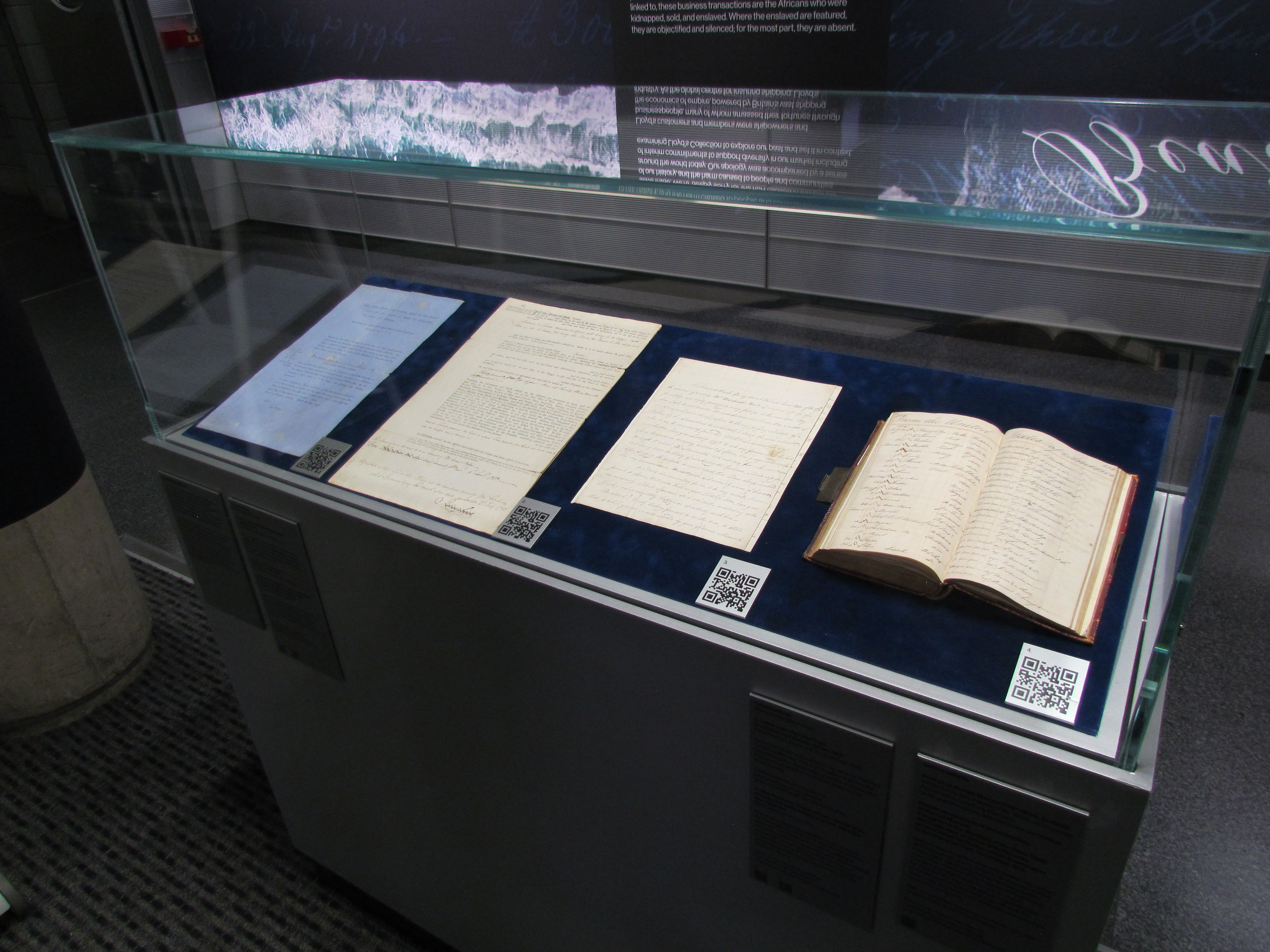
Lloyd’s has done a good job in laying out its past, much of which can be viewed in an online exhibition called Underwriting Souls. There is also a modest physical exhibition in the Lloyd’s building for those who work there to visit.
The big omission, and one that I have raised before, is the lack of any connection to slavery today.
Modern slavery is a serious problem. There are clear definitions of it and far too many examples around the world, the most serious, and probably the largest, being the Uyghurs in Xinjiang province in China.
It is all very well making an effort to acknowledge the part the London insurance market played in facilitating slavery 250 years ago but what if we are repeating that crime now? How will our descendants judge us if we stand by and do not ask serious questions about the way some of the businesses that are insured into Lloyd’s operate and their involvement in modern slavery?
They will judge us harshly, and rightly so.
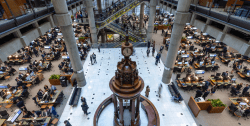
Lloyd’s has decisively put to bed the speculation that has been running since the Covid pandemic lockdowns that it might leave its present Lime Street HQ. Earlier this year it finally stopped the persistent rumours that it might exercise the 2026 break clause in its lease. Now, the market authorities have said they are looking to extend the lease beyond its current end in 2031. This is not just talk. They have backed their words with investment in the main underwriting floor which re-opened recently after a major summer re-fit.
This should be welcomed by everyone who cares about ensuring London maintains its key position in the global insurance market.
Some people forget that Lloyd’s is merely a tenant in its own building. Although it commissioned the building on the site of an older Lloyd’s building from the 1920s, it no longer owns it. It was first sold to Commerzbank for £231m in 2005 before Chinese insurer Ping An paid £260m for it in 2013. The current lease extends to 2031, with that now dismissed break clause in 2026.
It is an iconic building, designed by Richard Rogers and once damned with faint praise to me by Alan Lord, the market’s chief executive when the building opened in the mid-1980s: “If you look around London at the buildings constructed since the war it makes every other office look as about as innovative as an igloo. You might love it or loathe it but you cannot be neutral about it.”
Over the subsequent decades most people have at least come to appreciate it, if not love it. It is seen the world over as the Lloyd’s building, the only truly distinctive building associated with the insurance industry in the City of London. Although people may argue that a physical presence in the City is less important in this digital age, it still sends out a clear message about the importance of the insurance industry to the fortunes of the City and, in turn, the UK economy.
The faith being shown in the building is more than affection for an important architectural feature of the City of London. It says Lloyd’s believes it has an important part to play in the market’s future – a future that also includes significant investment in a wide range of digital initiatives. It is now up to insurers, underwriters, brokers and everyone who does business through London to show they, too, are committed to that vision of a varied future.


