

It’s not Aviva managing the risk of regulatory reforms that worries me but the risk of less reputable firms taking advantage of lower standards to rip-off unsuspecting consumers. Less well managed and risk aware firms also have the potential to threaten the stability of some sectors. Surely, the recent crisis among pension funds caused by the government’s misguided September mini-budget reminds that we are only ever one step away from financial disaster.
Commenting on the government’s so-called Edinburgh Reforms, Aviva’s CEO, Amanda Blanc, is reported as saying “risk goes up when rules are relaxed, and all of us in financial services and beyond should identify and manage those risks all the time … The way to address risk is to understand it, and manage it, not necessarily to try and freeze it with immovable laws”.
Few will doubt that firms like Aviva will live up to this but what about the firms that do not? The likes of Aviva cannot control them or the reputational risk they would pose to the entire insurance and financial services sector.
Woven into all the reforms the government has tabled are too many proposals that the reckless or just plain unscrupulous could take advantage of.
Take the suggestion that in the reforms to Solvency II, regulatory hurdles could be lowered for new entrants into the UK insurance sector. This has danger written all over it.
Does the UK really want to become another Gibraltar, where over a dozen insurers selling into the UK market have collapsed in the last decade? As they get excited about the prospect of widespread regulatory relaxation and urge the government to go further, the bosses of the major financial institutions need to pause and ponder the risks they might be exposing the sector’s customers to, and the reputational damage that would flow in the wake or similar problems.
There is certainly a need to make regulation more efficient, especially by speeding up processes, but lowering standards offers illusory benefits.
Further away from EU equivalence
The proposed reforms also move the UK further away from any hope of establishing equivalence with European Union rules for any part of the financial services sector, a point made at the same event by private equity boss Guy Hands. He warned that the equivalence “horse bolted back in 2016” and that regulatory reforms would not reverse the decline of the City of London and its financial services sector.
This points to the naïveté that lies at the heart of the Edinburgh Reforms. “Opening up the UK” and making the financial services sector more competitive carries risks that people seem to be blind to. I would be more impressed if the industry’s bosses acknowledged these and talked more about how they will protect customers from the potential downsides.
It goes deeper than that, however. We can make it easier for people to set up financial businesses in the UK but why would they want to? We cannot offer them access to other markets, especially in the EU. The strengths that were once unique to London or shared with only one or two other major financial centres are, as Hands points out, gradually ebbing away.It will take more than regulatory relaxation to reverse that and attract new fintech-led businesses to the UK. It requires a complete political re-set to re-engage commercially with our major markets. There is little sign that this government has grasped that need.

The curtain comes down on a 182 year publishing story this month as Insurance Post publishes its final print edition. While new editor Emma Ann Hughes sets out a bright digital future for this historic title, it is hard not to feel a moment a sadness that we will not see Post in print again.
It is a story that started in July 1840, a few months after the introduction of the Penny Post – and it is a story of innovation. Post Magazine, as it was known for most of its history, was the first magazine in the world distributed by post. That spirit of innovation is now carrying it into the digital age.
I look back to my period as editor and then editor-in-chief in the 1980s and 1990s with great fondness. In those pre-internet days Post Magazine broke the big news stories of the week for the insurance market when it hit the desks and the newsstands in major insurance centres every Thursday morning. Many weeks saw us publish 80-page plus issues, often with accompanying supplements on special topics.
Press day was Tuesday and it was often stressful, frequently dragging on well into the evening as every deadline was stretched to get the latest news in. Phone calls to and from the printers waiting for sign off became ever more agitated as the minutes ticked away. Now publishing is instant with a continuous flow of news appearing on websites. For journalists this produces new stresses but it does not entirely replace the camaraderie and excitement of press day.
A large part of each weekly issue was the recruitment section, packed with job adverts. For many people, this was the first section they turned to every week. It was also the first section to change as the digital age dawned in the 1990s. When job advertising started to go online we knew the commercial dynamics of publishing a weekly industry magazine were changing for ever. Post moved quickly to defend its revenues by launching InsuranceJobs.com but it was revenue lost to the print edition.
As news went online, the inevitable decision was taken in the last decade to take Post monthly and change its title from Post Magazine to Insurance Post, an acknowledgement that it was now more than just a print brand and would one day perhaps only be a digital publication.
The Covid pandemic hastened that transition. It flipped many companies overnight into remote operating and we all know the return to offices has been slow and the world of work has changed for ever. I met some contacts for lunch in the Brokers Wine Bar in Leadenhall Market one Friday a couple of weeks ago. Meeting people for lunch seems an old-fashioned concept to some people but imagine my surprise when I was told that it closed at 3pm on a Friday. Of course, Thursday is the new Friday in the City now.
That just underlines how much the world of work has changed. Faced with a rapidly diminishing number of firms that want to order print editions of Post for their offices, the publishers have decided that the production resources required to produce a print edition can be better deployed on enhancing the digital proposition.
While that all makes sense, it is hard not to feel a few pangs of regret, some would say nostalgia.
There are some things that will be lost, and not just the rhythm of the journalists’ week. There is a physical and visual pleasure of handling and reading print. There is a serendipity of browsing through a print publication and something unexpected catching your eye that is hard to replicate online, especially as algorithms always insist on pointing you to similar content. You also lose a sense of history. Pick up a copy of Post Magazine from a 180 years ago and you get a glimpse of commercial life in Victorian England. Pick up a copy from 100 years ago and you get a genuine sociological insight into how a major industry and the people who worked in it were recovering from the ravages of the First World War. That cannot easily be replicated digitally where you search for specific content with intellectual blinkers on.
To balance that there are many advantages of creating and distributing content digitally that will continue to multiply.
The curtain may have come down on one act in the story of Post but that story goes on, as it does for many other long-standing business publications.
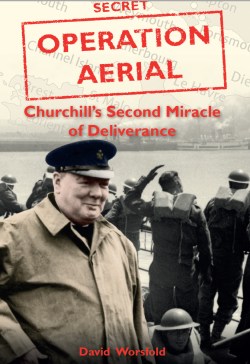
Since the publication of Operation Aerial: Churchill’s Second Miracle of Deliverance in the summer many people have asked me what inspired me to write it.
The answer goes back to my earlier book, Fighting for the Empire, which is a life and times biography of Thomas Kelly, a doctor from Galway who spent 50 action-packed years in a British uniform. He also happens to be my wife’s grandfather.
In the middle of June 1940, at the age of 70, he was serving as ship’s surgeon on the SS Madura which was re-directed into Bordeaux while returning from East Africa. This surprised me because like most people I thought when Dunkirk fell in the early hours of 4 June we were out of France. My father was a driver with the British Expeditionary Force and came home through Dunkirk so I have always taken a keen interest in that phase of the war but never realised just how extensive the evacuations after Dunkirk were.
My quest for a book to explain what happened after Dunkirk drew a blank, so when I finished the Kelly biography I vowed to fill that gap.
There are a couple of decent military histories, which are very detailed and thorough, but they only deal with the military aspects of what happened during the rest of June 1940. There are also two books that list the ships involved in the post-Dunkirk evacuations with some narrative. All of these are credited in my book.
However, there was nothing that drew both aspects together, let alone covered the stories of the 25,000 British civilians living and working in Belgium, Holland, Luxembourg and France when the Germans attacked on 10 May. They were left to their own devices and fled south in the hope of finding safety and deliverance from the Nazi menace.
Pulling all those aspects together was a huge challenge.
There is a wealth of excellent literature on Dunkirk but it is a relatively easy story to tell because it is linear. It is linear geographically because it eventually focusses on a single port. It is also linear chronologically because it can be told day-by-day with few complications.
Operation Aerial is just the opposite.
It is hugely complicated, sweeping round the Brittany peninsula, all the way down the Biscay coast to the ports on the Spanish border and eventually to the French Riviera. The evacuations from the many ports involved also overlap, so a simple chronological treatment would not do the story justice and would probably lose the reader.
There was a period as my researches were nearing completion when I wondered if I could find a satisfactory way of telling this complex story. I struggled for a while with various options but eventually found a way of organising the content that I hope gives the reader a coherent picture of what happened to bring home another 250,000 people from France in June 1940.
I hope by telling the story of Operation Aerial I have filled a gap for people, especially those who had relatives stuck in France after the evacuations through Dunkirk were brought to an end but, until now, have not had a clear picture of why, what was happening and how they eventually found their way back to England.
• Operation Aerial: Churchill’s Second Miracle of Deliverance is available from the publisher Sabrestorm, Amazon and all good bookshops.
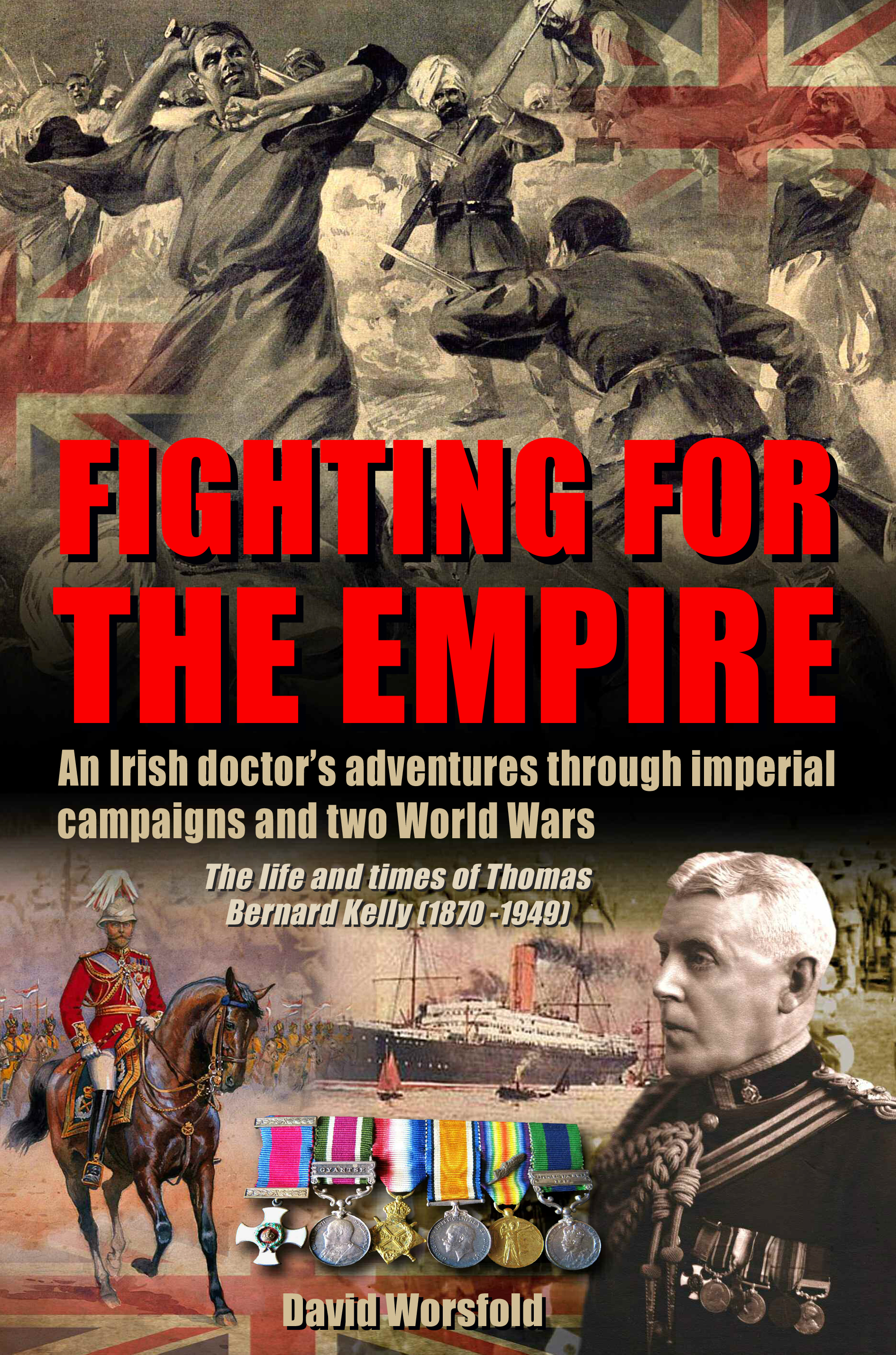 • Fighting for the Empire is also still available on Amazon at a ridiculously low price in the run-up to Black Friday!
The last few weeks have surely demonstrated to anyone still with a grip on reality that the Conservative Party is no longer fit to govern. It is broken. It is deeply divided and incapable of electing a competent leader. It has put in office a government of breathtaking incompetence.
It is so totally divorced from the reality of its own plight that there is serious talk of replacing the leader it has only just elected. It is already on its fourth leader – and Prime Minister – in a little over six years. Now some senior members of the party think the country should have a fifth Prime Minister of their choice inflicted on the country. That fact alone should tell you this is a party no longer fit to hold office.
That is barely the start of the charge sheet to be held up against the Conservative Party.
There have been many governments in my lifetime that I have profoundly disagreed with on policy but I now realise had the saving grace of being competent, and capable of pursuing their agenda effectively. Perhaps we all took for granted that those at the top of major parties were capable of holding senior government posts and exercising their responsibilities seriously, listening to experts and making informed, coherent decisions. Maybe it is one of those things you do not notice until it is gone. Gone it is.
Abyss of incompetence
The succession of Prime Ministers the Conservatives have inflicted on the country since David Cameron ran away from responsibility for the outcome of the Brexit referendum has been a decline into a grim abyss of incompetence. May to Johnson and now Truss. Every time the country must have hoped for better, only to get worse.
The Conservatives took two months off from the job of running the country to elect a new leader and the best they could come up with was Truss. That really tells you all you need to know about the state of a once great party. It was always obvious to sane observers of the UK political scene that she was going to be a disaster but no-one could have expected her government to implode within weeks of taking office.
The day she was elected the Tories probably kissed goodbye to their chances of winning the next election. Now, they will be doing well to escape electoral obliteration: defeat is certain. We may even be witnessing the death throes of the modern Conservative Party. In opposition the blame game between its warring factions may grow so bitter and intense that they part company with each other.
The country is crying out for competence in high office. Labour may have an uninspiring leader but at least he looks like a safe pair of hands and Starmer’s frontbench increasingly looks like a government-in-waiting.
Long wait for relief
The problem is we may have to wait until 2024, even until the last possible date for the next General Election of 23 January 2025, to put the Conservative Party out of its misery. Imagine the damage Truss’s gaggle of bumbling clowns will have done to the country by then.
We are in unprecedented times, however. We cannot write-off the possibility that this government will collapse into as yet unforeseen chaos that leads to a General Election much sooner.
We can only hope.

It is hard to believe that a Prime Minister who just two months ago was forced out of office amid unprecedented chaos, as the government disintegrated and ministers deserted him in droves, could possibly return to 10 Downing Street. Yet, as the interminable Tory leadership contest dragged on during the summer this possibility bubbled up to the surface. Even as Liz Truss was today confirmed as the choice of Tory Party members to lead them, speculation about Johnson’s return refused to subside.
To those of us with a grip on reality this seems beyond absurd.
It is, of course, a huge vote of no confidence in Truss before she has even made her first Cabinet appointment. Some are describing it as “buyer’s remorse”. Perhaps “buyer’s amnesia” might be a better description. Can a significant number of Tory MPs and members really have forgotten the shambles that Johnson tried to pass off as a government just two months ago? Can they have forgotten the lies, the lurching from self-inflicted crisis to self-inflicted crisis? Can they have forgotten the slump in the opinion polls and the dangerous (to the Tories) resurgence of the Liberal Democrat vote in local authority and Parliamentary by-elections?
They are clinging to the belief that Johnson wins them elections, obviously realising that Truss is more likely to be an electoral liability than an electoral asset. But surely the Johnson magic has gone, washed away in a torrent of scandal and incompetence?
The most alarming aspect of this delusional nonsense is the attempt to advance comparisons with Winston Churchill by pointing out that he had two separate terms as Prime Minister. This comparison lacks any credibility.
Churchill was elected out of office by the Clement Attlee-led Labour Party in a landslide election victory in 1945. He stayed as leader of the Conservative Party, leading the party to a narrow defeat in a General Election in February 1950 before returning to office in October 1951. He voluntarily retired as prime Minister in April 1955, having led the Conservative Party for 15 years.
Simply no comparison.
For a party that likes to bang on about the need to teach British history in schools, it seems many of its members have a woefully poor grasp of some of the basic facts of our political history.
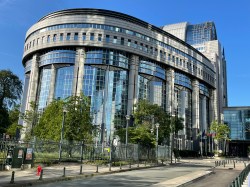
The Association of European Journalists seminar on media freedom and the implications of the war in Ukraine held in the European Parliament on 16 June was a real eye opener for a Brit expecting to spend most of his time apologising for the mess his country has made of its relationship with the European Union.
Brexit was barely mentioned.
Russia’s barbarous assault on Ukraine has changed everything. It has changed the priorities of the European Union and its member states and it has changed their attitude to Britain.
The Baltic states and those countries most threatened by Russian Imperialism now look to the UK as a stalwart ally. They are quick to praise us for matching our words about standing with Ukraine with weapons and tougher sanctions than the EU has put in place. Indeed, the UK was used by some speakers at the one-day event as an exemplar against which other major European powers must now be judged – and have been found wanting.
The war in Ukraine has also changed key elements of the EU’s agenda, especially around the long-standing ambition of many in the EU to form a European Defence Force.

The flamboyant Belgian MEP Guy Verhofstadt (pictured centre) came close to ridiculing the concept. He said Europe was made up of “27 different armies that like to give the impression they work together” but find it almost impossible to do so because of the duplication of weapon systems and their incompatibility. He said across the EU there were 130 major weapon systems compared to just 25 for the vast US military machine.
“Common defence procurement would be a start but the 2% target [of GDP] is only worth achieving if you solve the problem of duplication and compatibility”, said Verhofstadt.
NATO is the key to the defence of Europe with the aim being to strengthen the European pillar of NATO.
This was taken up by other speakers. Austrian MEP Hannes Heide said “NATO is the future. European defence is in the hands of NATO for the immediate future”.
Defending liberal democracy
Roland Freudenstein, vice-president of the GLOBSEC think-tank and head of GLOBSEC Brussels went further: “NATO needs to evolve into a world organisation defending the interests of liberal democracy worldwide”.
He painted a bleak picture of a world where liberal democracy is in retreat, warning of the threat China, in particular, posed: “We have already given up on Hong Kong. Tomorrow it could be Taiwan”.
Throughout the day, the role of a free, independent media in these conflicts was a central theme with an acknowledgment that information was now one of the five battle spaces of international conflict, along with land, sea, air and space. There were many powerful contributions to the sessions on media freedom, which have been covered by AEJ media freedom representative and AEJ-UK chair William Horsley.
The praise for the UK’s strong stance was also frequently evident whenever the discussion moved onto the impact of sanctions, with speakers urging unity and resilience in terms similar to those Boris Johnson has been using in this week of summits around Europe.
“What is solidarity if you don’t suffer yourself?”, asked Verhofstadt, as he urged quicker and tougher action against the import of Russian oil and gas. On a day when the UK announced it was extending its list of individuals being sanctioned, including the Russian Orthodox Patriarch Kirill, Verhofstadt said the EU was being far too timid. He produced a thick file of papers which he said contained details of 6000 people “who are the backbone of Putin’s regime” and who should be sanctioned immediately.
The Lithuanian ambassador to EU, Arnoldus Pranckevicius, also picked up the need for the whole of Europe to display “increasing democratic resilience”, adding “This is not the moment to feel comfortable. We are all in this together”.
Quoting Churchill
The changed attitude of many Europeans towards Britain was underlined in the final session discussing Ukraine’s future in the EU, a crucial session in the days before the EU decision to accept its candidature. I challenged the Slovak MEP Ivan Stefanec to define what he meant when he said Ukraine must win the war. Did he mean that there would just be a ceasefire leaving large parts of Ukraine under Russian control, was it a return to the pre-24 February boundaries, or a restoration of Ukraine’s full territorial integrity on the pre-2014 borders?
His answer was clear: full territorial integrity as “anything less would be appeasement”. He concluded by paraphrasing Winston Churchill – not the first time he had been mentioned during the day – saying “We don’t want peace. We need victory”.
Who could have imagined MEPs quoting Churchill back at a British journalist? It seemed to sum up the change of mood in Brussels.
When I tell people my new book on the post-Dunkirk evacuations from France in June 1940 is now out they often look slightly bemused, as if to say: What evacuations?
When Dunkirk fell on 4 June, tens of thousands of troops and British civilians were still in France. By the end of June, a further 250,000 people had been brought back to the United Kingdom.
This is a story of incredible resourcefulness, simple courage and remarkable heroism – spiced up with controversies and cover-ups – that has never been fully told and that is what Operation Aerial: Churchill’s Second Miracle of Deliverance is all about.
I don’t blame anyone for knowing little about it.
My late father, a driver with the British Expeditionary Force, went to France in the autumn of 1939 and returned to England through Dunkirk a little more than six months later. Like many Brits, that gave me a fascination with Dunkirk and Operation Dynamo. It also led me to fall into that trap of thinking it marked the end of large-scale British involvement in France until the D-Day landings four years later.
It is a misconception widely held and reinforced every time an episode of Dad’s Army is shown, with its opening graphic that ignores the huge numbers of troops still in France when that little Union Jack arrow defiantly retreats across the English Channel. There should still be another Union Jack firmly planted in France, south of those lines showing the German advance.
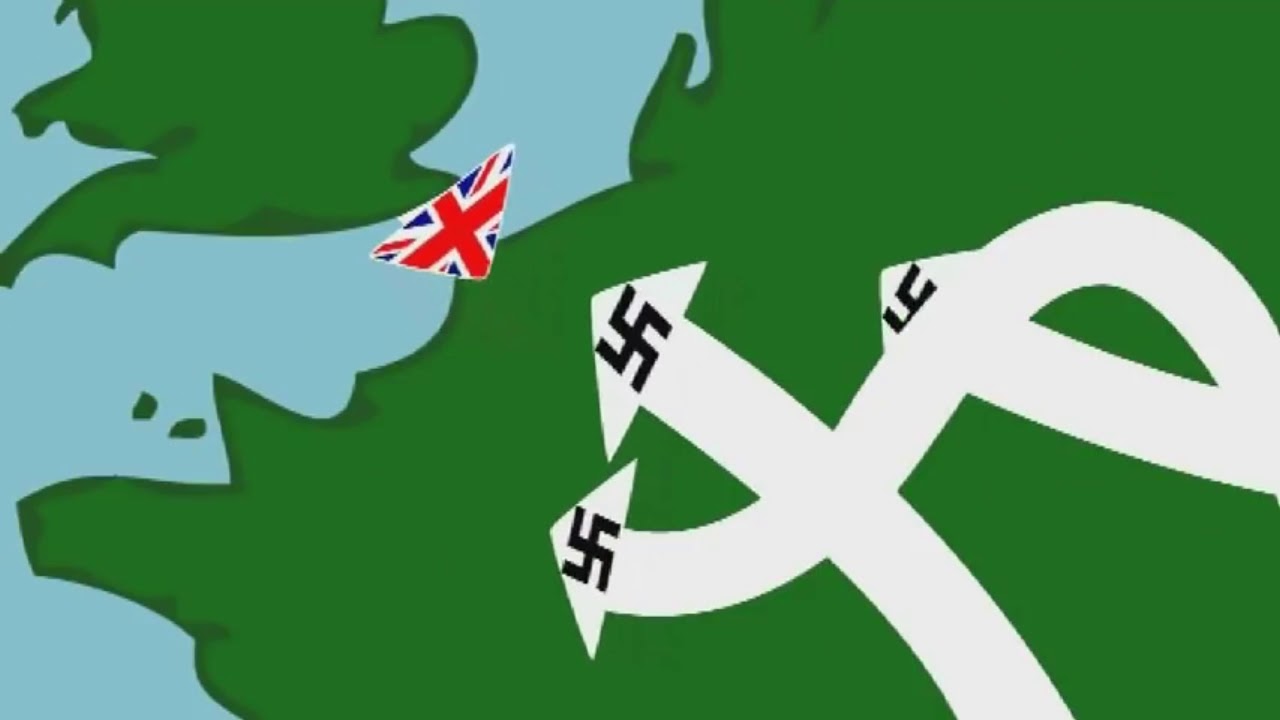
This book is about that Union Jack and how the people – troops and civilians – it should have represented, escaped from France.
It is about the thousands of ordinary soldiers and civilians who struggled through the chaos, confusion and disintegration of France to get back home so they could continue the battle against Hitler. It is about the nurses on board hospital ships, the demolition teams that stayed and those who never made it, such as the thousands who died when the Lancastria was sunk at St Nazaire, or those who surrendered with the Highland Division at St Valery. It records the role of the Polish and Czech troops still fighting in France in June 1940 and the spiriting out of the world’s supply of heavy water from under the noses of the Nazis by an eccentric British aristocrat.
It is a complicated story but a very human story and it is the voices of the people involved that bring it alive.
It is my attempt to fill a gap in the history of the Second World War. I hope people will find it as rewarding to read as I did to research and write.
• Operation Aerial: Churchill’s Second Miracle of Deliverance, published by Sabrestorm.
Hardback, 270pp
ISBN 978 1781220221
RRP: £20.00
• I am available for talks – in person on online – on any aspect of the story of Operation Aerial. Please get in touch if you are interested.

The barrage of briefings over the weekend from senior Conservatives against the Bank of England and its Governor, Andrew Bailey, over the Bank’s role in the inflationary crisis that is buffeting the UK economy seem to have little to do with economics and a lot to do with politics. It will certainly make for an interesting session of the Treasury Select Committee today.
Is the criticism fair?
Some of it can be easily dismissed.
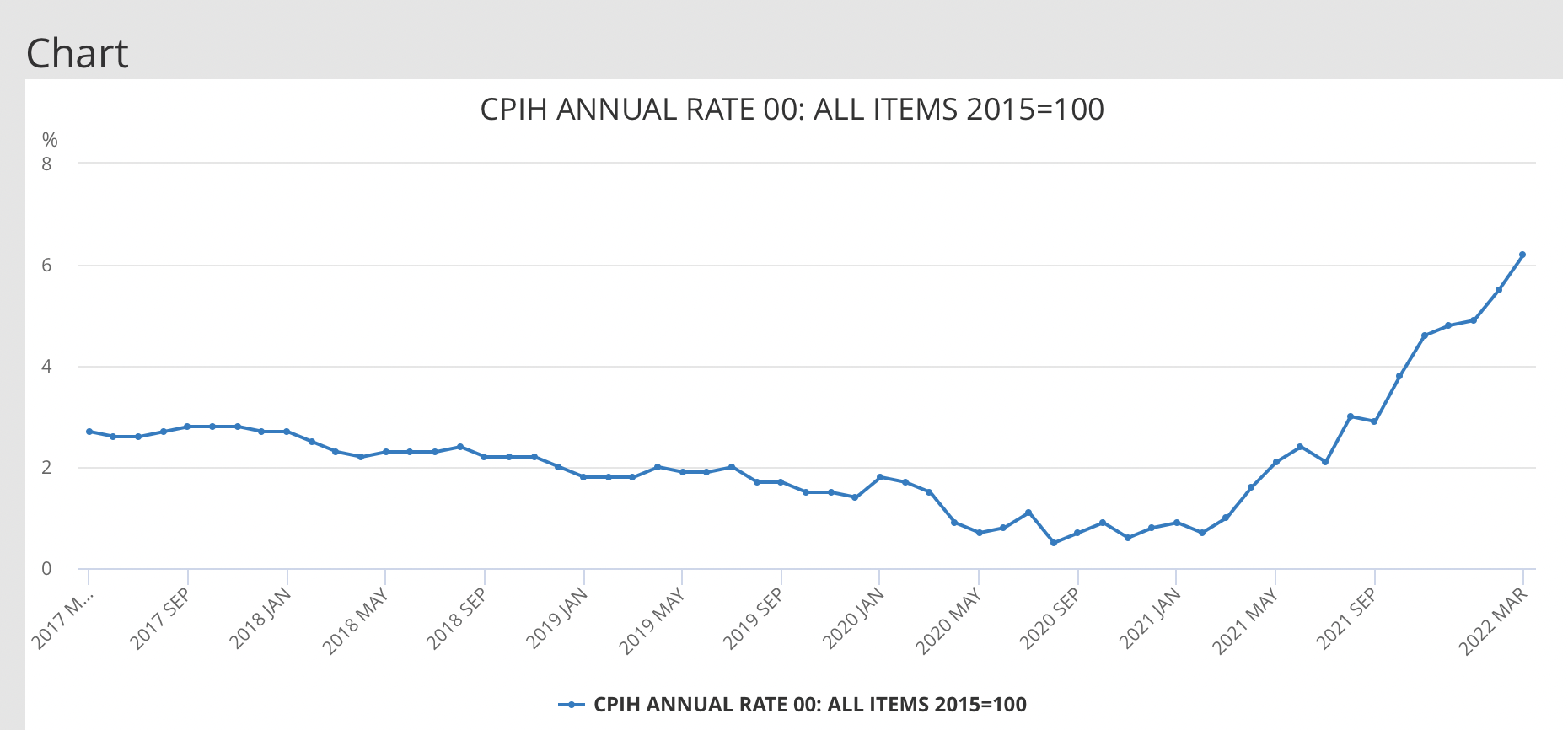
If, as The Sunday Telegraph reported, a Cabinet minister really said of the BoE “It has one job to do — to keep inflation at around 2 per cent — and it’s hard to remember the last time it achieved that target” then it is hard not to despair. Is there really someone sitting round the Cabinet table whose memory about such key economic data really does not extend further back than nine months? Inflation was just 2.1% last July, having been below 2% all the way through the long months of pandemic lockdowns (see graph).
Central bankers are certainly in difficult position as they have boxed themselves into a monetary policy corner in the wake of the Global Financial Crisis, now over a decade ago. The slashing of interest rates and the pumping of billions into financial markets via the quantitative easing programmes saved the financial system from collapse, but many economists have been warning for a few years that the banks were being too slow to move back to normality so that they would have room for manoeuvre when the next crisis struck.
Inflation has caught them on the hop and some have been complacent in their analysis and response. Others have been wiser.
Jerome Powell, chair of the US Federal Reserve, was striking a gloomy note in the late autumn. He said using the word “transitory” in conversations around inflation should be retired, when he appeared before the US Senate’s Committee on Banking, Housing, and Urban Affairs. For Powell inflation was being driven by a range of factors, the push of rising raw material and energy prices and the pull of consumer demand: “Pandemic-related supply and demand imbalances have contributed to notable price increases in some areas. Supply chain problems have made it difficult for producers to meet strong demand, particularly for goods. Increases in energy prices and rents are also pushing inflation upward.” And this was before Russia launched its assault on Ukraine and China effectively closed one of its largest ports.
Powell’s assessment was not shared by European Central Bank president Christine Lagarde who told a Reuters event a few days later that inflation was transitory, playing down fears that it would continue to rise well into 2022: “I see an inflation profile that looks like a hump,” Lagarde said. “And a hump eventually declines. We are firmly of the view, and I’m confident, that inflation will decline in 2022.” The ECB still hasn’t made a move of interest rates, suggesting Lagarde is stubbornly sticking to this belief, despite the powerful global trends to the contrary.
Bailey, an instinctively cautious man, positioned himself somewhere between these two views when last appeared before the Treasury Select Committee in December. He was not shy about the problem inflation poses but offered few firm commitments on interest rate policy: “I’m very uneasy about the inflation situation. I want to be very clear on that. It is not, of course, where we wanted to be, to have inflation above target.”
Central banks are fearful about being manoeuvred into a situation where interest rates are increased but inflation does not respond. This is a seminal moment for them as one of the cornerstones of monetary policy in the 21st century, controlling inflation through interest rates, is put to its first real test. The policy has worked because most inflationary – and deflationary – pressures over the last 25 years have been caused by fluctuations in consumer demand – the pull factors.
If central banks raise interest rates or curtail their bond purchase programmes and the impact that has on demand is minimal, people will start to lose faith in their ability to control inflation. The longer higher rates of inflation prevail, the more they become part of a new normal which could add fuel to the push factors by unleashing demands for higher wages and making regular price increases more acceptable. the wage-price spiral that dogged the 1970s.
If you accept that inflation is being driven by push factors rather than surplus demand then it points to a need to return to economic management through fiscal policies and that turns the spotlight on governments, which gives you a clue as to why Tory MPs are looking to put Bailey on the spot. The government seems to be like a hapless rabbit caught in the spotlight. It is doing next to nothing to address the powerful push factors such as rising energy prices and food price increases. Indeed, it has added to the cost-of-living pressures by increasing National Insurance (although this will not show in inflation data).
The problem for Mr Bailey today is that he will not feel it is his job to turn the spotlight back on the government – that would be political dynamite – but, at the same time, he does not want to admit that the monetary weapons in his armoury are potentially ineffective against the powerful push factors driving inflation.
It will be interesting viewing.
The UK, European Union and USA might not be directly involved in the war on the ground in Ukraine or in the air over its shattered, beleaguered cities, but we are on the frontline in a new type of hybrid warfare. There is the war being fought with troops, missiles and bombs and then there is the war being fought with economics: that is our war.
All wars have consequences and inflict casualties on both sides and the economic war being fought over Ukraine is no different. Those consequences will inflict economic pain on the western liberal democracies as well as on Russia. We are already feeling that pain with the sharp uplifts in gas prices and prices at the pumps when we fill up our cars. That will be just the start, as the businesses owned by now sanctioned Russian oligarchs are also showing signs of strain.
The enforced sale of Chelsea football club has grabbed the headlines but other firms are reeling too. Last week Holland & Barrett, the health food chain whose owner is sanctioned, found it could not pay its debts. Many more will follow.
Countries have been choosy over the sanctions they have imposed, trying to pick those that will inflict the maximum economic pain on Russia and the oligarchs they believe have Putin’s ear, while not impacting their own economies too harshly. This has led to an uneven, patchy approach.
At the end of last week, there were signs that some countries like Germany and Italy, highly dependent on Russian gas, were growing nervous about the impact the sanctions are having on their pandemic ravaged economies. This morning all the talk is of tougher sanctions in the face of the chilling reports of massacres in Bucha.
Banning the import of all Russian gas and oil – for which the west is still paying billions each week to Russia – will hit hard. In Germany, it could quickly lead to gas rationing. Here, it will hit motorists as 13% of diesel is still imported from Russia, according to the latest government figures. Prices will go up and we may see shortages, potentially leading to rationing at the pumps. Domestic energy prices are already causing hardship and can only go in one direction if even tougher sanctions are imposed.
These are the hard consequences of our war on Russia. And it could be a long war.
The big question is: do we have the national and individual resilience for that long haul?

Stuffy Essex tourist bosses have decreed that the county needs a rebrand to shed what it rather insultingly dismisses as TOWIE – The Only Way is Essex – stereotypes. What it ignores is that these stereotypes have brought a lot of money into the county, especially Brentwood, the town where I live.
Just as provincial high streets like Brentwood’s were taking a nose-dive, TOWIE rode into town and saved it from the grim spectre of empty shops.
The fans of TOWIE – which I have never watched – flocked to Brentwood to see where the stars of the show were filmed and the night clubs and restaurants they frequented. TOWIE tours and hen parties arrived in such numbers that the TOWIE stars, led by Amy Childs, started to open shops in Brentwood. In no time there were around 14 shops owned by participants in the show, together with several new restaurants that opened to serve the new visitors.
The response of the local council and most residents was straight out of the same patronising play book that seems to have fallen into the hands of Visit Essex. Instead of welcoming these new visitors spending money in our town most people looked down their noses at them. While TOWIE was at its peak it was if the town centre inhabited two parallel, disconnected universes.
I know some people point to the occasional Friday and Saturday night disturbances down the High Street and blame them on the TOWIE visitors but almost every town and city centre suffers the same blight. It is just another manifestation of the English disease we export to holiday destinations across Europe most years and we saw all too vividly at last year’s European Championship final at Wembley.
We should have been laying on town centre entertainment for our new visitors, encouraging more of the retailers left in the town to stock merchandise of appeal to the TOWIE generation and making them feel more welcome. A few may even have taken an interest in some of the other shops and features of the town and the locality. I am not naive. I know that 99% would have only been interested in TOWIE but at least they wouldn’t have gone away feeling unwelcome.
It seems very strange for a tourism organisation to be sending out a message to a large group of people that can only be interpreted as “we don’t want you” – or your money.
Essex is a very large county and offers some wonderful countryside and coastlines but the powers that be have a habit of falling into this snobbish trap from time-to-time. For years it was Southend they used to look down on, now it is Brentwood. It is simply not good enough. Why can’t they be proud of the diversity the county enjoys and promote all of it equally? I am not surprised that the TOWIE cast feels offended.
If Visit Essex has £300,000 to spare it should be embracing TOWIE, using that as a platform to promote the rest of the county and its attractions. A re-think is needed.
• Image By ITVBe, Jump – https://www.jumpdesign.co.uk/towie/


