
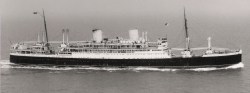
Christmas Day 1942 for Thomas Kelly was celebrated on board the troopship Rangitata, making its way up coast of south America to New York to collect American troops coming to Europe.
The Rangitata left the Clyde in August 1942 as part of one of the Winston Specials convoys taking the 8th Army to North Africa. On its return journey it was sent with additional troops to reinforce Diego Suarez on Madagascar, which had recently been seized from the Vichy French to prevent it being used as a base by the advancing Japanese forces. While there it collected a troop detachment to take to Mauritius.
It then eventually continued as originally planned to Uruguay and Argentina to load up with food to bring back to the UK but was then unexpectedly diverted to New York. These various diversions meant that Kelly missed his daughter Rosemary’s wedding in London on 11 January 1943.
Kelly continued serving on troopships and Atlantic convoys until the middle of 1944 when, aged 74, he returned home to London.
His wife Gertrude for the first time in her married life then enjoyed an unbroken period with her husband. As well as the arrival of grandchildren there was the novelty of being together to celebrate a succession of landmarks in their lives: his 75th birthday in March 1945, her 60th the following year and their 30th wedding anniversary in April 1948.
This happy postlude came to an abrupt end on 29 January 1949.
While shaving at home in Paddington Kelly suffered a massive heart attack. The curtain was thus lowered on a life of adventure, courage and service to country and his fellow human beings of many races.
The Kelly story is told in Fighting for the Empire.
Follow his remarkable life through 12 Christmas Days.
Previous: No 11, London 1939
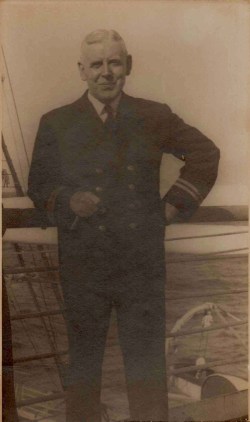
The Kelly family spent the first Christmas of the Second World War together at their new home in Paddington, having left Jersey the previous year as the storm clouds of WW2 gathered.
Kelly may have been almost 70 at the end of 1939 but his mind was turning to the war and, in particular, how he could serve the British Crown once more. He initially volunteered for service with the Royal Navy but was rejected on grounds of his age so he turned his attention to the Merchant Navy instead. By February 1940 he was on board the SS Madura as Ship’s Surgeon and would soon find himself being dive-bombed in Bordeaux harbour.
He spent almost the whole of WW2 at sea.
The Kelly story is told in Fighting for the Empire.
Follow his remarkable life through 12 Christmas Days.
Next: Come back tomorrow!
Previous: No 10, Jersey 1936
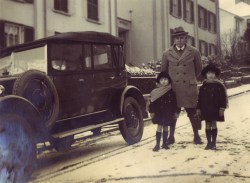
Thomas Kelly’s 30 year service with the Indian Medical Service came to an end in the summer of 1926 and by Christmas Day that year he was with his family in their new home in Jersey.
He signed up as a ship’s surgeon with the Royal Mail Steam Packet Company and by Christmas had already completed one two-month voyage to South America on the 900-passenger liner SS Orduna. This was the start of a regular engagement with the shipping line (which was about to become the Pacific Steam Navigation Company – PSNC) and he spent two to three months every year for the next decade either on the Orduna or its sister ship the Orbita, increasing the number of voyages he undertook later in the 1930s so that he was then at sea for most of the year.
His daughter Rosemary (pictured on the left with her father and late sister Brigid) saw snow for the first time that Christmas.
The Kelly story is told in Fighting for the Empire.
Follow his remarkable life through 12 Christmas Days.
Next: Come back tomorrow!
Previous: No 9, Rawalpindi

Thomas Kelly’s life changed dramatically after the First World War as he married and quickly had two daughters, Brigid and Rosemary, both born in India. He had also managed to serve in another war – the 3rd Afghan War in 1919.
After visiting the UK and Ireland on leave with his new family in 1922, they were back in India by Christmas at home at 2 The Mall, Rawalpindi. He was Commanding Officer of all the Indian Army hospitals in that part of India (now Pakistan).
He was contemplating another move, this time to Lahore where he took up the post of Commanding Officer of the Indian hospitals in January 1923. His status and reputation also earned him an appointment as Honorary Surgeon to The Viceroy, by now Lord Reading, the former Rufus Issacs who had served as Attorney-General in the pre-war Liberal government. This would have taken him and his wife, Gertrude, to many government functions at Delhi and Simla, especially after his promotion to full Colonel later that year.
The Kelly story is told in Fighting for the Empire.
Follow his remarkable life through 12 Christmas Days.
Next: No 10, Jersey 1926
Previous: No 8, Mesopotamia 1917
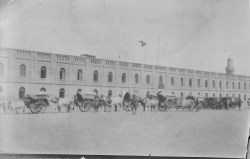
Kelly was still in Nasariyah in 1917 but now confirmed as a Lieutenant Colonel and in command of the 1000-bed 83rd Combined Stationary Hospital and its field units spread along the Euphrates towards Baghdad.
Christmas Day 1917 was celebrated in some style with choice of curried chicken, duck or roast beef with Yorkshire pudding for all the staff and patients not on a special diet followed by plum pudding, stewed peaches with cream or fruit jellies. The Indian staff and patients were also offered an extended menu for the day, which finished with a concert in the evening. Life was clearly much more relaxed in the cool, damp winter weather with the Turkish forces no longer posing any threat. The previous summer had seen record temperatures causing major problems with severe heatstroke.
The 46 year old Kelly was soon to be awarded the Distinguished Service Order for his role in the aftermath of the Siege of Kut and was about to propose to Gertrude Fenn, a nurse from Essex, who served at the 83rd CSH earlier that year.
The Kelly story is told in Fighting for the Empire.
Follow his remarkable life through 12 Christmas Days.
Next: Come back tomorrow!
Previous: No 7, Mesopotamia 1916
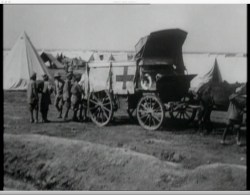
The 105th Indian Field Ambulance had been on active service for over two years by time Christmas Day 1916 approached and was now based in Mesopotamia (present day Iraq), still with Thomas Kelly as its commanding officer.
It had been sent from Egypt to Aden where it was a the centre of fierce fighting. In early 1916 it arrived in Mesopotamia to help with the appalling crisis in the aftermath of the infamous siege of Kut, one of Britain’s great military disasters. Thousands of sick and wounded had to be evacuated and the 105th IFA was flat out for months.
By Christmas Day 1916 things had calmed down and it had moved to Nasariyah on the Euphrates River and been re-designated the 105th Combined Field Ambulance.
For the first time since the war started Kelly recorded in the official War Diaries that they were able to celebrate Christmas with some modest entertainment – improvised by themselves – and a Christmas lunch, albeit lacking anything that resembled a traditional Christmas meal back home. It was, however, a far cry from the horrors of the aftermath of the fall of Kut six months earlier.
The Kelly story is told in Fighting for the Empire.
Follow his remarkable life through 12 Christmas Days.
Next: No 8 – Mesopotamia, 1917
Previous: No 6 – Egypt, 1914

Acting Lieutenant Colonel Kelly was commanding officer of the 105th Indian Field Ambulance on the Suez Canal on Christmas Day 1914.
He had been on only his second period of leave home to Ireland since 1897 when war was declared and was immediately recalled to India. Already a Major he was promoted so he could take charge of a large medical unit and was quickly on his way to Egypt with them.
By December 1914 they were stationed at Ismalia on the Suez Canal, soon to be the front line as the Turkish Army launched a major attack against Egypt. Kelly was determined his unit would be ready when the fighting started. He was so concerned about the challenges of moving casualties from the first aid posts he had established along the long frontline to the field hospital that he even arranged a training exercise for Christmas Day 1914.
It proved worthwhile as the fighting erupted early in February and Kelly’s unit was in the thick of it, winning praise for its efficiency, including for coping with large numbers of Turkish casualties. He was Mentioned in Dispatches for his part in the fighting.
The Kelly story is told in Fighting for the Empire.
Follow his remarkable life through 12 Christmas Days.
Next: No 7 – Mesopotamia, 1916
Previous: No 5 – Iran, 1906

Captain Thomas Kelly, now in his mid-30s, spent Christmas 1906 in the remote province of Seistan in Persia (present day Iran). There his one task was to stop an outbreak of the plague spreading to India.
It was dangerous. Previous medical officers had caught the disease and died. The tiny British consulate in Nasratabad was attacked by a 500-strong mob claiming claiming Kelly was burning the Koran – an incident reported in newspapers around the world.
But they were British and had standards as Swedish explorer Sven Hedin noted when he stayed at the consulate:
“Six Englishmen, without ladies, were staying in Seistan, and with them I spent nine memorable days. Englishmen have a knack of making themselves at home in whatever part of the world their lot may cast them, and even here in this wretched Nasretabad they lived much as in London. They did not come unshaved to luncheon in the great saloon, and at dinner they appeared in spruce attire, with starched shirts, dinner jackets, and patent leather shoes. And then we sank into the soft armchairs, and took coffee, with prime cigars, and, while the gramophone reminded us of the divas and tenors of the great world, whisky and soda were served, and we talked of Iran, Tibet, and the plague. We were in high spirits; and it was difficult to believe that all the while the angel of death was roaming about in search of his hapless victims.”
We can imagine they ensured Christmas Day 1906 was celebrated with some style.
It took two years but Kelly rid Seistan of the plague.
The Kelly story is told in Fighting for the Empire.
Follow his remarkable life through 12 Christmas Days.
Next: No 6 – Egypt, 1914
Previous: No 4 – Tibet, 1903

Thomas Kelly found himself deep into Tibet on Christmas Day 1903 but with a decent meal and a ‘Best Beard’ competition to take his mind off the hardships he faced. He was a medical officer on the Tibet-Sikkim Mission, sometimes called the Younghusband Expedition, although not by Kelly who loathed Francis Younghusband.
Kelly’s medical unit crossed the Himalayas and arrived at the main expedition base at Chumbi on Christmas Day 1903, just in time to enjoy the one break he was going to have from the monotonous diet of porridge, mutton stew, biscuits, jam and chapatis with the occasional ration of butter. The officers at Chumbi sat down to a Christmas dinner of turkey, ham, plum pudding, mincemeat, cake and champagne, which must have tested the supply lines to the limit. The champagne arrived almost frozen, however, not something that would have bothered Kelly as a teetotaller. This was to be the last culinary treat for a long time as Charles Allen comments in Duel in the Snows: “Almost ten months passed before any of those present enjoyed another meal even half as good”.
Firewood was in short supply and was limited to cooking so the men, officers included, had to rely on the many layers of winter clothing they had been issued to keep warm, much of it not removed for days on end. Just about every man abandoned shaving, prompting the commanding officer General Leslie Macdonald to jokingly offer a prize for the best beard by Christmas. Unfortunately, we don’t know who won the prize.
The picture shows Kelly – with beard – back right. General McDonald is seated centre.
The Kelly story is told in Fighting for the Empire.
Follow his remarkable life through 12 Christmas Days.
Next: No 5 – Iran, 1906
Previous: No 3 – Chitral, North West Frontier 1900
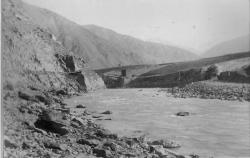
Christmas Day 1900 would definitely have been a White Christmas for Thomas Kelly
He was now a captain and doctor in the Indian Medical Service, having arrived in India at the beginning of 1897. On Christmas Day 1900 he was serving as senior medical officer with the Chitral Field Force, based high up in the notorious mountain passes between Afghanistan and India (now Pakistan), including the Khyber Pass. He was attached to the 2nd Regiment, Central India Horse, an Indian regiment, and had already mastered Urdu and Hindi.
On the North West Frontier he experienced at first hand the indiscriminate, sudden attacks that rebel tribesmen launched on British and Indian forces and lived with the constant threat of sniper fire, especially when travelling on horseback between the two mountain bases Drosh and Chitral, a day’s journey. Even medical officers were armed on the North West Frontier and Kelly frequently slept with his pistol under his pillow.
One bonus of a posting in such a remote region was the access to local game and as a fine horseman and frequent hunter there is no doubt the Kelly would have helped ensure a hearty meal for the handful of British officers at Chitral on Christmas Day 1900.
The Kelly story is told in Fighting for the Empire.
Follow his remarkable life through 12 Christmas Days.
Next: No 4 – Tibet, 1903
Previous: No 2 – Queen’s College, Galway 1890


 David Worsfold