
I have just spent a couple of days in Brussels, not at the European Summit but at an event for fund managers and financial institutions, but it was enough to add a different perspective to the post-Brexit chaos.

Cameron: held in contempt
Most striking was the utter contempt in which they hold David Cameron, veering towards bitter anger. They blame him for putting party advantage before the country’s interests in ever holding the referendum and then pour scorn on his campaign to persuade us to vote Remain. As to walking away from the mess he created they just see that as totally irresponsible.
Many Belgians – possibly the most pro-EU nationals as a group – followed the campaign closely and felt the Remain campaign was almost as dishonest as the Leave campaign, not talking about the benefits of EU membership, showing where EU money was spent and being honest about free movement and the need for immigration in a developed, growing economy like the UK.
They also cannot believe that the Leave campaign is clueless about what to do now it has won.
The real surprise was the unspoken welcome for the chaos that has gripped the UK politics since the referendum. They see this as a warning to other governments about what might happen if they bow to public opinion and hold similar votes. This is partly why the SNP MEP yesterday was given such a rapturous reception in the European Parliament when he pleaded with Europe not to abandon Scotland. They want to encourage the chaos and the profoundly challenging consequences of Brexit.
However, they don’t want it to go on for long. They are frightened of the consequences of that uncertainty. They want to know what Brexit really looks like, they – financial institutions – want to make major decisions about how they will trade across borders in the future and do not want the contagion of disillusionment with the EU to spread across Europe. Almost everybody wants the negotiations to start as soon as possible.
This is essential. There are no significant benefits for waiting before starting the Article 50 process. Three million people may have signed a petition asking for the referendum to be re-run under different rules but I still believe that would be wrong.
You cannot spit in the faces of 17m people who voted to Leave and expect there not to be a backlash. To go down that route would risk UKIP sweeping the pro-Leave parts of the country in a General Election with the prospect of a right wing Tory/UKIP coalition at the end of it. It would also deepen all those bitter wounds we inflicted on ourselves in the referendum and that are going to take such a long time to heal.
And what would a second referendum clarify? We are no nearer knowing what Brexit would really look like than a week ago.
The only sensible course is to get on with it and start the Article 50 process. It is what should happen at the end of that process that we should focus on.
It will take at least two years so we will be into early 2019 before anything could actually happen. That is the moment to pause and turn to the British people once again, not in a referendum but in a General Election. Parties can then campaign on the reality of Brexit – and probably a much changed European Union too. That would be a much more honest way of moving forward.
Those who want to remain in the EU could then look Leave voters in the eye and say “Look, we listened, we have negotiated the best deal for what you wanted. Now you have seen it do you still want to go ahead?”. If they do then they will vote for a Johnson-led Tory party or UKIP. If they don’t then the Liberal Democrats, Greens and the SNP would be their options. I have no idea what the Labour Party might stand for by then, except having proved it is chronically unfit to govern.
Playing that longer game might also prevent the break-up of the United Kingdom.
It is the only sensible game in town.
We are not where I wanted us to be. Leaving the European Union is a dangerous, retrograde step but it is the path the British people have chosen. As a democrat I accept that.
I didn’t want the referendum as I believe the complex modern world doesn’t lend itself to simplistic acts of direct democracy. Boris Johnson likes to talk about the UK having the “Mother of Parliaments” but cheerfully rejected the representative democracy that stands for when it suited him. The folly of reducing the huge complexity of issues around the best way to foster international co-operation to a simplistic question about our relationship with one multi-national institution has left our country deeply scarred and divided.
But we have voted in large numbers and have made a decision. We must now see it through in a way that does the least damage. That means getting on with it.
Prolonging the agony will benefit no-one. If we have to set out on this new course we need to know exactly what it looks like as quickly as possible otherwise the uncertainty will become economically and politically crippling both for us and for the rest of Europe. We need to recognise that we need a clean, fair and equitable break because to damage Europe will be to damage our own future prospects. Those welcoming Brexit cannot wax lyrical about how we can and will trade with Europe and then set out to willfully or otherwise damage it.
What do we need to do?
Second referendum: no thanks
The decision has been made: let’s respect it
First, stop this nonsense about a second referendum. I poured scorn on Nigel Farage during the campaign when he flagged up the possibility of a second referendum if there was a narrow Remain vote. I am not going to be a hypocrite just because my side lost. A debate about a second referendum would be divisive and potentially extend the process indefinitely. What happens if you have this second referendum and the vote is even closer either way? Do you have a third?
Press the button on Article 50
Second, get on and activate Article 50. Sitting on our hands until the autumn because David Cameron has walked away from taking responsibility for the mess he has landed us in creates a huge political vacuum and will cause untold economic damage. Uncertainty cripples the financial markets and increases volatility, an environment in which a tiny few profit while most of us suffer.
We need to know what the separation will look like and quickly. We need to have as much influence over that as possible. By sitting back and waiting for the Tory Party to get its ducks in a row we are likely to find that our soon-to-be former European partners will have made all the decisions for us. That isn’t what I call taking control of our destiny.
That will only be the first step towards the new reality because Brexit isn’t a decision, it is a process and a pretty lengthy one at that. Until we know what the exit deal is we can’t start to build all the other relationships we will need to prosper in the future. On trade alone there are 53 agreements with non-EU countries that we will no longer be party to and which will have to be negotiated afresh.
I am sure the exit will be messy and at times acrimonious. It is hard to see how it will be otherwise. We need to get that part over and done with as quickly as possible so we can start to look to the future.
The EU referendum campaign came close to descending into farce over the weekend as Boris Johnson comprehensively mislaid the plot with a bizarre analogy about Hitler and the EU and the official Leave campaign throwing all its toys out of its pram because ITV had asked Nigel Farage to put the Brexit case in a TV debate.
There is a rich irony in the official Leave campaign wanting to keep Farage in the background because it fears he is a loose cannon and could repel as many people as he attracts when its own preferred mouthpiece brings a mountain of opprobrium on himself and the Leave campaign. Put together the two incidents reveal a degree of desperation creeping into the Brexit camp as the opinion polls show undecided voters start to make up their minds, and doing so in favour of staying in the European Union.
This doesn’t reflect a great showing on the part of the Remain campaign which is still relying too much on Project Fear, although we are seeing the first shoots of some positive arguments about the benefits of co-operation and EU membership poking through.
This is a far cry from the last referendum campaign in 1975. Then the pro-Europe campaign enjoyed an abundance of arguments about principle and hope. There were huge rallies with real political heavyweights sharing platforms – I remember one at a packed Westminster Central Hall with Edward Heath, Roy Jenkins and Jeremy Thorpe rousing the audiences with speeches of great passion and vision.
The trouble is the modern EU isn’t very loveable and has several severe faults which David Cameron’s phony renegotiation did nothing to address. I have written about many of these before. These are hampering the Remain campaign in generating the sort of excitement, belief and momentum for co-operation we saw in 1975.
Many of the fault lines have been exposed because of the inability of the self-serving EU bureaucracy to deal with crises. It is something of a goodtime girl poorly equipped to cope with the bad times – the migrant crisis, the still unresolved debt problems, the Russian-Ukraine conflict on its borders, the threat from global terrorism. These failures aren’t a reason for coming out. Quite the contrary: they are powerful reasons for staying in.
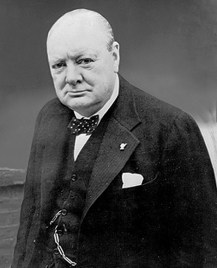
Churchill’s vision of European co-operation is the real lesson of history we need to have in our minds as we go to vote on 23 June
The real lesson from the catastrophic conflicts of the 20th century is that “To jaw-jaw is always better than to war-war”, as Winston Churchill succinctly put it in 1954.
Any one of the crises now imposing itself on Western Europe would have been sufficient to spark a conflict in the last century. It is no accident of history that in the 70 years since weapons were laid down at the end of the Second World War we have avoided a major global conflict. We may have stumbled, we may not have always stepped in when we should have done (Bosina for instance) but because we are talking, co-operating and working together we have stopped the sort of escalation that blighted the lives of previous generations.
Yes, there are economic benefits, there are cultural benefits and there are social benefits of remaining in the EU but, overwhelmingly, the real lesson of history is the one Churchill captured in his vision of European co-operation, not the crudely distorted interpretations of Johnson and his Leave cronies.
I would be lying if I didn’t admit to having mixed feelings over the decision of Incisive Media to take Post monthly after almost 176 years of weekly publication.
For those who don’t know I edited what was then called Post Magazine from the mid-1980s to the mid-1990s and then helped to guide it into the multi-platform era. I arrived as it was acquired by new owners – Timothy Benn Publishing – with a brief to radically modernise a very tired but respected brand before it was swept aside by the threat of brash, new competitors. This we did with a total overhaul of contents, style, tone and design in September 1986, remarkably the first major revamp of the magazine since the late-1930s. No, that’s not a typing error. It really hadn’t changed in nearly 50 years: unthinkable nowadays.
It worked and Post rode the crest of a wave, frequently publishing 100-page plus issues packed with classified and display advertising. Those were great days. But they are gone.
The print publication was everything then. We had no events and the internet was still a very faint and distant vision of a handful of tech pioneers. Roll forward 30 years and we are in the multi-platform era where print, where it still exists, is secondary to digital publishing. The developments at Post have to be seen in the wider context of the revolution that is sweeping through the publishing world, whether that be newspapers such as The Independent or specialist media like Lloyd’s List abandoning print. It is a relentless trend, although Lloyd’s List got ahead of its readers and had to re-introduce a print edition.
Post, of course, is still planning to maintain a monthly print version. This seems a sensible move as the UK general insurance market it serves is notoriously conservative and many in it still place some value on the printed word, or at least they say they do.
Finding a place for print in the digital age
In sticking with print it has set itself some interesting challenges. Finding the right longer form content is not as easy as it sounds. It doesn’t just mean publishing longer, more technical articles, although they will clearly have a place in a business-to-business publication. It means playing to the strengths of print by investing in high quality design, photography and production. I also think it requires an imaginative approach to diversifying the content so that it becomes a desirable, even entertaining read, as well supporting and complementing the new website and app Post is promising.
Print magazines are not dead as a look around the shelves of most newsagents demonstrates. But look carefully at the ones that appeal to a youthful readership, especially women who are an increasingly important part of the insurance industry’s workforce. They have personality and a very strong emphasis on people. Find a way of importing that into business publishing alongside the more technical and discursive content and you may yet find a winning formula for print. After 175 years it is certainly worth a try.
****************************
Why was an insurance publication called Post Magazine?
Post Magazine was a huge innovation when it was launched by the enterprising John Hooper Hartnoll in July 1840. It was the very first magazine in the world sent by post, taking advantage of the launch of the Penny Post just three months’ earlier.
State support of the insurance industry? In Conservative Britain in 2016? Unthinkable? To many people the questions might stop there – but they shouldn’t.
The state already stands behind the insurance industry in several key areas and there are suggestions that it should do more, especially helping extend the availability of affordable flood insurance to small businesses, leaseholders and others not covered by Flood Re and to facilitate the provision of insurance for an ill-defined basket of cyber risks.
Of course, the Treasury already ultimately stands behind Flood Re although with mechanisms to pass most of the costs back to the insurance industry, but this is no isolated example of government intervention in insurance in the UK when the market fails. For many years there has been a Treasury-backed reinsurance guarantee for long-term export credit insurance and terrorism cover was abandoned by the commercial market in the mid-1990s and replaced by Pool Re.
 All of these seemly unrelated areas have the common feature of risks that have become too large, too difficult to quantify and measure using traditional underwriting and pricing mechanisms. In short, the market has failed in these areas and so the state has – very reluctantly – stepped in, albeit keeping its involvement at as long an arm’s length as it can.
These challenges are not going to go away or diminish in scale and scope. We live in an increasingly volatile, unstable world and one where risks are getting more concentrated and bigger by the day. Many of these risks are growing beyond the ability of established insurance mechanisms to cope with. Yet, in almost all cases, commerce and society can’t function effectively without the back-up of insurance.
You can add into this mix the challenges of providing affordable, accessible health and social care to aging populations, a clear example of current public and private sector failure.
I don’t know what other risks will be next to be added to the list that insurers and reinsurers feel unable to manage but I do know that climate change, geo-political instability, terrorism, the growth of mega-cities, mass migration, dependence on technology and changing demographics will all play a part in creating risks that are beyond the capability of the insurance industry to underwrite without threatening its own existence.
We need to find a new settlement between state and the private sector that acknowledges the extent of these threats and the complete absence of mechanisms to cope with them. I am not optimistic as we have a government that sees only a diminishing role for the state and an insurance industry reluctant to be be realistic in acknowledging its limitations.
I have been struck when reading and listening to the tributes to Pierre Boulez, who died this week aged 90, by the frequent references to the hostility to his music and his assaults on the stale repertoire of the London and New York orchestras in the 1970s. People may take away from some of the tributes the belief that he ploughed on regardless and cared little about whether people appreciated what he was trying to achieve. That was far from the case.
I was fortunate to spend most summers in the 1970s attending the Proms almost nightly, during the period when Boulez was at the height of his powers and influence in London as Chief Conductor of the BBC Symphony Orchestra. With his ally William Glock, who was Controller of Music at the BBC and in charge of the Proms, he took the Proms programme by the scruff of its neck and through the force of his personality and passionate, persuasive advocacy built an audience for his music and that of his contemporaries. He also championed many neglected masterpeices and brought a refreshing clarity to established works such as Mahler’s mighty 8th Symphony.
An audience in tune with him
He struck up a warm rapport with those of us who stood behind him at the front of the arena in the Royal Albert Hall – in those days a predominantly youthful group – as he could see we approached his project with an open mind. In those days some of the performers, including star conductors such as Colin Davis and Bernard Haitink, would occasionally join the Promenaders for at drink at the Queen’s Arms. Sometime in the mid-70s I, with a couple of friends, decided it was time to ask Boulez if he would join us. Everyone told us he would never come, that he was intensely private, not a man of the people and so on.
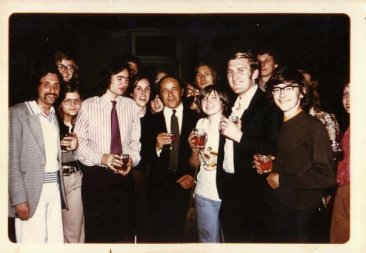
Boulez at the Proms: the great man in the centre with yours truly (with hair!) on his right
We did ask and he readily accepted, relishing the opportunity to enjoy the enthusiasm we had for what he was doing and his determination to remain true to his principles regardless of what the more snobbish, conservative music critics and audiences thought. The picture taken on one of those occasions captures the very genuine warmth he felt for a supportive audience.
He largely succeeded in his mission.
I remember when he first revived Schoenberg’s Gurrelieder, a massive work requiring vast orchestral and choral forces. The audience that night was thinly spread around the vast spaces of the Royal Albert Hall. By the time he repeated it a year or two later, the hall was nearly full as he produced another beautifully crafted performance, controlled as ever without any podium histrionics and without ever using a baton.
He also gradually built an audience for his own music which we came to understand more through him. Works such as Rituel: in memoriam Maderna and Répons were enthusiastically received at the Proms. Also, later, when he brought his avantgarde group Ensemble Intercontemprain to the Proms the audiences were both large and receptive, almost unthinkable a decade or so earlier.
A debt we all owe to him
Concert programmes now are more adventurous than they were before Boulez, with Glock and the BBC, embarked on their bold mission over 40 years ago. We are in their debt.
One of the presenters on Radio 3 this morning said “we will never see his like again”. My initial reaction was to agree with that but then a moment’s thought made me think otherwise. I fervently hope we do see more like him, although they will grace our lives infrequently.
We need people like Boulez, who unflinchingly challenge conventions with an intellectual rigour and passion in music, the arts and the wider world.
The relentless heavy rainfall across the north of England is calling into question our entire approach to water management, flood risk, flood defences and flood insurance. The last few weeks have changed the game so dramatically that you have to question whether Flood Re – the joint insurance industry and government initiative to provide cover to the most flood prone domestic properties – is already doomed.
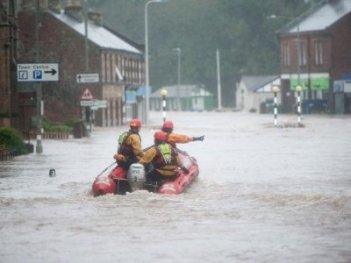 If Flood Re had already been up and running as was originally intended it would be financially stretched, possibly relying on government support and almost certainly having an industry whip-round in the form of a second levy bail it out. The insurance claims from the current flooding are already estimated to be a minimum of £1.5bn, although part of that will be from commercial properties which Flood Re won’t cover, contrary to what the BBC and other national media outlets were suggesting this morning. Even so, we have to assume that many, if not most, of the domestic properties affected are in high risk flood areas and would therefore have been passed by the mainstream insurance industry to Flood Re. Without years to build up reserves from the levy that will be imposed on all household property insurance policies Flood Re would be pushed to pay the claims that would now be coming its way and would be close to going through its reinsurance cover, expected to be set at £2.1bn. With no levies squirreled away in reserves it would have to look elsewhere to find the money to respond to a disaster on this scale. That could be the trigger for an additional levy on all insurers ceding policies to Flood Re.
That was before everyone started to acknowledge that the severity of the current flooding will prompt a complete reassessment of flood risk. It will mean many more homes being added to the hundreds of thousands of the most vulnerable high risk properties that Flood Re will be expected to cover. The length of time it is taking to get the current modest project up and running suggests that to ask it to cope with a much expanded portfolio will be expecting too much.
Businesses face insurance crisis
Then, there will be the increasing pressure on the insurance industry to ensure that small businesses in flood prone areas can find affordable insurance. The claims that the market is providing this at the moment are not supported by the stories coming out of the north of England. Many small business are saying they are uninsured, or subject to huge excesses that effectively render insurance useless. This was always a weakness of the Flood Re scheme. It was clear from the start that it should have been extended to cover small businesses. The pressure on the government and insurance industry to ensure small firms can find affordable and effective insurance cover will now intensify. Flood Re is not set up to provide the answer and to look to it now to take on commercial properties would set it back months.
It is hard to have much confidence in Flood Re as a solution to the huge challenge of providing flood insurance to domestic and commercial property owners in this dramatically changed world. It was always a limited solution to a very restricted view of the problem and many will judge it harshly when it proves not to hold the magic wand flood victims hope for.
The Oldham by-election result had political correspondents and doomsayers in the Labour Party scrabbling to find a new script today. Most had already written their stories and started penning Jeremy Corbyn’s political obituary on the assumption that we would see a narrow Labour victory after holding off a strong UKIP surge.
Oh Dear: how wrong they were.
All day they have struggled to understand, let alone explain what happened. Many seized on Nigel Farage’s assertion that 11,000 dodgy postal votes spiked UKIP’s guns before it slowly dawned on them that whatever might be wrong with the way postal and proxy voting currently works it was embarrassing to be caught sharing UKIP’s pathetic fig leaf.
 This happens so often when political correspondents are forced to step outside the Westminster bubble, especially after the dramatic week we have just witnessed in Parliament. On Wednesday evening they were ready to write how Hilary Benn was about to topple Corbyn: they just needed the expected narrow win in Oldham to press the publish button. Had they looked beyond the narrow confines of London SW1 they might have steadied their hand and injected a little more balance into their interpretation of events.
Oldham confirms what has been happening over the last two months in local authority by-elections. Labour has been doing well in its heartlands, showing that the enthusiasm that swept Corbyn into the leadership at the end of the summer was not temporary and has not dwindled. They also show that Labour is not doing so well elsewhere: Corbyn appeals to the loyalists but has yet to build a narrative that reaches beyond that base.
Awkward for UKIP too
The results also show that support for UKIP is slipping as they, too, are struggling to build a new narrative following the painful General Election result for them. With only one MP they won’t get the attention at Westminster their substantial electoral support justifies until they find a way of countering the clever, but fragile, position David Cameron has adopted on the European Union renegotiation and referendum. The debate appears to have moved but UKIP hasn’t.
People expect to be able to follow major events as they happen whether that be breaking news stories, Test Matches or industry conferences. This means that live blogging is now an essential skill for the modern journalist.

Live blogging: easier than you think
It should be almost instinctive for a good news journalist but it is surprising how many find it challenging or dismiss it. Some are fearful of the technology, others think that it gets in the way of ‘real’ reporting while for others it is probably just too much effort. Such flimsy excuses shouldn’t be accepted by editors or publishers. Live blogging from events should be a standard component of the content on any new-driven website, even for specialist B2B markets.
It isn’t difficult.
You can start with a simple, free platform like Twitter and create a feed from an event using a hashtag so everyone can find it easily and also so you can curate it afterwards. Two of the biggest objections I come across to live blogging are easily overcome this way.
The first is that it gets in the way of taking notes so you can write a proper report later. My answer to that is simple: use Twitter as your note book. Capture the key quotes you want to use and share them with everyone else. If there are several people using Twitter at an event you’ll even be able to check across to their Twitter feeds to see what caught their attention, helping you to fine tune the story for your readers.
Curate your content
The second objection is that it is a lot of effort for something that is so transient. That’s an easy one to overcome. Use a tool like Storify to curate all the relevant social media content and create a permanent record of the event so the reader who missed out live can catch up on everything as it happened at their convenience. Here’s an example of one I created from an event yesterday – IFAA Educational Conference. There weren’t any other people Tweeting from the event which was disappointing but I have pulled in a few comments to add other voices. Had there been content on Facebook, Google+ and other platforms this could have been added too using Storify.
Twitter can be limited so you can take your live blogging to another level using tools such as ScribbleLive. This enables you to add longer content, breaking away from Twitter’s 140 character limit, as well as pulling in comments from social media, more pictures and multi-media content. It is easy to use and creates a deeper experience, especially if you want engagement with an audience as it allows commenting. I covered a whole day virtual event for Insurance Age recently using Scribble, mixing my own content with Tweets from various people watching the event.
People expect immediacy nowadays: publishers and event organisers need to respond to that.
• If you want someone to live blog your event or come in and train people how to do it themselves then contact me on 01277 221445 or david@worsfoldmedia.com
• See other Training courses run by David Worsfold
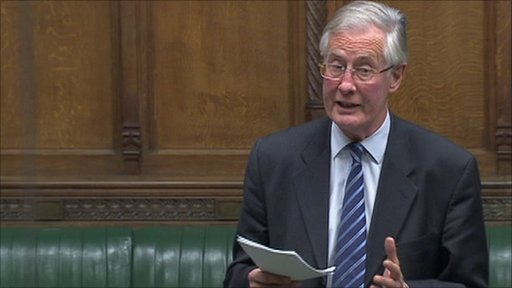
Meacher: respected figure shown little respect by his own party in death
The unseemly haste to get the Parliamentary by-election in Oldham West and Royton – caused by the death of Michael Meacher – underway is both unseemly and cynical. We have heard alot about a new style of politics since the election of Jeremy Corbyn as leader of the Labour Party but moving the writ for the byelection ten days before Mr Meacher’s funeral is as cyncial and old politics as it gets.
I am sure any readers who are students of British Parliamentary by-elections will tell me it has done before: it may well have been but that does not mean it is right. It shows a profound lack of respect for Mr Meacher, his achievements, his long service and his family.
Labour fear they may be vulnerable to a UKIP surge in Oldham and so wanted to give them as little time as possible to build up momentum, hence the haste to set a date for the contest. This will now take place on 3 December, just six weeks after Mr Meacher’s death. It could easily have waited until after Christmas as by time the new MP is sworn in Parliament will be off for a recess anyway.
There was a risk in Labour’s strategy and that was that their selection process could have been dragged out, especially if it was very close and there was any scope for disputing the result. They seem to have avoided that trap as Jim McMahon, leader of Oldham council, was selected today with a substantial lead over his nearest challenger.
Mr Corbyn talks a very good game about a new approach to politics and likes to play it out in front of the cameras at Prime Minister’s Question Time but it needs to be backed by actions if it is to be convincing. So far, with cyncial ploys like this, he is not convincing me.


 David Worsfold