
In the immediate aftermath of the shock vote to leave the European Union I felt a prompt start to the Article 50 process was preferable to an extended period of pre-Brexit manoeuvring. Four months later I still think enacting Article 50 quickly would have been better to the prolonging of the uncertainty that delaying it until next March at the earliest has created.
Article 50 is about exiting. It was never going to be about the detail of our future relationship with the EU and the rest of the world, simply because that is far too complex to sort out in two years. Everyone knows that so all we have achieved by hanging around is allow a lot of people here and in the EU to take up entrenched positions while clarifying precisely nothing.
It has actually made the likelyhood of an eventual Hard Brexit more likely.
If we had accelerated the Article 50 process I believe that most of the complex regulations and internal EU free trade arrangements would have been put into a transitional mode, simply because it would have been impossible to even prioritise which ones to sort out before leaving, let alone negotiate new versions to be put in their place. What would have been agreed is some headline grabbing stuff about control of borders on our side and plenty of noise about restricting access to the single market from the EU. Neither would have been immediately deliverable.
This would have created some sensible space to turn those transitional – largely ‘as you were’ – arrangements into something more permanent and probably nearer to a soft than a hard Brexit.
Instead the language on both sides has become intemperate and we now face the near certainty of a rapid plunge towards a much harder Brexit than will be good for us or for the rest of Europe. On top of that we have added further months of uncertainty which will be extended as next year the French and German elections will absorb the attention of the only two countries that now really matter in the EU. No-one wins.
Well, not quite.
Most financial institutions are already planning on the expectation that access to the single market and passporting rights will go. This means that some will have to seek new domiciles within the EU just to continue servicing their existing customers. Regulators in Ireland, Malta and Luxembourg in particular are already reporting high levels of enquiries and applications.
There is one consequence of the delay that might not be entirely detrimental and that is the greater opportunity for Parliamentary scrutiny. Theresa May probably miscalculated when she hesitated over starting the Article 50 process and didn’t entirely appreciate how Parliament might interfere in setting out the negotiating terms – as indeed it should.
A defeat in Parliament is not out of the question and could tip us towards an early General Election. I’m not sure how useful this would be as it would still most likely produce an increased Tory majority, especially with the contraction of the UKIP vote.
It seems to me that we are making a bad position worse at almost every turn.

You might think being an author is a big enough challenge in itself what with all that research and writing but that is only part of what is required of a writer in 2016.
Once you have written your book, found a publisher, checked proofs and signed everything off another whole new world of challenges opens up: marketing, promoting and selling your book. That is just where I am right now.
I started seriously researching Fighting for the Empire at the beginning of 2013 and got down to the hard work of writing early last year. With the writing progressing well I felt it was time to find a publisher so headed for the London Book Fair in April 2015 and found an excellent publisher in Sabrestorm. Yesterday the book was officially published and tonight we are holding a launch party. All very good but that is the starting pistol for a multi-faceted promotional campaign which requires the author to turn into a salesman.
What does that consist of? Almost anything that will help you connect with your audience, quite a challenge in my case as the Kelly story is so wide-ranging it touches many different interests and potential audiences as the publisher’s publicity vividly explains.
Social media is obviously a great tool and both the publisher and myself have been making plenty of noise there over the last few weeks and will continue to do so.
Writing about the book, the research, the context and the subjects it covers is another way and that has already kicked off with blogs on various sites such as Goodreads.
Having an author video is nowadays considered essential so I have filmed one myself and have another professionally filmed interview following soon.
Being prepared to go and talk to groups – reading circles, special interest groups, community bodies – is also an essential part of the promotional mix. Talking about something you have been immersed in for over three years is no problem at all and I have devised a wide range of talks covering every possible angle. If you want to hear more just ask. Book talks (pdf).
Of course, one of the best promotional tools is reviews and nowadays we can all review the books we read in various places so if you are kind enough to buy Fighting for the Empire and like it, please take a few minutes to rate it on Amazon, Goodreads etc and add a line or two about it.
Fighting for the Empire is available direct from the distributor Casemate, Amazon. It is also available through all bookshops.

Many of those most committed to maintaining the UK’s membership of the European Union are nailing their colours to the mast of a second referendum. The thought fills me with dread.
Haven’t we had enough of that deeply flawed, divisive process that reduces complex issues to ludicrously simplistic questions? I certainly have.
The EU referendum produced nothing but bitterness and division, with the focus of both sides entirely on negative campaigning. The Scottish independence referendum 18 months earlier was the same. It left our countries divided against themselves.
As someone who voted to Remain but without any great enthusiasm for the bloated bureaucratic monster the EU has become, I have a lot of sympathy with those who value continuing our close ties with Europe. I hope that as we loosen those ties through the Brexit process we don’t cut them entirely and that our European partners don’t either. I want a Brexit deal I can live with that maintains trade links, allows the appropriate and very necessary movement of people around the continent of which we are an important part.
I don’t want the sort of settlement that the little Englanders want.
How does that leave me when it comes to the Brexit deal? Do I wish it well or do I wish it ill? If I thought a second referendum was a good idea I would wish it ill so that ill-tempered, fractured negotiations lead to a deal that leaves the UK isolated and diminished both economically and politically. That sort of exit would be more likely to stir people into voting to reject it in a second referendum, although I do not share the naive optimism of many who think there are millions of people who regret voting Leave in June. I don’t want damaging negotiations. I want us to put the bitter divisions behind us and find a way our country can develop and prosper. I want a Brext deal I can at least live with.
Just when could you sensibly hold a new EU referendum?
The other difficulty in the campaign for a second referendum is timing.
When will the final deal be concluded? Is it when the flawed Article 50 process is complete? Surely not as that is merely to agree how we leave not what the future relationship with Europe looks like. I still believe we need to get on with that part of the process.
The final deal will be when we have the new trade and other important agreements on security, education, research and so on in place – whatever they may look like. That will be around the middle of the next decade. Most people – me included – will want to know how those impact them, their families, their businesses and their communities and that sort of detail will simply not be available at the end of the Article 50 process. A referendum at that stage would produce an ill-informed debate in a vacuum – and we have just had one of those.
A second referendum? Please, no.

Last week I was bombarded with messages from LinkedIn congratulating me on my three years as Worsfold Media Services, which really means three years as a freelance journalist, trainer and editorial consultant.
It has been an interesting three years. I wrote when I launched myself as a freelance and started this blog after leaving Incisive Media: “Redundancy may have been an unwanted challenge but, so far, it doesn’t feel unwelcome: quite the contrary. Here’s to the future”.
People who know me wouldn’t have been surprised at my optimism; but has it been justified?
Largely, yes. I have been almost constantly busy over the last three years, although the mix of work has been slightly different to what I expected. I have done more journalism and writing and less consultancy than I anticipated at the outset and although, let’s be honest, that probably pays less well I am happy with that outcome. My core skill is writing and journalism so it plays to my strengths, makes me explore and research new topics and I get to talk to alot of people. Of course, it is almost always short-term assignments and so doesn’t offer the medium-term security that a decent consultancy contract promises. But you can’t have everything.
One of the other core elements of my portfolio has been training which I also consider to be a key strength. I have run alot of training courses at Incisive Media, not just in London but also in their New York and Hong Kong offices and am about to start their Editorial Training Programme for them for the third time since I left. I have also run many of my courses at other publishers as a quick look down my client list will show.
The third major element has been events, especially awards. Over 20 years experience of devising, launching, producing, judging and developing industry award schemes has proved of huge value. With firms in all sectors keen for the third party endorsement awards represent, there has been a wealth of opportunities to help publishers develop new awards or refresh existing schemes.
There have been slow times of course but they were easy to fill. How? Write a book.
I had been pondering the idea of researching and writing a biography of my wife’s grandfather and made a tentative start on the project at the beginning of 2013. It turned out to be a far better story than I – or anyone in the family – ever imagined. Sufficiently interesting that it caught the eye of an independent publisher and is about to hit the bookshelves as Fighting for the Empire.
To all those LinkedIn messages that asked me how it is going, the answer is “just fine”. Thank you to everyone for their support over the last three years.
It now seems a case of when, not if, the Labour Party splits and a new political grouping enters the fray. With Jeremy Corbyn and his deputy Tom Watson now involved in a bitter war of words over Trotskyite entryism into the Labour Party it looks as if all hope of unity once the leadership election is concluded has finally gone.
Corbyn is going to win and his opponents will be routed
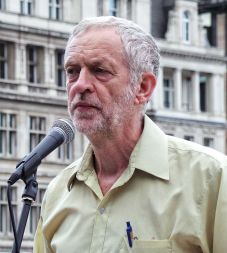 This has looked inevitable for some months but the coalition of moderates and soft left that has clumsily manoeuvred against Corbyn and his allies has constantly deluded itself into believing it can somehow regain control of the leadership and party machinery that it so spectacularly conceded to Corbyn and the hard left last summer. The battle has been about laying claim to the Labour name, its proud history and legacy and, crucially, the party machinery and union support. With the outcome of that battle no longer in doubt, plans for a breakaway must be in the process of being drawn up.
This won’t be an SDP Mark 2, however.
• First, there is no coherent, credible leadership. No Gang of Four as there was in the early 1980s. If Owen Smith is the best they can manage, they haven’t a chance.
• Second, Corbyn’s opponents have proved themselves tactically inept from the start. Their dull, predictable, uninspiring campaigns last summer gifted him the leadership. Their attempts to undermine him in Parliament have been botched and ineffective. Then to provoke a leadership election that could only succeed if Corbyn was prevented from standing sealed their collective reputation for misjudgement. Even if Corbyn had been excluded from the ballot it would have backfired because – like him or not – most people would have seen him as the victim of unfair backroom shenanigans and would have deserted the Labour Party anyway.
• Third, there are no obvious generous financial backers for a new party as there were when the Social Democratic Party was launched. The SDP was a long time in the planning and its founders picked their moment to launch, unlike now. The day after Corbyn is re-elected his opponents will have to make their minds up: stay and unite around his leadership or go.
The prospects for a new party look bleak. It is hard to see many people rallying to the cause of a Westminster elite that has proved itself disloyal in the extreme and turned in on itself just at the moment the country was crying out for a coherent, principled opposition to a government that has embraced Brexit with alarming enthusiasm.
With Scotland lost, a boundary review pending that will wipe out dozens of Labour seats, UKIP threatening to grab thousands of working class votes and MPs that clearly can’t stand the sight of each other the future for Labour looks equally bleak.
Amid the breathless whirl of events which today sees Theresa May start work as Prime Minister there is an increasing clamour for an early General Election. All very understandable, if rather predictable, from opposition parties but many of the demands come from those most keen to prevent Brexit.
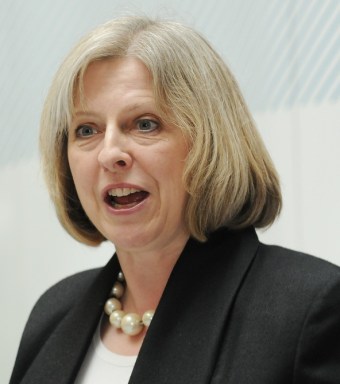
May: Brexit Means Brexit would be a powerful message at an early General Election
They are dangerously misguided if they think a snap General Election would somehow prevent the UK from leaving the EU. If there is any prospect along the potentially long and wildly unpredictable path towards Brexit of pausing and reconsidering it would almost certainly evaporate if we have a General Election in the next few months. By far the most likely outcome would be an increased Tory majority, legitmising the new Prime Minister’s declaration that “Brexit means Brexit”.
Opinion polls may be rather discredited at the moment but they are still showing a consistent Tory lead and the prospect of the well-organsised and experienced May giving that lead a boost in the early months of her Premiership have to be very high. Add to that the huge financial resources the Tories are able to call on and without doubt they would be in pole position and virtually impossible to dislodge.
Labour is in meltdown. If it gets through the autumn without splitting it will be a minor miracle. It is in no position to fight a General Election and there must be an element among the Tory Party that would love to call Labour’s bluff and go to the country.
It is hard to see a change of leader making much difference to Labour’s prospects. In many areas Corbyn is popular, as the resilience of the Labour vote in local elections this year has shown, and neither of the challengers looks remotely capable of enthusing large numbers of voters to return to Labour. Whoever was in charge would probably be looking at a loss of 30 to 50 seats. Predictions of a wipeout in parts of the country are almost certainly over-stated but Labour’s vulnerability is obvious.
The Tories would pick up some seats at Labour’s expense, more than enough to offset their likely losses to the Liberal Democrats. Strongly pro-EU areas such as south west London where the Liberal Democrats lost several seats last year could easily return to the Lib Dem fold and a squeeze on a soft Labour vote should deliver them gains elsewhere.
In Scotland it is hard to see much change from SNP dominance, although the gradual recovery of the Tories there could bring them one or two unexpected victories.
Wales would be interesting. The Valleys voted Leave and how they would react to having a pro-EU Labour campaign, alongside an even stronger pro-EU Lib Dem and Plaid Cymru would be interesting. It would most likely end up with the three parties exchanging some seats but have little impact on the overall balance at Westminster.
Then there is UKIP. Unpredictable in the extreme with no leader and not even an agreed process for finding a new one. It is likely to see its best prospects of success as lying in those areas strongly supporting Leave where it has positioned itself as the alternative to Labour. With the Tories campaigning on a “Brexit means Brexit” platform UKIP’s ability to dent the Tory vote would be limited. Labour would lose seats to UKIP.
And if the Tories somehow fell short of an overall majority they would be far more likely to turn to a Farage-less UKIP as potential coalition partners than the Lib Dems again.
Of course, this is all speculation and the current volatility of British politics could render much of this analysis invalid in an instant but I do think that is is close to the most likely outcome, one that would move Brexit from a probability to a certainty.
On top of that, the additional uncertainty of a General Election campaign would be another blow to business and consumer confidence and further increase volatility in the financial markets which few, apart from fleet-footed traders, benefit from.
I have just spent a couple of days in Brussels, not at the European Summit but at an event for fund managers and financial institutions, but it was enough to add a different perspective to the post-Brexit chaos.

Cameron: held in contempt
Most striking was the utter contempt in which they hold David Cameron, veering towards bitter anger. They blame him for putting party advantage before the country’s interests in ever holding the referendum and then pour scorn on his campaign to persuade us to vote Remain. As to walking away from the mess he created they just see that as totally irresponsible.
Many Belgians – possibly the most pro-EU nationals as a group – followed the campaign closely and felt the Remain campaign was almost as dishonest as the Leave campaign, not talking about the benefits of EU membership, showing where EU money was spent and being honest about free movement and the need for immigration in a developed, growing economy like the UK.
They also cannot believe that the Leave campaign is clueless about what to do now it has won.
The real surprise was the unspoken welcome for the chaos that has gripped the UK politics since the referendum. They see this as a warning to other governments about what might happen if they bow to public opinion and hold similar votes. This is partly why the SNP MEP yesterday was given such a rapturous reception in the European Parliament when he pleaded with Europe not to abandon Scotland. They want to encourage the chaos and the profoundly challenging consequences of Brexit.
However, they don’t want it to go on for long. They are frightened of the consequences of that uncertainty. They want to know what Brexit really looks like, they – financial institutions – want to make major decisions about how they will trade across borders in the future and do not want the contagion of disillusionment with the EU to spread across Europe. Almost everybody wants the negotiations to start as soon as possible.
This is essential. There are no significant benefits for waiting before starting the Article 50 process. Three million people may have signed a petition asking for the referendum to be re-run under different rules but I still believe that would be wrong.
You cannot spit in the faces of 17m people who voted to Leave and expect there not to be a backlash. To go down that route would risk UKIP sweeping the pro-Leave parts of the country in a General Election with the prospect of a right wing Tory/UKIP coalition at the end of it. It would also deepen all those bitter wounds we inflicted on ourselves in the referendum and that are going to take such a long time to heal.
And what would a second referendum clarify? We are no nearer knowing what Brexit would really look like than a week ago.
The only sensible course is to get on with it and start the Article 50 process. It is what should happen at the end of that process that we should focus on.
It will take at least two years so we will be into early 2019 before anything could actually happen. That is the moment to pause and turn to the British people once again, not in a referendum but in a General Election. Parties can then campaign on the reality of Brexit – and probably a much changed European Union too. That would be a much more honest way of moving forward.
Those who want to remain in the EU could then look Leave voters in the eye and say “Look, we listened, we have negotiated the best deal for what you wanted. Now you have seen it do you still want to go ahead?”. If they do then they will vote for a Johnson-led Tory party or UKIP. If they don’t then the Liberal Democrats, Greens and the SNP would be their options. I have no idea what the Labour Party might stand for by then, except having proved it is chronically unfit to govern.
Playing that longer game might also prevent the break-up of the United Kingdom.
It is the only sensible game in town.
We are not where I wanted us to be. Leaving the European Union is a dangerous, retrograde step but it is the path the British people have chosen. As a democrat I accept that.
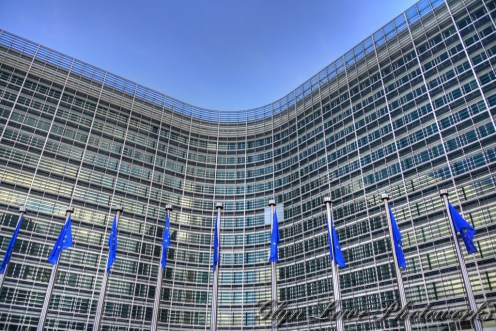
I didn’t want the referendum as I believe the complex modern world doesn’t lend itself to simplistic acts of direct democracy. Boris Johnson likes to talk about the UK having the “Mother of Parliaments” but cheerfully rejected the representative democracy that stands for when it suited him. The folly of reducing the huge complexity of issues around the best way to foster international co-operation to a simplistic question about our relationship with one multi-national institution has left our country deeply scarred and divided.
But we have voted in large numbers and have made a decision. We must now see it through in a way that does the least damage. That means getting on with it.
Prolonging the agony will benefit no-one. If we have to set out on this new course we need to know exactly what it looks like as quickly as possible otherwise the uncertainty will become economically and politically crippling both for us and for the rest of Europe. We need to recognise that we need a clean, fair and equitable break because to damage Europe will be to damage our own future prospects. Those welcoming Brexit cannot wax lyrical about how we can and will trade with Europe and then set out to willfully or otherwise damage it.
What do we need to do?
Second referendum: no thanks
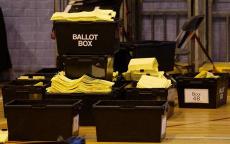
The decision has been made: let’s respect it
First, stop this nonsense about a second referendum. I poured scorn on Nigel Farage during the campaign when he flagged up the possibility of a second referendum if there was a narrow Remain vote. I am not going to be a hypocrite just because my side lost. A debate about a second referendum would be divisive and potentially extend the process indefinitely. What happens if you have this second referendum and the vote is even closer either way? Do you have a third?
Press the button on Article 50
Second, get on and activate Article 50. Sitting on our hands until the autumn because David Cameron has walked away from taking responsibility for the mess he has landed us in creates a huge political vacuum and will cause untold economic damage. Uncertainty cripples the financial markets and increases volatility, an environment in which a tiny few profit while most of us suffer.
We need to know what the separation will look like and quickly. We need to have as much influence over that as possible. By sitting back and waiting for the Tory Party to get its ducks in a row we are likely to find that our soon-to-be former European partners will have made all the decisions for us. That isn’t what I call taking control of our destiny.
That will only be the first step towards the new reality because Brexit isn’t a decision, it is a process and a pretty lengthy one at that. Until we know what the exit deal is we can’t start to build all the other relationships we will need to prosper in the future. On trade alone there are 53 agreements with non-EU countries that we will no longer be party to and which will have to be negotiated afresh.
I am sure the exit will be messy and at times acrimonious. It is hard to see how it will be otherwise. We need to get that part over and done with as quickly as possible so we can start to look to the future.
The EU referendum campaign came close to descending into farce over the weekend as Boris Johnson comprehensively mislaid the plot with a bizarre analogy about Hitler and the EU and the official Leave campaign throwing all its toys out of its pram because ITV had asked Nigel Farage to put the Brexit case in a TV debate.
There is a rich irony in the official Leave campaign wanting to keep Farage in the background because it fears he is a loose cannon and could repel as many people as he attracts when its own preferred mouthpiece brings a mountain of opprobrium on himself and the Leave campaign. Put together the two incidents reveal a degree of desperation creeping into the Brexit camp as the opinion polls show undecided voters start to make up their minds, and doing so in favour of staying in the European Union.
This doesn’t reflect a great showing on the part of the Remain campaign which is still relying too much on Project Fear, although we are seeing the first shoots of some positive arguments about the benefits of co-operation and EU membership poking through.
This is a far cry from the last referendum campaign in 1975. Then the pro-Europe campaign enjoyed an abundance of arguments about principle and hope. There were huge rallies with real political heavyweights sharing platforms – I remember one at a packed Westminster Central Hall with Edward Heath, Roy Jenkins and Jeremy Thorpe rousing the audiences with speeches of great passion and vision.
The trouble is the modern EU isn’t very loveable and has several severe faults which David Cameron’s phony renegotiation did nothing to address. I have written about many of these before. These are hampering the Remain campaign in generating the sort of excitement, belief and momentum for co-operation we saw in 1975.
Many of the fault lines have been exposed because of the inability of the self-serving EU bureaucracy to deal with crises. It is something of a goodtime girl poorly equipped to cope with the bad times – the migrant crisis, the still unresolved debt problems, the Russian-Ukraine conflict on its borders, the threat from global terrorism. These failures aren’t a reason for coming out. Quite the contrary: they are powerful reasons for staying in.
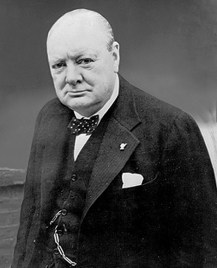
Churchill’s vision of European co-operation is the real lesson of history we need to have in our minds as we go to vote on 23 June
The real lesson from the catastrophic conflicts of the 20th century is that “To jaw-jaw is always better than to war-war”, as Winston Churchill succinctly put it in 1954.
Any one of the crises now imposing itself on Western Europe would have been sufficient to spark a conflict in the last century. It is no accident of history that in the 70 years since weapons were laid down at the end of the Second World War we have avoided a major global conflict. We may have stumbled, we may not have always stepped in when we should have done (Bosina for instance) but because we are talking, co-operating and working together we have stopped the sort of escalation that blighted the lives of previous generations.
Yes, there are economic benefits, there are cultural benefits and there are social benefits of remaining in the EU but, overwhelmingly, the real lesson of history is the one Churchill captured in his vision of European co-operation, not the crudely distorted interpretations of Johnson and his Leave cronies.
I would be lying if I didn’t admit to having mixed feelings over the decision of Incisive Media to take Post monthly after almost 176 years of weekly publication.
For those who don’t know I edited what was then called Post Magazine from the mid-1980s to the mid-1990s and then helped to guide it into the multi-platform era. I arrived as it was acquired by new owners – Timothy Benn Publishing – with a brief to radically modernise a very tired but respected brand before it was swept aside by the threat of brash, new competitors. This we did with a total overhaul of contents, style, tone and design in September 1986, remarkably the first major revamp of the magazine since the late-1930s. No, that’s not a typing error. It really hadn’t changed in nearly 50 years: unthinkable nowadays.
It worked and Post rode the crest of a wave, frequently publishing 100-page plus issues packed with classified and display advertising. Those were great days. But they are gone.
The print publication was everything then. We had no events and the internet was still a very faint and distant vision of a handful of tech pioneers. Roll forward 30 years and we are in the multi-platform era where print, where it still exists, is secondary to digital publishing. The developments at Post have to be seen in the wider context of the revolution that is sweeping through the publishing world, whether that be newspapers such as The Independent or specialist media like Lloyd’s List abandoning print. It is a relentless trend, although Lloyd’s List got ahead of its readers and had to re-introduce a print edition.
Post, of course, is still planning to maintain a monthly print version. This seems a sensible move as the UK general insurance market it serves is notoriously conservative and many in it still place some value on the printed word, or at least they say they do.
Finding a place for print in the digital age
In sticking with print it has set itself some interesting challenges. Finding the right longer form content is not as easy as it sounds. It doesn’t just mean publishing longer, more technical articles, although they will clearly have a place in a business-to-business publication. It means playing to the strengths of print by investing in high quality design, photography and production. I also think it requires an imaginative approach to diversifying the content so that it becomes a desirable, even entertaining read, as well supporting and complementing the new website and app Post is promising.
Print magazines are not dead as a look around the shelves of most newsagents demonstrates. But look carefully at the ones that appeal to a youthful readership, especially women who are an increasingly important part of the insurance industry’s workforce. They have personality and a very strong emphasis on people. Find a way of importing that into business publishing alongside the more technical and discursive content and you may yet find a winning formula for print. After 175 years it is certainly worth a try.
****************************
Why was an insurance publication called Post Magazine?
Post Magazine was a huge innovation when it was launched by the enterprising John Hooper Hartnoll in July 1840. It was the very first magazine in the world sent by post, taking advantage of the launch of the Penny Post just three months’ earlier.


