
The shaming of the previously unknown Lord Sewel has heaped further ignominy on the House of Lords. He may have resigned but the damage has been done. Good.
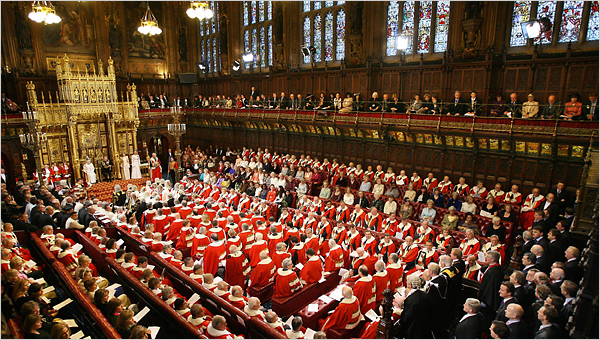
House of Lords: time for it to be shut down
The House of Lords has no place in a modern democracy and should be abolished. The more of its members who are caught doing things that undermine its credibility the closer the day will come when the case for shutting it down becomes unanswerable.
Many will have sympathy with Lord Sewel at the savagery of the media exposure of his private life and the heavy-handed response of the police. It is possible construct a decent liberal argument about how the private life of a public figure should stay private unless it clearly interferes with their public duties. The Sewel story is right on this boundary, involving as it does drug taking and prostitution.
The Sun certainly hasn’t weighed up this moral dimension and also hasn’t been an enthusiastic supporter of Lords reform or abolition. It saw that even a political non-entity like Sewel when dressed in ermine makes a good story that sells newspapers and website subscriptions: it was ever thus. Other peers need to look very carefully at their private lives as the interest this has generated will encourage the search for further similar stories.
Abolition should be a priority
There is a greater good that comes out of the Sewel story and that is the further discrediting of the House of Lords.
I have long been a supporter of radical reform but I increasingly find myself drawn towards supporting outright abolition.
I used to be seduced by arguments about the need for a ‘revising’ chamber but find those rather threadbare. We have a very large lower house – 650 MPs – which doesn’t function with any great efficiency. Over the last 30 years much of what it used to do is now done elsewhere, either in Europe or in the devolved parliaments and assemblies of the UK, yet we have more MPs than ever. If they can’t make a decent job of passing legislation then they shouldn’t be there. A revising chamber is a dreadful indictment of the incompetence of the main chamber so that isn’t a decent reason for having one.
Alongside that is the problem of competitive legitimacy if you have two elected chambers – no-one will ever sell me the idea of a partially elected Lords as that is just absurd. I think that is a very hard one to resolve so why not avoid it altogether by dispensing with the second chamber? That would take nearly 1000 politicians off the public pay-roll and begin to offset the huge increases in the number of paid politicians over the last 30 years we have as a result of the European Parliament, devolution, city mayors, full-time councillors, police commissioners and so on.
The sacking – for that is what it is – of FCA chief executive Martin Wheatley by the Chancellor of the Exchequer, George Osborne is a vindictive act and one that could come back to haunt the Chancellor.

Wheatley: made an enemy of Osborne
Osborne has wanted to ditch Wheatley for some time. He thought he saw his chance in April last year when the Financial Conduct Authority made the one serious mistake in its relatively short existence – bungling the announcement of the review of closed fund insurance policies.That moment passed quickly and Wheatley survived. By then his days were already numbered.
Wheatley’s card had been marked by the Chancellor more because of the FCA’s warnings over the the rush of pensions reforms than for its perceived banker bashing. Indeed, the FCA has acted as useful lightening conductor for public disquiet about the banks and the ease with which they are widely believed to have escaped their full responsibility for the economic and financial chaos of the last eight years.
At yesterday’s annual FCA meeting, Wheatley came under sustained pressure over the regulator’s allegedly lenient handling of the interest rate swap scandal that crippled many small businesses. That criticism is indicative of the underlying public mood when it comes to banks and especially the excessive remuneration of many in the sector: they still want blood. The danger Osborne faces is that he will appoint a new FCA chief executive who will be more sympathetic to the businesses it regulates, especially banks. It will only take one more scandal in the sector for that to cause Osborne some serious political problems as he sets out his stall to replace Cameron as Prime Minister in 2019.
Wheatley did a good job of creating a new regulator out of the breaking up of the old Financial Services Authority. It moved faster, it fired warning shots across the bows of sectors indulging in practices it didn’t like, allowing them to fix their own problems, but hit them hard if they ignored the warnings. It wasn’t intimidated by the protestations of the big vested interests and certainly wasn’t taken in by the banks’ subtle and sustained campaign to bring the curtain down on the era of banking bashing, unlike the Chancellor.
This blog also appeared on Professional Adviser

Europe is destroying itself: A dream has died
The grinding humiliation of Greece and the sacrificing of its people – especially the jobless youth – on the altar of austerity will fundamentally shift the debate about UK membership of the European Union. The once passionate pro-European voices are stilled, seemly without a narrative to justify the actions of institutions they want us to remain members of.
The long-term British distrust of European institutions will be a powerful factor in the referendum when it finally comes, reinforced by the re-emergence of the Germans as the bullies of Europe. These are deep, at times almost visceral emotions in this country and once they come to the surface rational debate will be hard.
What is the case for Europe now?
But what is the rational case for the European institutions we will be asked to vote for or against? They have long since lost sight of the sort of dream of mutually supportive European co-operation that has made me a long time supporter of the EU and its predecessors. I’ve shrugged off the bloated bureaucracy, the obvious democratic deficit within EU institutions and the almost imperialist ambitions behind the expansion of its boundaries but I cannot turn a blind eye to the economic insanity and callous treatment of Greek democracy and of its people. Where is the narrative to justify that?
Some pro-Europeans will attempt to split hairs and argue that the Greek crisis is an issue for the Eurozone countries alone and not the wider EU to which the UK belongs. That doesn’t wash as the European Commission is a key member of the troika and hasn’t made any attempt to represent a different or broader perspective. The president of the the European Council, Donald Tusk, has also vociferously joined the cheerleaders for the bullies when he could – and should – have stood back in order to play a more conciliatory role. European institutions have made themselves indivisible and in doing so have made the pro-EU case much harder to put in the UK.

Krugman: powerful critic of austerity
The finest economist of our generation, Paul Krugman, believes the European project may have been dealt a fatal blow by its mishandling of the Greek debt crisis. If the UK leaves then it will be dead.
I always thought the UK referendum would be a forgone conclusion with a 60-40 vote in favour, similar to 1975. I now think it is very hard to call and it is the very institutions that the pro-Europeans want us to remain members of that have done the most damage to their cause. If asked today how I would vote I would have to say I really don’t know. I never thought I would be put in that position.
Read also: It is getting harder to like Europe and its failing institutions
Sometime in the next two years the UK will be asked to vote in a referendum on its continuing membership of the European Union. The most likely outcome of that has always been a fairly clear vote to remain members: now I am not so sure.

Is Europe still a beacon of democracy?
Forget the charade of Cameron’s renegotiation as that is very unlikely to make much difference as to how people vote. It is the growing crisis surrounding Greece that is causing people to question the role and nature of European institutions. To many, like me, who have long believed that European co-operation through the institutions of the EU is a valuable contribution to greater political and economic stability in what has historically been a troubled continent the response of those institutions to the economic crisis has been been blinkered from the start. Their brutal response to Greece and its people has reinforced those concerns.
Euro is now deeply flawed
Europe clearly has some deep flaws running right through its institutions and at the core lies the Euro. It was a once idealistic project of some promise but was rushed and ill-conceived in its execution. Greece, along with other weaker southern European economies, should never have been in the Euro but they were needed because without them the Euro would have been too strong and German exports (in particular) would have suffered. Germany’s ability to ride out the global financial crisis so successfully would have been undermined without them.
The trouble was that those economies were always going to struggle to play on the same pitch as the stronger economies. They were cut alot of slack to get them into the Euro club when it suited Germany and its allies. There is no hint today of recognition of the debt the rest of the Eurozone owes Greece, Spain, Portugal Italy and, to a lesser extent, Ireland. Where is the concern for the youth of those countries who are without jobs and bereft of hope? That alone is a huge condemnation of the Euro project – it cares nothing for people.
Where is the Europe that cares?
The underlying problems in the Greek economy were there ten years ago but those weaknesses were useful to the Eurozone then. Now they are no longer useful Europe has turned nasty and it leaves a very bad taste. A Europe that cared would put its arm around its weaker brethren and pick them up, not kick them while they are down.
There is also a disturbing disregard for democracy. Like it or loath it, the Greek people have spoken clearly twice in the last six months. Does that mean nothing in Berlin and Brussels? That we can even ask that should send shiver down the spine of anyone who claims to value democracy. And many commentators are asking that question today.
From there we are inevitably led to ask: what are Europe and its institutions for and do we want to be part of them? Many more people in the UK will now be hesitating in their answers and very few will feel able to make a persuasive case for them when the referendum comes.
Will the UK vote to stay in? I’m now not so sure and it will be Europe and its failing institutions – not UKIP or the Tories – that will be to blame if we do leave.

Sturgeon takes on cybernats – and not before time
Nicola Sturgeon’s attempts to take the bile out of Scottish politics should be applauded. Her article in the Scottish Daily Mail and in her own blog on the Scottish National Party website acknowledges the damage that has been done to democratic debate – especially online – by the SNP’s supporters.
The cybernats have poisoned political debate in Scotland and around the broader debate on the future of the United Kingdom. When you write something you know they will disagree with you take a very deep breath before publishing it on social media and wait for a whirlwind of abuse. That fear of abuse and hatred has intimidated some people into keeping quiet: that is when the flame of democracy starts to dim.
It will take more than one article to cleanse the Augean Stables but it is a welcome start.
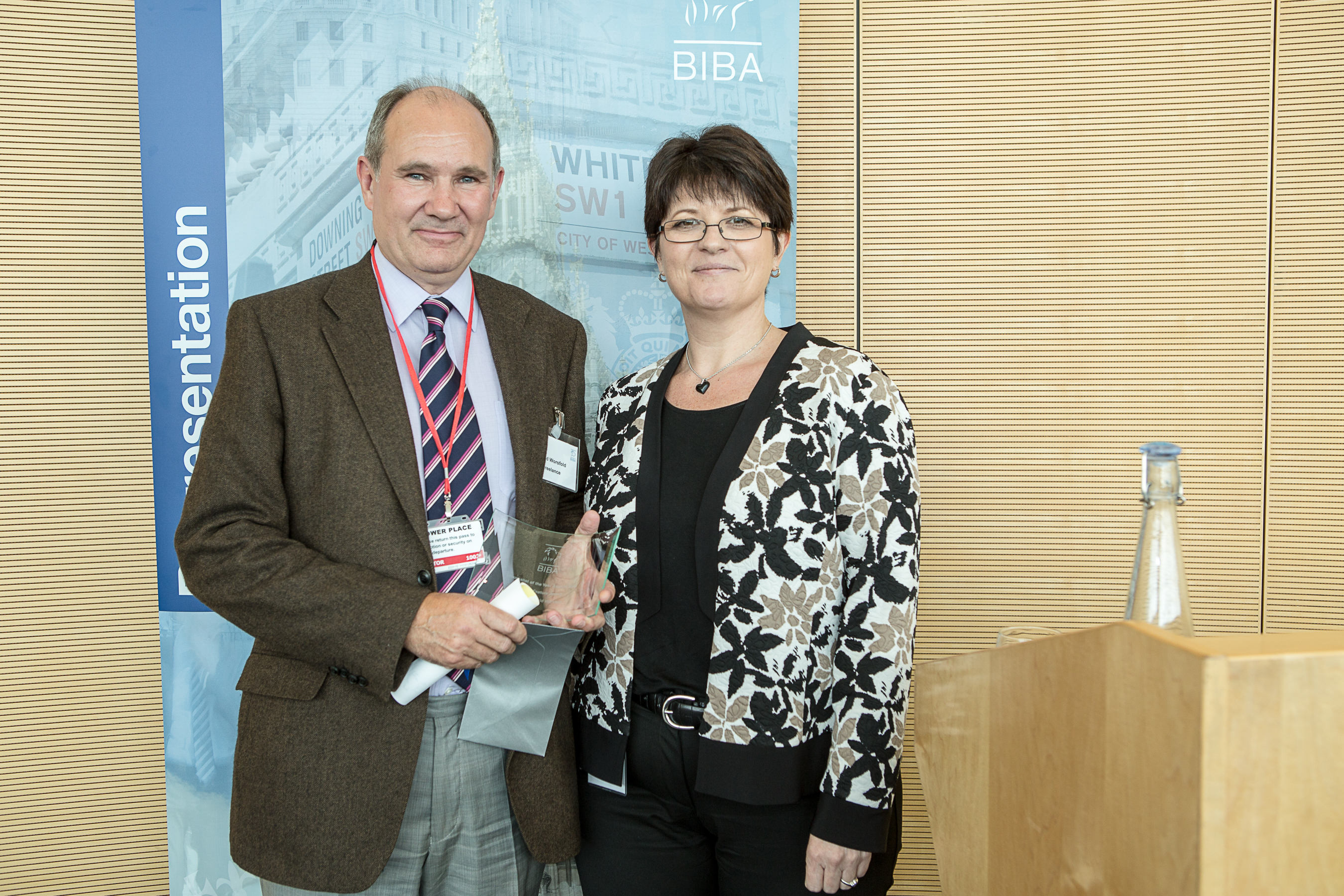
Receiving the award from one of the judges, Julie Page, CEO of Marsh’s consumer & commercial practice.
I’m rather pleased to have won the Trade Feature Award at the BIBA Insurance Journalist of the Year Awards for a piece called “The Rise of the Machines” about drones and pilotless planes. Such things were the stuff of science fiction when I first won the same award back in 1984.
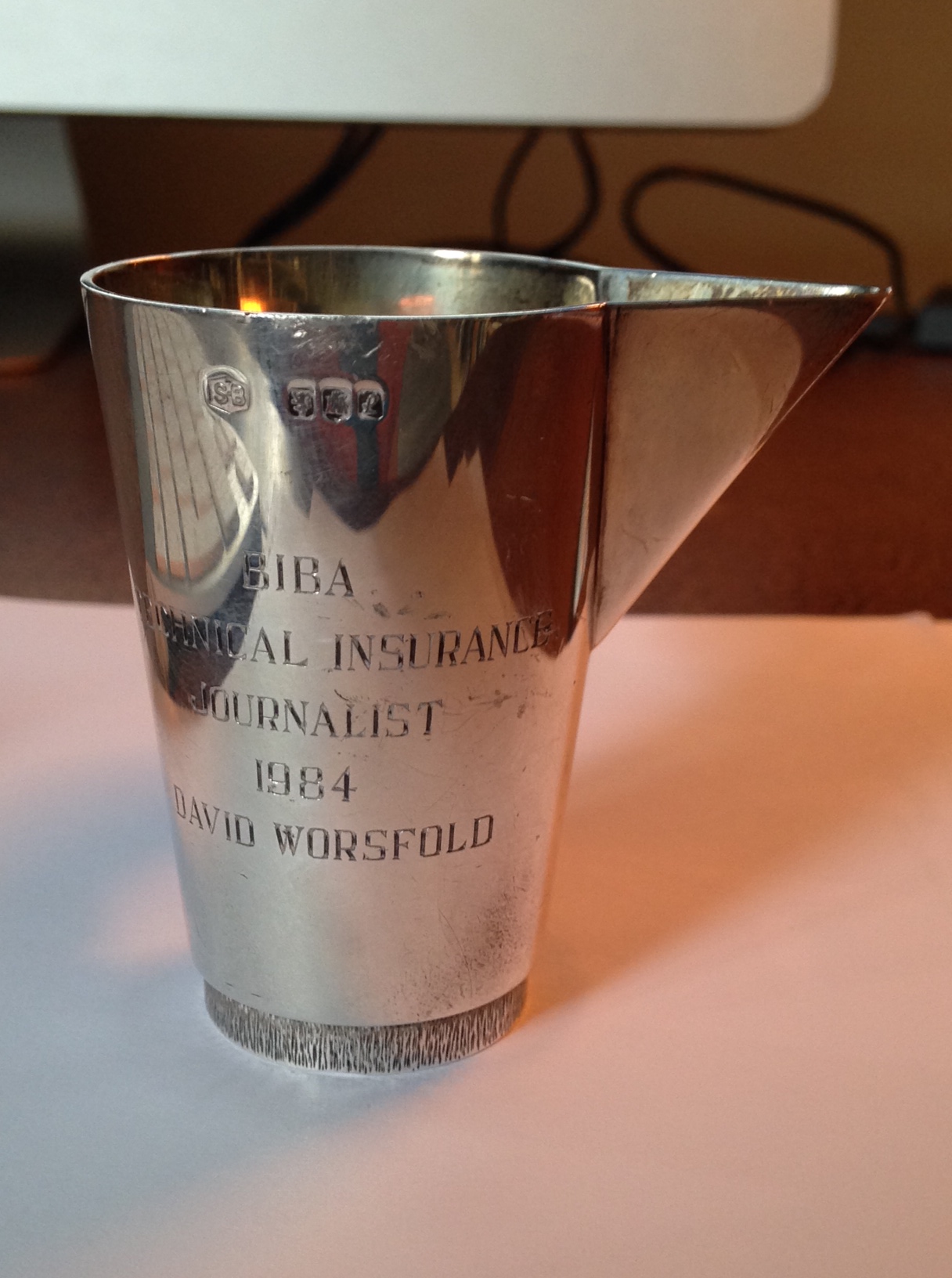 Nowadays you get a simple piece of glass as a trophy (and a rather nice cheque) for winning. Back in 1984 it was a silver spirit measure which probably says something about how people viewed journalists then.
As someone kindly pointed out (I think they were being kind) with the other awards from BIBA and the ABI Media Awards I have won over the years I have now won journalistic awards in four different decades. Only another five years to go before I can can try to make it five decades. I’ll probably have to write about insuring flying saucers or making a claim when you are time travelling for that one!
The news that urgent consideration must be given to need to restore the Palace of Westminster – which houses the chambers of the Commons and the Lords – is very welcome for anyone interested in bringing our national Parliament into the 21st century.
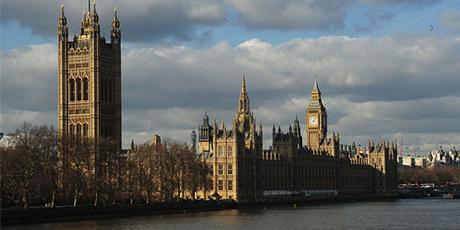
I have been a long-time advocate of building a new Parliament and turning the present Palace of Westminster into a Museum of Democracy with a residual function for state and other ceremonial occasions.
Sadly, I doubt it will happen.
This is 2015, not 1815
The present building is inadequate and ill-suited to the demands of a modern legislative assembly. Take the House of Commons itself. It is far too small as even when they are crammed shoulder-to-shoulder it can accommodate little over 450 of the 650 MPs we elect to it. Only ministers have somewhere to put their papers when speaking and no-one has a table or desktop. When you consider the hundreds of pages that modern Bills often run to and the background material you might need to have to hand when participating in a debate this is just absurd.
 Then there is the shape. Once we had two parties, Whigs and Tories, and before they were formed you were either a government supporter or you were opposition. This made a chamber originally based on the layout of a collegiate chapel (its first home) with rows of benches facing each other perfectly sensible. Now, we have a multi-party system with 12 parties currently represented and many subtle cross-party alliances on specific issues that make a nonsense of the “them or us” layout. Horseshoe or similar layouts are much more common throughout the world and can be seen in the new buildings for the Scottish Parliament (right) and Welsh Assembly.
This is all before you start to consider the role that technology might play in making the running of Parliament more efficient, with proper IT support for MPs while they are in the chamber. You could have individual built-in screens which could, say, display all the relevant background material for debates, have a news feed and so on. Maybe we could even look at electronic voting instead of having to have 15 minutes of wandering around everytime a vote is taken. Someone might even suggest that we could look at using technology to create opportunities for direct engagement with voters. Many MPs are very effective at using Twitter and Facebook to engage with the wider world so you might imagine they would welcome the opportunity to modernise their workplace. That is far from the case and today as the latest report is published you will see a succession of Westminster dinosaurs objecting to any suggestion that they leave the Palace of Westminster.
I am the first to acknowledge that the Charles Barry and Auguste Pugin building that constitutes most of the present Palace of Westminster is a wonderful building, full of history. I have loved going there ever since I made my first visit back in the early-1970s and frequently wonder at the history that has been made within its walls. But let’s be ruthlessly sensible for a moment.
It is not what it seems
First, the present House of Commons is a replica. The 19th century chamber (itself a replacement for the earlier chamber destroyed in a huge fire in 1834) was completely destroyed in May 1941. After that, the Commons met in Church House and later on in the House of Lords until 1950. So, Churchill’s wartime speeches were not made in the present chamber, the NHS was not born in debates there and going further back, Gladstone, Disraeli and Lloyd George never graced its benches.
Where the real history is
The oldest part of the building is Westminster Hall which you now walk through when visiting the Palace. It is over 900 years old and was the location for the trials of Thomas More and Charles I as well as the lying in of state of many monarchs and great statesmen. Nowadays, it is used when a visiting head of state makes an address to both Houses of Parliament and for other important occasions such as the Queen’s Jubilee celebrations in 2012. There is no reason why Westminster Hall could not continue to be used for such occasions.
MPs already know what modern looks like – and they like it
Second, many of the most significant Parliamentary occasions of the past couple of years have taken place in the modern committee rooms of Portcullis House as the key Select Committees have abandoned the traditional meeting rooms in the Palace of Westminster. This is not surprising as they are cramped and ill-equipped to cope with the demands of the modern media. The popularity of Portcullis House demonstrates that MPs acknowledge the need for better, more modern facilities.
People don’t want crude confrontation anymore
Third, the confrontational culture of the present House of Commons repels many people from politics. The weekly Prime Minister’s Question Time is often acutely embarrassing despite the best effects of the present Speaker, John Bercow, to get MPs to clean up their act. I think he will never succeed in that worthy mission in the present chamber with its architectural invitation to think in crude them or us terms and the associated legacy of hundreds of years of rowdy behavior, once accepted but now seen as wholly inappropriate.
House of Lords could have its wings clipped too
Another huge potential bonus of moving Parliament out of Westminster would be that people might start to look seriously at that bloated anachronism the House of Lords. Why should we pay for a new home for an unelected chamber that by itself is larger than any elected Parliament in the Western world? Permanent reform of the second chamber is a distant prospect at the moment but it would make huge sense to use the need to move out of the Palace of Westminster to take an axe to it and cut it numbers from the present 850-plus to 350.
Once you start to look at the problem in this more dispassionate way it becomes clear that a move to a new building – even temporarily – has both logic behind it and many potential attractions.
The question then becomes, where?
Must be London
I am not in favour of a move outside London, especially as we have now established parliaments in the constituent nations of the United Kingdom. London is our capital city and I can’t think of other national parliaments that are not in their country’s capital (I stand corrected on this point as the Dutch Parliament is in The Hague rather than Amsterdam for complex historical reasons and the Georgian Parliament is in Kutaisi, not Tblisi for more prosaic short term reasons of political popularity).
Could it be in Docklands?
Years ago I always thought the answer was a completely new Parliament built in Docklands. This would have instantly solved the problem of trying to establish the viability of Docklands but forgetting to put in a proper transport infrastructure: MPs and senior civil servants would have ensured that the roads, trains and buses were put in place for them. The moment for a move to Docklands has probably passed, however.
This probably leaves the QEII Conference Centre as the front-runner, although the possibility of stimulating further regeneration in east London shouldn’t be overlooked. The area around the Olympic Park still has potential and Stratford is superbly well connected nowadays including, dare one say it, to Europe.
QEII Centre has plenty going for it

QEII Centre: an obvious alternative
The QEII Centre just across the other side of Parliament Square would certainly work as an interim measure – as has been suggested several times – especially as the case for shutting down the Palace of Westminster for the repairs has now become unanswerable but it might even be the best permanent option. It is a relatively modern building with plenty of adaptable space, it is very near to all the present MPs offices, government departments and Downing Street. It would also mean that it would be easy to continue use of the present Palace of Westminster for ceremonial occasions and that the modern office and committee room facilities at Portcullis House wouldn’t be redundant.
The big drawback of the QEII Centre as a permanent new home is that you would be adapting a building not originally conceived for the purpose of a Parliament building.
Genuine Parliamentary reformers are thin on the ground
A move to a new building has so many advantages that you may think it surprising that it doesn’t have more supporters. Over the years whenever a temporary or permanent move has been mooted, Labour and Tory MPs alike have grumbled at the prospect, with their objections rising to a crescendo as soon as any suggestion of a horseshoe-shaped chamber creeps into the conversation. The institution has taken them over.
We are now into the third Parliament since the need for extensive repairs and restoration to the Palace of Westminster was first known and yet no decision on how to carry them out has been made: that in iteself is a scandal. Yet again we are being subject to squeals of protest from blinkered Parliamentarians horrified at the prospect of having to move out and face the 21st century. The option of staying in the Palace of Westminster while repairs are carried out wouldn’t even be seriously considered by any other institution and should be rejected immediately: the cost, the length of time it will take, the potential dangers are all unacceptable.
Setting course for a future outside of the Gothic grandeur of the present Palace of Westminster is the only sensible option but it is the one that will be most passionately opposed today.
Are there any real reformers left at Westminster?
There is too much lazy journalism around. I don’t mean the sort where under pressure junior journalists cut and paste whole press releases onto websites in order to meet pressing demands for more and more stories per hour to go online. I am talking about the stuff written and broadcast by experienced, senior journalists for major media outlets.
There is too much unquestioning acceptance of conventional wisdom on a wide range of economic, financial and political issues. This does not serve readers and listeners well and does nothing to promote constructive, intelligent debate on some of the key issues of the day. Two examples illustrate the problem very well.
The first is rising house prices. This is invariably presented as a good news story. Experts are quoted “welcoming” rises, “warning” of slowdowns, frequently the headlines are about house price “booms” with the clear implication being that this is a good thing. There is some awareness that rising houses prices are not good for everybody – such as first time buyers – but if this is acknowledged it invariably appears low down in a piece. Surely this is a story that deserves far greater scrutiny and a more balanced approach. There are so many downsides to rising houses prices – affordability, young people priced out, rising debt levels, impact on rent levels, distorted incentives to build the wrong type of homes in the wrong places and so on – that journalists should take a deep breath before accepting an uplift in prices as a positive angle.
Another topic that recurs frequently nowadays is retirement age. Every time suggestions are made that retirement ages should rise this is inevitably treated as a bad news story. Why? Working until, say 70, is not bad news in itself. People live so much longer than when retirement ages were set nearly a century ago, causing all sorts of sociological and economic challenges. We need people to work longer so they earn longer and save more for retirement. The state cannot support a rapidly growing retired population so raising retirement ages is surely good news from that perspective. Many people even welcome the opportunity to work longer – just look at the success of B&Q in recruiting older people to work for it.
Journalists are, along with everybody else, surrounded by what we might loosely label conventional wisdom. But they are also in a privileged position where they can challenge it. They should do exercise that privilege and their critical faculties far more.
It was a great shock this morning to wake up to the news that Charles Kennedy was dead. He was everything that the many generous tributes from people who knew him far better than I ever did have already said: decent but principled, a man of humility and humour.
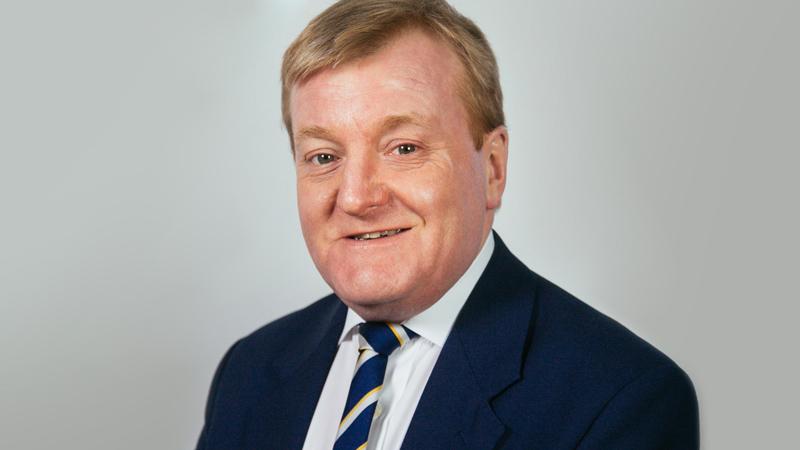
Warmth and humanity: That smile we will all remember
He was frequently underestimated as a politician, partially because of the breadth of personality that made him stand out from the generation of politicians around him who were in the 1990s becoming increasingly two-dimensional, frightened to say or do anything that might offend some focus group. Ordinary people liked him because he was what you saw and heard, not some artificial construct constantly struggling to stay on message. He didn’t need all that because he instinctively knew what the message was and never shied away from articulating it.
Kennedy knew the Liberal Democrats could only thrive as a party of the centre-left and made sure they were firmly planted there. He gave them a clear voice on the key issues of the day, never more so than when he joined two million people to march through London and speak against the Iraq War at Hyde Park. That was a proud day to be a Liberal Democrat.
His own frailties meant that he was forced out of the party’s leadership far too soon. It may be that he was never really suited to the demands of that role but who knows what the Liberal Democrats may have achieved if he had remained capable of leading them into another election campaign.
He was, we should also remember, the one Liberal Democrat MP who stood out against going into the coalition with the Conservatives. His deeply liberal, left-leaning instincts told him it was wrong on many levels. It was one of the saddest moments of that gripping election night last month when he lost his seat, a victim of the nationalist backlash against the coalition.
Kennedy had already started making plans for his political future, dropping strong hints that he wanted to be involved in the forthcoming campaign to preserve Britain’s membership of the European Union. With other names being bandied around as potential leaders of a Yes campaign his stood out to my mind. He would have been a unifying force, a man who could have communicated the benefits of European co-operation with a simple passion. He is the leader we will never have.
There will be time to reflect on the election result and, in particular, write Nick Clegg’s political obituary over the next few days but let no-one spare him.
He is a decent, personable guy with some genuinely Liberal instincts but as a leader he has been a catastrophic failure. Full stop. He took over a party with over 60 MPs and has almost destroyed it.
The reasons are many but at the core lies way he has led the party away from the direction it has marched for 50 years since Jo Grimond pointed it towards the sound of political gunfire and a mission to replace Labour on the left of British politics. Clegg’s part in promoting the Orange Book betrayal of the party’s radical values has now borne very bitter fruit.
You can add to that the shorter-term considerations such as the tuition fees fiasco and his own failure as the minister in charge of constitutional reform where he promised much and delivered nothing.
People will try to be kind and find something generous to say over the next few days but he will be judged by history as one of the greatest political failures – deservedly so.


