
With the latest opinion polls in Scotland showing the SNP vote surging to over 50% and a clean sweep of seats in prospect wise heads in the party should be getting worried.
Why?
If the election sends 59 (or just one or two fewer) SNP MPs marching south on Westminster they will face some significant challenges, not least how do they represent all the Scottish people when only a little over half will have voted for them?
There is a grave danger that an overwhelming haul of seats for the SNP will unleash a wave of nationalist triumphalism – the signs are already there, especially on social media – that will blind them to the fact that a faction under half the Scottish people will have voted for parties that stand diametrically opposed to the SNP’s core policy of independence for Scotland. It is very hard to see how SNP MPs can give voice to those who want to remain part of the United Kingdom so who will speak for them? No-one? If you so completely disenfranchise half the population you store up big trouble. They will get angry and resentful and politics north of the border will get even more bitter and polarised than it is already.
A clean sweep will test the nationalists’ commitment to pluralism and tolerance. Nationalists the world over have always found that a tough challenge.
That won’t be their only challenge, however.
They will have to elect a leader. Yes, that charming Nicola Sturgeon won’t be there. She isn’t standing for Westminster, a point that Conservatives, Labour and the Liberal Democrats have failed to get across.

Sturgeon won’t be SNP leader at Westminster – but who will?
The SNP has a leader at Westminster, the bluff but ineffectual Angus Robertson. It is hard to believe that Alex Salmond won’t stage a coup the moment he arrives back in London. This will at the very least be distracting for the SNP while it decides how to play its cards as kingmaker and, worse, could prove very divisive. As it is very unlikely that the SNP will enter a coalition with anybody it means they will have alot of backbench MPs with relatively little to keep them occupied in London and history shows that large numbers of idle MPs sooner or later make mischief. We could quickly discover that the SNP is not such a unified force after all.
Finally, they will face the challenge of what to do with an electoral system that now lies shattered and broken across the United Kingdom.
First Past The Post will have delivered 55 plus SNP MPs to Westminster when a fair electoral system would have given them half that number. The SNP has always supported proportional representation and has prospered under a PR system in Scotland. With the last vestige of credibility now stripped away from FPTP and the specious claim that it produces strong governments ruthlessly exposed as the fraudulent argument it always was electoral reform will be back on the agenda. The current system must surely be something that even its most blinkered adherents now realise has no place in a modern, multi-party democracy. How foolish must the proponents of the strong government argument feel now it is about the deliver them chaos and instability?
If electoral reform forces its way back on the agenda in the next Parliament will the SNP turkeys vote for Christmas? Half of them will lose their seats under a PR election. Will they put principle before career?
This election may turn out to be a case of beware what you wish for for the SNP.
The polls increasingly confirm what we have known for months: that neither Labour nor Conservatives are galvanising voters sufficiently to give either any hope of gaining an overall majority. The most likely result at the moment seems to be a minority Labour government, possibly with sufficient Liberal Democrat support to give it a decent chance of governing without being derailed by the SNP.
It will leave more than “who governs” up in the air.
 It has been a passionless, plastic campaign with party leaders kept carefully away from ordinary people. Endless over-managed photo opportunities have just served to exaggerate the growing gulf between most of us and the political class. Election campaigns used to be an opportunity to bridge that gap and to engage in conversation and debate with people from outside your party, outside any party. Not anymore. The campaign managers are excessively timid, fearful of exposing our politicians to dissenting viewpoints and frightened of losing control. The Tories especially have so over-protected David Cameron that they have made him look weak and almost semi-detached from the campaign.
Ed Miliband has at least attempted to inject some passion into Labour’s campaign although his attempts to connect with ordinary voters have been far too modest. He has been constantly distracted by the SNP question as Nicola Sturgeon successfully commanded the media agenda for over a week. If he can push that issue aside he has a chance in the last week to open up a gap between his party and the Tories, although not sufficient to gain an overall majority.
To question all the parties – with the exception of the SNP – must ask themselves after the election is: how do we engage, motivate and enthuse voters. The rush to the centre ground over the last 25 years has made them indistinguishable in most people’s eyes and election campaigns have become more about competence to govern than a belief in changing things for the better. Competence is important but it doesn’t excite most people. Where will that spark of passion come from?
Who leads the SNP?
One question I am very surprised hasn’t featured more in the campaign is the SNP leadership. All the focus has been on Nicola Sturgeon but she won’t be at Westminster when the deals need to be done and decisions made on what to support and what to reject as she isn’t standing for a Westminster seat. The SNP’s current Westminster leader is the relatively ineffectual Angus Robertson who has been almost invisble in the campaign. Is the plan to oust him and put Alex Salmond in his place if he gets elected? This is an important question and one the media has been remiss in not posing.
Our broken electoral system
The first-past-the-post electoral system hasn’t been fit for purpose for over a generation, ever since the two party duopoly started to crumble in the 1960s. The failure of Nick Clegg to bring about any significant constitutional change – including electoral reform – is a dreadful indictment of his time as Deputy Prime Minister. He screwed up the golden opportunity he had with the botched referendum on the alternative vote. Ironically, his party could now be one of the beneficiaries of the total failure of our current system to cope with multi-party politics.
The current opinion polls suggest that the Liberal Democrats’ share of the popular vote could fall to around 7% but that they could still hang on to around 25-30 seats. UKIP is polling at twice that level but probably won’t win a single seat (they may hold Clacton but that looks like it for them). This is a huge anomaly that can’t be easily dismissed.
In Scotland, the SNP is polling at around 40%, a figure that could net the party 50 of the 59 Scottish seats. Another huge anomaly and one that might unwind in next year’s Scottish Parliament elections which will be held under a system of proportional representation.
Clearly, the system is broken beyond repair. It needs to be completely replaced.
Immigration – the elephant in the room
One issue that constantly comes at or near the top of public concern is immigration yet it isn’t being constructively debated in the campaign. Perhaps we should be thankful for this. But running away from it doesn’t make it go away.
UKIP, of course, has tried hard to push it up the agenda but its campaign seems to be struggling and it – and its leader – lack the credibility to promote a constructive debate around the issue. UKIP’s stance is too simplistic and one-dimensional to be taken seriously thus the issue falls by the wayside. I don’t believe they have been helped by the daily toll of human misery in the Mediterranean Sea.
You might have thought the flood of refugees into Europe, many of them making clear their desire to come to the UK, would have boosted UKIP but, thankfully, it hasn’t. The reasons lie in the innate humanity of most British people. They see children dying, they see desperate people prepared to risk their lives and they cannot rush to condemn or judge. When hysterical commentators such as The Sun’s Katie Hopkins do decide to pronounce and wish them dead most people are appalled. She and the minority who support her have made the issue so poisonous that UKIP now can’t touch it. For that we should be grateful to her.
It won’t stop people wanting better answers from our political leaders about how immigration should be managed in a way that supports our growing economy and in the context of a housing crisis due not to immigration but 30 years mismanagement of housing policy.
So, who will govern the country and how?
The smart money has to be on a minority Labour government, largely relying on Liberal Democrat support. It will dare the SNP to bring it down and put the Tories back into office and the SNP will back away despite all its bluster. If the Lib Dems hold sufficient seats to combine with Labour to produce an overall majority then we may even see another coalition although negotiations could be complicated if Clegg loses his seat and the Lib Dems face a leadership crisis.
That government – and all the parties – will have to start thinking very hard about the other unresolved issues before confidence in the political system slumps even lower.
For a generation the Conservatives’ strongest electoral card – apart from their ability to out spend their opponents – has been their economic prudence. This has been a double-edged sword they have wielded to great effect: swipe one way and they show they have fully-funded, costed and well-thought through plans; swipe the other way and they reveal their opponents’ lack of economic credibility with their flaky spending plans, over-promising and financial wishful thinking.
All this they have abandoned.
• £12bn more in welfare cuts: where are they going to fall? Answer: don’t know.
• £8bn more for the NHS: where is that going to come from? Answer: don’t know.
• Slashing of Inheritance Tax: how is that going to be paid for? Answer: don’t know.
Is Labour edging ahead in the electoral race?
Instantly, that old sword of past election campaigns is blunted on both sides. No longer do the Conservatives look like the party of economic prudence , just the people to guide the UK through the still choppy waters of the world economy. That alone significantly weakens their election campaign which, initially at least, was based on playing the “You can Trust Us with the Economy” card. That argument looks increasingly vulnerable as the attempts to break the electoral deadlock drive the Tories to throw economic caution to the wind.
It also severely blunts their ability to attack Labour for its economic imprudence. Goodness knows Labour has a very difficult position to defend on this, not least because it kept Ed Balls, a senior Treasury minister last time round, as Shadow Chancellor. But today Labour is promising us a fully-costed manifesto and has, so far, not been drawn into trying to match the Tories with rash financial commitments. Alongside this Labour has made just sufficient noise about making the better off pay more that it has attracted back to itself some of its core vote that had drifted away to the Liberal Democrats last time and the Greens in more recent polls.
It might be too early to describe this as momentum but it does begin to look as if Labour is building itself a sound platform from which to press on in the final three weeks of the campaign. If only Scotland could be similarly charmed Miliband would home and dry.
I’ve been mulling over last night’s very unsatisfactory Cameron v Miliband election programme. At first, I couldn’t quite put my finger on why it left me feeling that it fell so far short of what might have been. Then the more I thought about it the more I realised that feeling had less to do with how either David Cameron or Ed Miliband performed than with the programme itself.
Quite simply, it was the wrong format, with the wrong presenters at the wrong time.
The format

Cameron: handled audience better
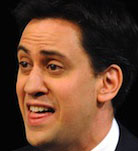
Miliband: handled Paxman better
I didn’t understand the mirror image format and I don’t think it worked. I felt that the audience first, interview second option was slightly the better except that there was very little join between the two. The awful selection of questions – too much about personality and not enough about policy – and the failure to consistently allow questioners a supplementary question certainly didn’t help. There is little doubt that Cameron was much more relaxed and confident in the audience section than Miliband and that he got a more coherent message across as a result. I was very disappointed that every question was pre-selected. It would have been much more edgy if it was opened up and a few unscripted questions were put to the leaders.
The presenters
Jeremy Paxman and Kay Burley failed to make the most of either element. Paxman was simply too Paxman. He has a very confrontational style which unnerved both interviewees at different stages but it almost gets in the way of the subject and certainly doesn’t make for a flowing conversation. His technique of constantly repeating the same question is rather tired. Make the point twice maybe and then move on. Most viewers of a programme like that are perfectly capable of making up their own minds whether a question has been answered adequately. He also seems increasingly to take pleasure in being rude, a style of interviewing that I expect turns off many people, especially women.
I’m really not sure why Kay Burley was there. She merely called the pre-arranged questioners and did virtually nothing else when it came to Cameron, although she did come alive abit more with Miliband, albeit over the rather irrelevant topic of his relationship with his brother. She should have positioned herself much more as an audience advocate, helping to ensure they got the answers they were looking for. There were hints of that but she always quickly shied away from adopting that role.
I don’t think the mirrored format helped either presenter. If they had both been the same way round then there could have been a much better pick-up from one to the other, ideally with Paxman linking in with a couple of key questions asked by the audience that he sensed they hadn’t felt were answered properly.
The timing
Quite simply, far, far too early. This whole campaign has already been ludicrously stretched out and is suffering from having no distinct phases. Having the first TV election”debate” the day after the final Prime Minister’s Question Time simply compounded that problem. We’ve moved in the blink of an eye from Parliament sitting to the hustings but with the tedious backdrop of almost 60 days solid electioneering behind us and the not very enticing prospect of 40 days of the same to come. We needed a clean break, a pause and, crucially, the publication of the manifestos before embarking on TV debate and interrogation. This would have provided greater substance and factual reality to the proceedings, making it unnecessary to indulge in so many personality questions.
With the manifestos out and the election campaign proper underway – by contrast with this extended phoney war – a Cameron v Miliband programme would have made much more sense. It would have made even more sense as the last programme, not the first but I suspect we have Cameron to blame for that.
Who won?
Both leaders will be relieved that neither suffered any significant damage, a negative way of assessing the outcome that befits the cautious, focus group driven nature of both campaigns. Personally, I thought Miliband came out slightly the better if only for the way he stood up to Paxman which clearly won the sympathy of the studio audience. Otherwise neither leader did anything – good or bad – that surprised me.
Yesterday was Post’s annual Motor Claims Conference and there was lots of Tweeting going on. I’ve captured it using Storify and you can read the results.
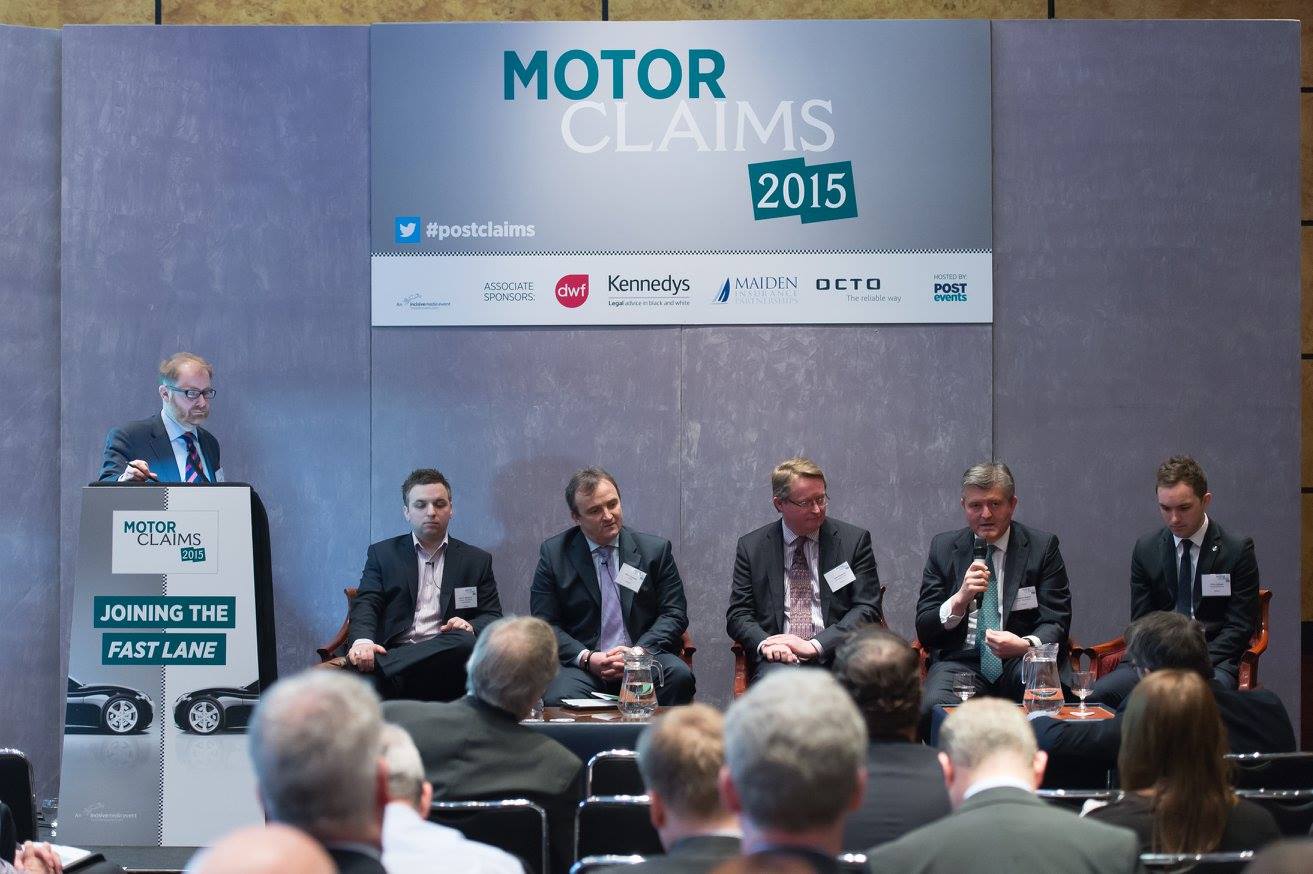
Morning Sessions
<div%20class=”storify”>//storify.com/DavidWorsfold/post-motor-claims-conference-2015-part-i/embed?border=false<script src=”//storify.com/DavidWorsfold/post-motor-claims-conference-2015-part-i.js?border=false”></script><noscript>[<a href=”//storify.com/DavidWorsfold/post-motor-claims-conference-2015-part-i” target=”_blank”>View the story “Post Motor Claims Conference 2015 – Part I” on Storify</a>]</noscript></div>
Afternoon sessions
<div%20class=”storify”>//storify.com/DavidWorsfold/post-motor-claims-conference-2015/embed?border=false<script src=”//storify.com/DavidWorsfold/post-motor-claims-conference-2015.js?border=false”></script><noscript>[<a href=”//storify.com/DavidWorsfold/post-motor-claims-conference-2015″ target=”_blank”>View the story “Post Motor Claims Conference 2015 – Part II” on Storify</a>]</noscript></div>
Or you can view them on Storify itself.
This gives some idea of how events can be covered using Twitter and how you can overcome the objection many people have about spending too much time and effort on Twitter – that it is there one minute, gone the next. This is a way of capturing it permanently.
Regulators don’t often get praised. Let’s face it, they don’t often deserve praise. But the Financial Conduct Authority deserves a huge pat on the back for the revised guidance on social media it published at the end of last week. It is sensible, balanced and full of commonsense advice, not words most of us often use when describing regulatory advice.
 When the FCA launched its consultation on social media for regulated firms last August I wasn’t hopeful. It was one of those cases of ‘I wouldn’t start from here’. So much of it seemed to miss the point of social media and its well-established role as a key communication channel between businesses and their customers. Clearly, there has been alot of very well-informed and intelligent response to that consultation and the FCA has listened very carefully.
It rightly notes that firms find it difficult when using character-limited forms of social media such as Twitter to comply with some FCA rules. This includes the key financial promotion rule, which says it must be made clear when a promotion is a promotion, as well as the need to include appropriate risk warnings. The consequence of this has been to stifle – often to the point of suffocation – well-meaning attempts by firms to use social media. The dead hand of compliance has killed many initiatives stone dead.
The new guidance should have a liberating effect and enable communications teams to make much greater use of social media free of the fear of incurring the wrath of compliance.
The FCA sensibly advises firms to consider whether it is appropriate to use character-limited media as a means of promoting complex features of financial products or services. To me this should never be a prime use of social media in financial services. It is a much more subtle and multi-faceted tool. To use it primarily as a product promotion vehicle misses the real potential which is to promote useful content and build customer engagement around that content.
The guidance has plenty to say about how to use social media as a means to stimulate engagement, essentially how to use it effectively within the regulations as a content marketing tool. It doesn’t quite put it like that but that is what lies at the heart of its guidance.
Of course, firms have to have the right content to engage customers and that will be a challenge for many firms but there are enough good examples around to show that it is far from an insurmountable challenge.
The guidance has plenty of illustrations of compliant and non-compliant use of social media to help people understand its approach. I advise everyone using social media in the financial services sector to read it. It is 20 pages of sound advice.
Of course, other challenges still remain. Creating the right content to support a social media campaign is essential. Finding where your audience is in the ever-changing social media universe is another ore-requisite for success. Alongside that it is important to have a thorough understanding of the platforms, the tools, how to measure engagement and create cost-effective social media programmes.
Some of us can help with all of that including content creation and Social Media Training for Financial Services Firms – just get in touch.
Most commentators seem to be lazily assuming that the better UKIP does the closer we move towards the EU exit door. The evidence doesn’t support this.
Putting the polling trends for UKIP since 2010 alongside EU referendum voting intentions shows the contrary: every time UKIP support jumps, the proportion of people who would vote to leave the EU declines.
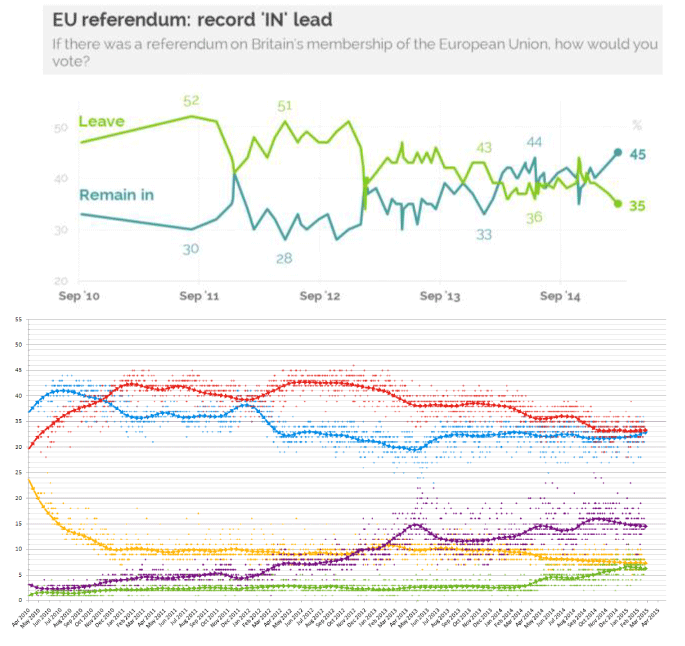 This isn’t a particularly recent phenomenon either. When UKIP first hit 10% in the polls at the beginning of 2013 – and Cameron was panicked into announcing that he would hold an In/Out referendum – support for leaving the EU suddenly collapsed. This shouldn’t have been too much of a surprise as it had also happened a year earlier when UKIP support first poked above the 5% mark. Although the proportion saying they would vote No recovered a little during 2013 it has never risen above 50% again and steadily declined during 2014.
UKIP may have celebrated the success of its high risk strategy of getting two defecting Tory MPs – Carswell and Reckless – to put themselves up for immediate re-election but it appears to have further damaged the prospects of achieving its cherished ambition of seeing the UK leave the European Union as there is now a 10% gap in favour of staying in.
What appears to be happening is that every time the prospect of actually having a vote on our EU membership edges a little closer, more people stop to think about the issues and decide that we are better off remaining on the inside rather than hurling abuse at it from the outside. I also think that the additional media exposure UKIP, and Nigel Farage in particular, receives as its poll ratings rise doesn’t help its long term cause. Clearly, there is a growing minority who are attracted to Farage’s disjointed rhetoric which is why UKIP could be a significantly disruptive force at the General Election, although emerging with only one or two seats.
A far greater proportion of the electorate are not taken in by Farage’s bluster. Indeed, the poll trends suggest they are repelled by it which is why the support for leaving the EU is declining.
It is probably even worse for UKIP and the anti-EU camp. Add to mix the Don’t Knows and the experience of the Scottish referendum is that if they are galvanised into voting they will split substantially in favour of the status quo – staying in the EU.
I am always shocked by the number of people who need to make presentations as part of their job – almost an essential requirement for people moving up the management ladder – who let themselves be stripped of personality and turned into dull, inspiring clones.
We’ve all sat through presentations by management consultant types which have been overloaded with Powerpoint slides, mechanically delivered and oh so routine. Safe but dull. I’ve worked with hundreds of people to take them on that difficult and, for many, frightening journey from behind the desk to the front of the stage and my starting point is always to build on people’s own personalities. It works. It produces better, more confident speakers.
I was delighted to have the opportunity to discuss my approach with Roger Edwards, a leading marketing strategy and social media consultant in the financial services sector, for his weekly podcast.
We also shared some views on the challenges facing the financial services sector as it gets to grips with social media.
Other articles on Presentation Skills and Public Speaking
The Perils of Boardroom Presenting or How the Mighty Fail
Don’t let those public speaking fears crush you

Oborne set out his case in a powerful, passionate article on the Open Democracy website
The high profile departure of Peter Oborne from his position as the Daily Telegraph‘s chief political commentator has sparked a fierce debate about editorial integrity. It is an important debate and one that should be carried out in public, in front of and involving the readers and audiences we all crave and which commercial departments have to monetise.
I have worked in business-to-business media, mainly covering financial services, for over 30 years and the tension between commercial and editorial departments has been a fact of life for my entire career. At its best that tension is creative and inspiring; at its worst it is sordid and dishonest. There are plenty of examples of both ends of that very wide spectrum played out daily in newspaper, magazine and website offices.
For me transparency, honesty and integrity have always been the cornerstones.
Can sponsored content really add value?
Sponsored editorial content has been around for years and can provide readers with valuable, high quality information, especially in business publications. The challenges for an editor when presented with a sponsored content opportunity are to win the trust of the sponsor and then to ensure that readers know the content is sponsored. What the sponsor is buying is access to your audience, your readers. If they are remotely intelligent they will also realise that they are buying a partnership with your brand and its values because that it what the readers buy too.
For me that always meant working with sales teams and sponsors from an early stage to set the objectives, content and style of any sponsored content, an approach that applies to print, online and events. This has worked many times and when it does it delivers great content for the readers and real value for sponsors. When it doesn’t work – for instance, when a dumb PR person gets hold of it and thinks it should be all about products and mention the company in every other paragraph it becomes a waste of everybody’s time and money: readers will just flick past it whether it is on page or on a website.
The second challenge is to get it labelled clearly: tell the readers it is sponsored. This has actually proved the harder battle to fight over the years and has undoubtedly got harder in the digital era. I believe readers appreciate the honestly and clarity. They are perfectly capable of making up their own minds what delivers value to them and do not want to be misled. Just about every market I have worked in has been blighted by a bucket shop “ad-for-ed” competitor which thinks its readers are stupid and can’t spot the correlation between who is advertising and the coverage they get (or don’t get in the case of HSBC and the Daily Telegraph). It is a fools’ game, a race to the bottom and hardly ever a recipe for long term commercial success. Quality advertisers and sponsors want to be associated with quality editorial products and readers want to be able to trust what they are reading: holding the line on this nonsense will pay off in the long term.
The media must be more transparent
Transparency applies in other ways too and the national newspapers have been poor at this for years. I give you one example to illustrate the point.
Just over ten years ago the switch by large numbers of insurance companies and others to call centres and back offices in India was generating alot of comment and I contribute my fair share to that. The chief executive of one insurer – Patrick Snowball at Norwich Union (Aviva) – took me to task over some of the things I wrote and said it was ill-informed and I ought to go an see for myself. I politely pointed out that my modest editorial budget was not going to stretch to a trip to India so he responded by offering to take me (and a couple of other journalists) to India for a week to visit a range of call centres.
I went and wrote several articles on Indian call centres for the various publications I was working across at the time and at the end of each one I put a footnote saying the trip was paid for by Norwich Union but that they didn’t exert any influence over what I wrote (not even a request for a quote check – another real blight on modern journalism). To me that left the intelligent reader to make up their own mind on the value of the content. I call that honesty. These trips go on all the time and I hardly ever see mention of who paid for them in articles or alongside videos. Why?
Sometimes you just have to be tough
There have been times when I have not been flavour of the month in advertising departments, especially when writing something that upsets one of their major clients. This is where editors and journalists have to have thick skins but also be prepared to justify what they have written. My favourite story is about the collapse of Independent Insurance in 2001.

Bright: upset was an understatement
Two years prior to that I had a big – I mean big – falling out with the chief executive of Independent Insurance Michael Bright over something I had written which got under the skin of his considerable ego. Unable to sue me (I found out years later he had lawyers crawling all over what I had written but it was quite simply true and fair comment) he decided to withdraw all Independent’s advertising and sponsorship from Post Magazine, the main title I worked on at the time and back our competitor Insurance Times to the hilt, along with other fringe titles. This made for some uncomfortable conversations with our advertising department but I was not prepared to backtrack on what I had written and, to give them credit. they understood my stance even though the sight of large Independent adverts elsewhere must have caused them constant grief and individually cost them money in lost commission and bonuses.
Vindication came two years later when Independent collapsed, leaving in its wake a long list of creditors, including Insurance Times which never got paid a six figure sum for advertising it had gladly taken from Independent. I couldn’t help feeling certain sense of vindication. Six years later I sat in Southwark Crown Court and watched Bright sentenced to seven years imprisonment for his part in leading the fraud that brought Independent down.
Peter Oborne has lifted the lid off a murky world and has done the media and the public who depend on it for honesty, complete and impartial coverage of the issues and industries that matter to them a huge service. If it helps restore some of the balance between editorial and commercial departments so they can work in partnership and not with one dominating over the other then we will all be better off.
I am struggling with this endless General Election campaign. It is, of course, an inevitable consequence of the move to fixed-term Parliaments, a reform I am still largely in favour of. However, a glance across the Atlantic should have been enough to prepare ourselves for months of campaigning.
We’ll be exhausted by the time Polling Day finally arrives on 7 May
What is disappointing is the way the political parties have responded to this challenge. They are using the electorate as one giant focus group to test an endless stream of disjointed policy initiatives lurching from the health service one day, to education the next and the economy the day after – and so on. There is little sense of an overarching theme with any of this except, tellingly, from the Scottish Nationalists. There should be no mystery as to why the SNP continues to poll strongly – it has its big idea and remains stubbornly focused on it.
The absence of a coherent narrative joining together the daily diet of unrelated policy initiatives is crippling the main parties. The polls aren’t moving because they are not engaging the electorate (just exhausting us) and they are not engaging us because we have no real sense of the vision of what they are offering for the next five years. We have a vague of what they stand for and don’t stand for and they are playing around the edges of that hoping that one day, one policy will hit the mark and shift just enough floating votes their way to make a difference. It is a directionless, passionless form of campaigning that deserves to fail.
Manifesto damp squibs?
What would shake up the political agenda would be if one party was brave enough to stop test marketing policies and publish a manifesto that communicated a vision, a sense of direction and built a powerful narrative linking its policies. My guess is that in this elongated General Election campaign the manifestos will be a damp squib, little more than a collection of the policy announcements we have already heard and which have got a vague thumbs up from the pollsters. I expect this will be true of Labour, Conservatives and Liberal Democrats. This may create further opportunities for the minority parties already upsetting the establishment apple cart.
The SNP already seems well-equipped to avoid this trap but the opportunity is also there for the Greens and UKIP to make further inroads into the votes of the mainstream parties by creating a simple, strong and focused narrative. UKIP will attempt to do this around its simplistic anti-EU message and would do well to avoid making too much fuss of the manifesto Nigel Farage is meant to be writing after its complete abandonment of its 2010 manifesto. The Greens are quietly creeping up on the outside but don’t seem to have found the accelerator pedal yet: there is time.
Lack of campaigning momentum
The barrage of daily policies currently being inflicted on us also highlights another looming problem with this campaign: how will the parties maintain, let alone build, the momentum as polling day approaches? They can’t rely on the TV leaders’ debates to do that alone if they haven’t developed a strong core message by then. I see a real danger that the debates could become just another squabble about whatever policy initiative happens to have grabbed the attention that day, turning them into an extension of Prime Minister’s Question Time and further turning the electorate away from political debate and the political process.
There is a big prize to be won by the party bold enough to break away from the present fragmented, directionless, uninspiring mess.


