
The Committee on Climate Change seems a little late to the Flood Re party. This independent body set up to advise the government has come out with a barrage of criticisms of the joint government and insurance industry initiative to ensure affordable flood insurance is available to all homeowners.
It has done so on the day that Flood Re announced that former government minister Mark Hoban will be its chairman, the latest in a series of rapid steps taken towards implementation following the passing of the relevant legislation.
It is rather late to be raising some of the points the CCC’s expert on adapting to global warming, Professor Lord John Krebs, has aired in a letter to Flood Re’s chief executive Brendan McCafferty. Some of his concerns, such as the inclusion of properties in Council Tax Band H, have been argued over in Parliament and have become part of the terms of reference for Flood Re so it is hard to see what benefit there is in revisiting those arguments now.
However, Lord Krebs does raise some interesting issues that won’t go away and which Flood Re should address.
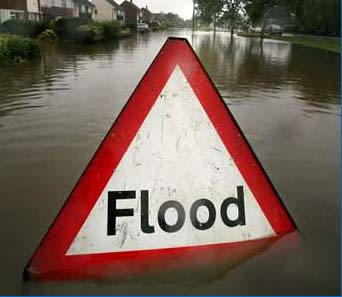
Flood Re: can it persuade insurers to embrace ‘resilience’?
He talks alot about resilience, arguing that more needs to be done to make high risk homes more resilient to flooding. He is right in identifying what needs to be done but hasn’t brought together all the elements that are needed to push this to the top of Flood Re’s agenda. It isn’t, as he appears to suggest, just a matter of using the threat of higher insurance costs as a negative incentive for householders to do more to protect their homes and make them more resilient.
This starts with the government. Spending on flood defences has to be maintained. Developers and the planning authorities have to be penalised for building on flood prone land if not prohibited altogether. These are matters of government policy.
The insurance industry also has a major contribution to make to improving resilience and must stop running away from its responsibilities in this area.
I have argued for many years that insurers could do more to encourage flood-resilient reinstatement when dealing with flood claims. Over 20 years of spiraling flood claims they have done far too little to make the properties they insure and which have been flooded significantly more resilient to the next flood, arguing that it would amount to ‘betterment’. This, they say, isn’t what the policyholder has paid for and would push up claims costs. They even worry that if they paid extra to make a property a better risk the householder might then go and insure with one of their competitors. I have always thought that a rather blinkered, short-term perspective.
If all insurers agreed to a package of reasonable – not extravagant – improvements they could make to properties that are flooded that would directly contribute to lower claims costs and a shorter reinstatement periods the next time a flood hits then it would be an investment in reducing future costs. It isn’t too hard to imagine many householders seeing their insurers investing directly in better protection of their properties actually being more prepared to contribute themselves to additional measures. That would certainly go some way to ticking Lord Krebs’ boxes.
Perhaps this is something Flood Re in its privileged position as a pan-industry scheme and without the competitive concerns of individual insurers to cramp its response could promote. It would be a constructive response to the CCC’s concerns.
Flood Re has taken an important step closer with the Government’s confirmation that the legislation needed to enable the new pooled flood insurance scheme to be set up will be presented to Parliament in the New Year. With some key appointments confirmed at the same time it does look as if two years of talking are at an end. The focus is now firmly on the practical steps to be taken to get it up and running by July 2015.
The Department for Environment, Food and Rural Affairs announced at the same time that properties in Council Tax Band H (and I in Wales) will be included in the scheme. This deals with one of the most obvious anomalies in the Government’s original proposals which would have seen owners of these properties contributing to the levy – set at 2.2% of premiums – but not eligible to benefit from the scheme if they have a claim. This was a crude, if minor, piece of social engineering totally inappropriate for private insurance. If governments want to redistribute wealth and promote equality they have a vast array of tax and benefits tools at their disposal.

The Somerset Levels in full flood. (from http://www.dillington.com/blog)
The Government has also removed a lot of the uncertainty about when it will step in should the cost of meeting claims ever overwhelm Flood Re. A sensible compromise about how far it might be subsidised from public expenditure and how this and its capital requirements will be reviewed seems to have been reached.
Leaseholders out in the cold
DEFRA has rejected most of the other pleas for the scheme to be extended, probably correctly, although I still think some consideration must be given to the problems faced by business property owners who live on the premises, such as pubs and B&Bs. Leaseholders have been quick to complain about their exclusion but they are running businesses for profit and should be expected to pay the market rate for insurance if they want to let properties in high-risk flood areas. Owners and occupiers of ground floor flats may find they have issues with obtaining affordable contents insurance and this needs to be kept under review.
Should small businesses be in?
Small businesses will also feel aggrieved that their pleas to be included in Flood Re have been rejected but the small business lobby never really came up with a viable proposal for their inclusion. People speak emotively about “small businesses” but what, exactly, is a small business and when would its premises be eligible for subsidised insurance? And who would subsidise it? Big businesses or other small businesses in low flood risk areas? Flood Re works on a cross-subsidy from low-risk domestic properties to high risk properties but you can’t ask homeowners to subsides businesses. The small business lobby simply failed to address these issues.
2009 cut-off retained
Properties built since 2009 will also remain outside the scheme in order to discourage the building of new properties on flood plains. It still looks a rather arbitrary date and could leave a lot of people on modest incomes exposed to high premiums, possibly even unobtainable cover. Perhaps it is necessary to have a simple, if rather blunt, cut-off in order to get Flood Re off the ground. I would hope that as it gets established this will be reviewed with reference to known and identifiable flood risks when planning permission was granted. If a flood risk was known at the time, it should be excluded; if it wasn’t, it should be covered by Flood Re.
The challenge now, however, is to get Flood Re off the ground with major decisions to be made on placing the reinsurance cover and putting in place operational systems that will be able to cope with the volume of claims Flood Re will receive when (rather than if) there is a major flooding incident in the next few years.
The unpredictability of severe weather means that it will have to be ready to respond on day one next July. After all, the 2007 floods that devastated so many parts of the country happened in June and July.
Jeremy Thorpe, who died yesterday at the age of 85 after a thirty year battle with Parkinson’s Disease, was one of the dominant political personalities of my teenage years. He spoke a language that transcended the sterile class warfare that Labour and the Tories had sunk into in the 1960s and was hugely refreshing because of it. He was a fierce opponent of the evil racist regimes in Rhodesia and South Africa and his courage in speaking out against them was also attractive to many a teenage radical.
He was also a victim of his own confused sexuality in an era far less tolerant than our own. This drove him into a series of bizarre responses to Norman Scott’s vindictive campaign against him which led to his spectacular downfall. That story is retold in vivid detail in many newspapers and websites today and makes sad reading.
For me it is as a brilliant campaigner and a passionate radical Liberal that I will remember him, alongside the modest dignity with which he accepted his exit from public life and his years of illness.

Thorpe: a charismatic platform orator
He was never afraid to be outspoken on a cause he believed in and his opposition to the illegal racist regime in Rhodesia (now Zimbabwe) marked him and the Liberal Party he by then led as a brave and distinctive voice in a timid world. While the Labour Prime Minister Harold Wilson was making the white rebel leader Ian Smith feel undeservedly important by negotiating endlessly with him, Thorpe came up with a more direct solution: bomb the sanctions busting railway lines. Wilson’s attacks on Thorpe were vicious, labelling him “Bomber Thorpe” but I still believe Thorpe was right. The sanctions against Rhodesia were ineffective because the railways from the African coast carried goods to and from the illegal regime with impunity. Cut the supply lines and Smith’s regime would have probably buckled, saving the country from years of guerrilla warfare and, maybe, the blight of the Mugabe regime today.
Thorpe was also the Liberal leader who knew when to say no to the Tories.
Many of us who campaigned for the Liberal Party for the first time in February 1974 held our breath when he walked into 10 Downing Street at the invitation of Ted Heath who wanted a coalition with the Liberals to keep the Tories in power. Despite being offered the job of Foreign Secretary, Thorpe rejected the coalition as it lacked cast iron guarantees on cherished Liberal policies such as electoral reform. What a shame Nick Clegg didn’t take the same stance in 2010.
He was a colourful, genuinely charismatic politician of a type we rarely see nowadays, putting principle before naked ambition as he showed in 1974.
He was also a committed European who would have destroyed Nigel Farage, not pussyfooted around him as today’s party leaders do. I always thought his greatest campaign was the EU referendum in 1975 when he outshone whoever he shared a platform with at some huge rallies – Ted Heath, Roy Jenkins and others were constantly overshadowed by Thorpe.
Many obituaries have commented on his brilliance at recalling names and faces: it was an astounding gift which I never saw fail him. I remember my late mother thinking she was one of the most important people in world when on meeting him briefly for the second time at a Liberal Party Assembly sometime in the mid-70s he remembered her name, where she came from and that her son was a Young Liberal despite us not sharing a surname (my mother, a young widow, had remarried).
One story I must share from later in his life illustrates his humility and simple humanity. We were at a Christmas party at Jonathan Fryer’s house in the early 1990s and when we noticed our two eldest daughters Eleanor and Olivia had disappeared I went to find them. They were with a few other young children sitting on the stairs with Jeremy Thorpe telling them some wonderful Christmas stories. The children were enthralled but had no idea who this man was until a lady guest walked past and said that one day they would read about him in their history books. Jeremy just turned round and said “I don’t think so. I’ll be a tiny footnote at best”. He deserves more than that.
This week’s hard-hitting report from the London Market Group – London Matters – pulls few punches when it comes to describing the scale and breadth of the challenges facing the London insurance market. It deserves a wide audience.
The London insurance market matters, not just to the UK insurance industry but to the UK economy. The report highlights a few key stats that should remind everyone of this: “The London Market now controls more than £60bn of annual premiums, employs 48,000 people, generates more than 20% of ‘The City’s’ GDP and over 8% of London’s GDP.” But, the report produced by Boston Consulting argues, this position is being steadily eroded, especially in the important emerging economies around the world and in some of the classes of business, such as reinsurance, that have long underpinned London’s success.

London insurance market under threat
It throws out many reasons for this, some of which are partially out of London’s control, the growing desire to buy locally when capacity, expertise and cover are available being prime among them. Of course, getting close to those local markets is something the key London players are doing and they clearly need to step up their efforts on that front but if the political and economic forces in in other countries are pushing people towards local players then it will be an uphill battle.
The report highlights the diminishing share London has in emerging markets and I have heard some firms already dismiss this concern by arguing that it doesn’t matter if they have a smaller share of a rapidly growing market so long as their revenues are growing. This is an insular and short-term view. A decreasing market share means a decreasing influence, it means that when new risks emerge those markets won’t think to look to London for a solution as London will have become a tiny blip on their radar screens. It also means that London will lose the ability to shape and guide those markets, thereby ensuring it remains at the forefront of everybody’s thinking.
Call for unity
Another area where the London Market Group has hit the target is its call for greater unity of purpose across the London Market when it comes to putting the market’s case to regulators and governments and promoting it around the globe. The proliferation of market bodies in such a commercially and physically tight-knit market baffles many outsiders. The LMG under its forceful chairman Steve Hearn is certainly doing its best to tackle that problem. It will need alot of goodwill and a fresh willingness on the part of some major corporate and trade associations egos to take a back seat if it is to succeed.
One issue that it wants the market to lobby on with a clearer voice is the cost of regulation, one of the potential deterrents to doing business in London identified by the report. It needs to be careful on this.
The cost of regulation is not the only reason why London is more expensive. As the report vividly illustrates the transactional and processing costs of doing business in the London Market are still too high. The 20 year drive to reduce these costs by making the market more efficient continues to proceed at, at best, a stately pace. It needs to speed up if it is to persuade politicians and regulators that they need to play their part in reducing the costs of doing business in London.
Attacking regulators and the costs of complying with their ever more complex regimes wins easy applause from market practitioners. It doesn’t always win you many friends among regulators, politicians or the wider public and nor should the industry expect it to. A more nuanced approach to this debate is needed. One of the strengths of London over many other domiciles and local markets is the quality and strength of its regulation. The market should show more willingness to promote this as a reason for doing business here. If it does I can’t help feeling that regulators will be more sympathetic to arguments about where costs do exceed the benefits the market has shown it is willing to promote.
Everybody with an interest in the future of the London Market should read this report and ask themselves what they can do to defend and promote the market.
The report and a CEO summary can be downloaded from the LMG’s website – Download reports
We are six months away from a General Election and rarely in the post-war era can the outcome be so uncertain this close to polling day.

Edward Heath: called snap election in 1974
I’ve seen some commentators suggest that the first election of 1974 was similarly wide open but the crucial difference is that it was snap election. It was called by Prime Minister Edward Heath on a simple “Who governs the country?” question in the face of crippling strikes by miners and power workers that had reduced the country to a three day working week with mid-week football matches played in the afternoon. At the end of August 1973 we were not wildly speculating on the outcome of the next General Election as we were just a little over three years into the Heath government.
The big unknown as election campaign of 1974 progressed was how well Jeremy Thorpe’s resurgent Liberal Party would do: it was the first election for over 40 years where the prospect of a significant vote for a third party threatened to disturb the two-party duopoly of British politics. Its impact was relatively minor in the end, polling a sizeable 19.3% but winning only 14 seats. Talks with the Tories over a potential coalition were over very quickly and a minority Labour government under Harold Wilson came into office.
How different from today.
That third party is now a real force in British politics and in government. All the talk now is about the likely impact of a fourth party in England – UKIP. The Scots and Welsh already have four party politics, of course, with their powerful nationalist parties.
Decline of Labour-Tory duopoly
Behind this is a story of the decline in the Labour-Tory stranglehold on British politics. From its high point in 1951 when they grabbed a massive 93% of the popular vote, through a 75% share in 1974 to 68% at the last General Election, the latest polls suggest that Labour Conservatives between them will be lucky to command a 65% share next year. Thus predictions about the outcome are highly speculative as the prospect of a genuine four party contest in the first-past-the-post system used for Westminster elections is a new dimension that has election experts frankly guessing. Some seats could be won on barely 25% of the vote.
So, everything is to play for. There are few certainties beyond the Liberal Democrats losing votes and seats (but no clarity on how far they will fall) and UKIP emerging as a major disruptive force.
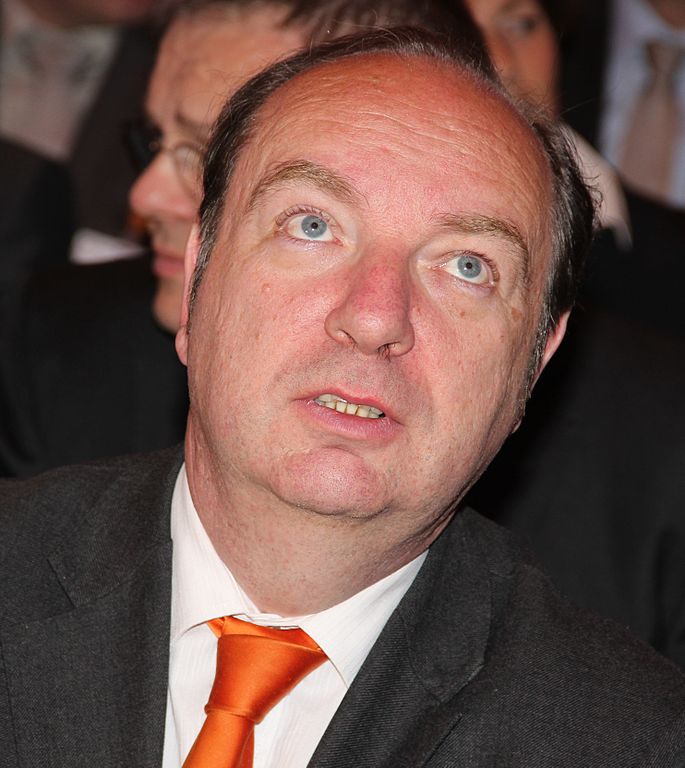
Norman Baker: Get me out of here before I lose my seat
From now until next May every national political event has the potential to exert a major influence over the outcome which is why the resignation of Norman Baker, a junior Liberal Democrat minister in the Home Office hit the headlines and has prompted so much comment. The simple truth is that it has very little to do with his dissatisfaction with the Home Secretary and an awful lot to do with his need to distance himself from the Tories who threaten his Lewes seat. Attracting less interest was the resignation of two other Lib Dem MPs – Jenny Willott and Mark Hunter – as junior whips: both have small majorities over the Conservatives. The Coalition is effectively dead as the Liberal Democrats start the grim struggle to recover some of the electoral ground they have lost since 2010. What we are seeing in office now is much nearer to a minority Conservative government than the Rose Garden Coalition of 2010.
Can the UKIP bandwagon be stalled in Rochester?
It is also why the by-election in Rochester and Stroud on 20 November will take on a such a major significance.
Is this where the Tories halt the UKIP bandwagon or will it gather fresh momentum that will see it fatally undermine Cameron’s prospects of a second term as Prime Minister? No-one seems to know.
If Mark Reckless wins the seat for UKIP then we will very likely see further Tory defections before the General Election and maybe some local deals on electoral pacts, although it is hard to see a rampant UKIP agreeing not to contest Tory seats unless it is given a clear run elsewhere. A UKIP win will force Cameron to turn up the anti-EU rhetoric which is already in danger of alienating the pro-Europe centre ground that he will need if the Tories are to stand any chance of winning with an outright majority: a rock and a hard place.
A Tory win should stabilise the Tories, at least a little, but it is unlikely to dampen UKIP’s determination to push itself to fore and ensure that we have that unpredictable, unprecedented four-way contest.
Marie-Louise Rossi, who died on Sunday night (26 October) at the age of 58, left a huge legacy for the London insurance market for which she acted as a powerful, persuasive advocate for over a decade while at the helm of the International Underwriting Association (IUA).

Marie-Louise Rossi: London Market champion
She combined her 30 year career in the insurance industry with a strong interest in politics which saw her serve as a councillor in Westminster and also fight the Parliamentary seat of the Cities of London and Westminster, albeit for different parties. The interest politics came from her father, Sir Hugh Rossi who was an Conservative MP 26 years and served as a junior minister under both Edward Heath and Margaret Thatcher.
At Oxford, where she studied Literae Humaniores (Philosophy and Ancient History) at St Anne’s College, she was treasurer and secretary of the famous debating society at the Oxford Union. She also became involved in the Bow Group – a pro-Europe Conservative organisation drawing on the One Nation tradition – and later served as its chairman.
Her insurance career began when she graduated in 1979 and became a credit and political risks broker, first with Hogg Robinson and later with the Sedgwick Group. After a short period as a consultant she was appointed chief executive of the London International and Reinsurance Market Association (LIRMA) in November 1993.
Five years later LIRMA merged with the Institute of London Underwriters to create a single, unified voice for the London company market and Rossi was appointed as it first chief executive. Her impact on the market in this role was enormous.
It was during the early part of the current century that the negotiations in Europe over the single market in reinsurance and with the United States over access to the US were at their most intense and sensitive. She was in her element.
An intensely intelligent woman, which sometimes made her seem a little distanced from mere social chit-chat, she demonstrated perfect mastery of every brief. Occasionally frustrated but never outwardly angry she knew how to play the long game that is essential for success when negotiating in international forums.
The success of the Reinsurance Directive which opened up European markets in 2005 was due in no small part to her persistence and ability to build alliances with key interest groups in the political labyrinth that is the European Union.
With the passing of the directive she felt her work at the IUA was done and left in 2005 to pursue her political career, leaving a confident, well organised and extremely effective trade body as her lasting legacy.
After serving as a Conservative councillor in the late 80s and early 90s, she found she was out of step with increasingly strident anti-European tone of the party and after a spell chairing the all party European Movement, decided to join the Liberal Democrats and it was under this new political banner that she fought the 2005 General Election, failing to make much impression on the strong Conservative majority in the Cities of London and Westminster.
Recent years saw her involved in high level lobbying for the industry on wide variety of topics including environmental liability, political and terrorism risks and piracy as well as branching out into setting up and advising new businesses.
She battled with cancer for several years but rarely let it stop her pursuing her twin political and industry careers, although these became increasingly fragmented as a result of the illness.
She died peacefully with her elderly parents Sir Hugh and Lady Rossi at her bedside. She leaves a brother and two sisters but never married.
••••••••••••••••••••••••••••
Originally published on Post Online on 27 October
Scottish financial firms should put customers first and tell us their independence contingency plans
Should financial institutions domiciled in Scotland come clean now on what their intentions are should the independence referendum next week signal the end of the Union?

Scottish finance has a proud history
Many will say that all institutions have contingency plans should this happen but that sharing them could make it look as if they are taking sides, upset the markets and cause unnecessary concern among customers. Well the markets are already upset and most customers, if they have any sense, should be concerned. That leaves “taking sides” and this can only be a worry because presumably most – if not all – major financial institutions in Scotland would be heading south pretty quickly and they feel that to say so publicly at this stage could be seen as strong backing for the No campaign and its warnings of financial chaos.
They owe it to their customers to set aside such political sensitivities and explain what they will be doing on Friday week if the vote goes in favour of creating an independent Scotland.
There is a very long list of sound reasons why banks, insurers companies and fund managers would be unwise to remain in Scotland if the vote is Yes next week. The major banks, as many commentators have already pointed out, are too big to be offered any sort of guarantee by the Scottish government or whatever lender of last resort Alex Salmond has sketched out on the back of an envelope somewhere. Collapse of a major bank is something of a doomsday scenario but we have been very close to that particular cliff-edge in the last decade so it is an issue that has to be taken seriously and, as far as I can see, the pro-independence lobby doesn’t come anywhere near having an answer.
But the problems are far wider and likely to touch on every financial firm in Scotland and should seriously worry their customers.
Just how likely is it in the crazy 18 months there will be between the vote and the severing of the ties with the United Kingdom that any sort of adequate system of financial regulation and consumer protection will be put in place? Consumers of financial services products in the United Kingdom now enjoy a very high level of protection and access to compensation should the products they have bought turn out to be inadequate, they are victims of fraud or the institutions looking after their money collapse – and even these fall painfully short from time-to-time. Would an independent Scotland be able to match that within 18 months?
Add to that doubt the substantial currency risk that hangs over an independent Scotland and the serious doubts about the speed with which it might be admitted to the European Union (Spain would be a major objector as it would not want to do anything to encourage its own Catalonian independence movement) and you would have to have a very robust attitude to financial risk if you live in England, Wales or Northern Ireland and wanted to keep your money in Scotland. It would effectively be an offshore domicile, beyond the reach of British or EU regulators – just imagine trying to get your money out if something goes wrong.
This is why we should be hearing from those financial firms that currently manage and invest money for people all over the United Kingdom: it is called putting customers first.
My pension fund is managed by a Scottish-based institution and I can tell you it won’t be for much longer if the Yes campaign wins and the company in question doesn’t come south pretty quickly. I imagine most other sensible investors will do the same. Whether we move our money or the institutions move it will be a terrible blow for the Scottish economy and a very sad final chapter in the proud history of Scottish finance.
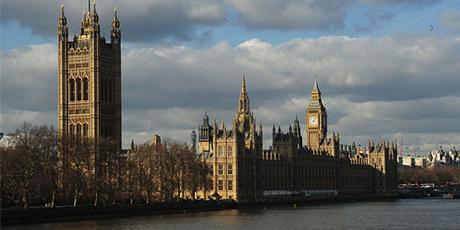
This week will see the already bloated, unelected House of Lords enlarged still further, ensuring that it retains its unenviable position as the largest parliamentary chamber in the world.
With a total of 828 members (although 54 are listed as being on ‘leave of absence’) it is larger than the unicameral European Parliament that represents an entire continent. Add to that huge number the 650 members of the House of Commons and by time 20 more Peers are nominated this week our national parliament will have almost 1500 members, leaving only the Chinese National People’s Congress – which is not a directly elected body – with its 3000 delegates as larger.
Hardly surprising people feel an intense distaste for the world of politics, especially when you start to look at the costs of maintaining such an unwieldy Parliament.
Ermine Arms Race
 There will be alot said about the need for more ‘working Peers’ and the need to balance the representation of the parties to better reflect the House of Commons. This is a lot of tosh and has been the justification for this bizarre ermine arms race since Tony Blair’s Premiership. Has it never occurred to the leaders of our political parties that this could equally be achieved by taking people out of the House of Lords? After all, they are unelected and only owe their appointments to patronage.
Of course it hasn’t occurred to them, sealed into their political bubble in Westminster.
None of the main party leaders has ever lived or worked in what the rest of us would describe as the ‘real world’ so they are incapable of seeing things as the rest of us do. They occasionally profess to worry about how people are getting disconnected from politics, especially when they see the steadily falling turnouts at elections, but are utterly incapable of responding to the important challenge that throws down. They can justify to themselves having more Peers because they believe that is what the rules of the political club they have belonged to all their lives requires. They can’t see that most of the country is already severely embarrassed by having an unelected second chamber, let alone begin to understand why we can’t accept a need to enlarge it further.
Perhaps someone will retort that the House of Lords at least contains people who have a wider experience of life. Really?
Europe laughs at us
Let’s have a look at David Cameron’s nomination as the next British European Union Commissioner, former Leader of the House of Lords Lord Hill. What does his CV say he has done? Oh, lobbyist, public relations consultant and special adviser. And we wonder why the rest of Europe is laughing when we argue that he should be given a major economic portfolio. He is a just another product of the Westminster bubble with no knowledge, experience or achievements beyond the narrow, unrepresentative world of politics.
There have been plenty of studies done recently that show how the House of Commons has become less representative over the decades and is now monopolised by the political class. It is this that lies at the heart of the disconnection between our political leaders and the rest of us and one of he key reasons why the phoney Nigel Farage appeals to so many people. We should all be worried but those best positioned to do something about it clearly demonstrate by their actions that they don’t have an an iota of understanding that they are the problem. They have sealed themselves into their bubble and stare contemptuously out on the rest of us.
I have just read a brief report from Eptica, a firm that offers what it calls customer engagement software, on how the insurance industry is shaping up to the challenge of engaging with its customers in the multi-channel age. It won’t surprise anyone to hear that the answer is “Not very well”.
Putting to one side the obvious fact that Eptica has a vested interest in arriving at this conclusion, the report does contain some useful comparisons with other service sectors and, crucially, focuses on key shortcomings.
Insurers have always be moaned that the dynamics of their business normally mean the only times they have an opportunity to engage with customers is at the inception or renewal of a policy and when they have a claim. The multi-channel, social media age is changing that but insurers are in danger of being left behind. This report shows just how far behind they are already.
The key is engagement. That is the glorious opportunity opening up to insurers in the digital age. Technology such as telematics is already creating a wealth of new interactions between insurers and their policyholders and that is just the beginning. Before the industry gets too excited about that it should ponder just how poor it is at using established technology such as websites and email to communicate: the findings in the Eptica report are sobering to say the least.
If insurers can’t communicate effectively by email when someone wants to buy a policy what hope have they got as the current generation of teenagers and university students starts to become customers? They view email as old hat, preferring the instant communication tools of social media. How many established insurers are ready to respond to their (potential) customers on Facebook and Twitter? Very, very few.
Move from the sales process to the claims process and the picture isn’t any better. Tracking something through a structured process is one of the easiest things to do on the web but how many insurers have fully embraced the potential of that technology? This report doesn’t deal with that but I think we all know the answer.
The most disappointing aspect of many insurers’ forays into social media is that they clearly do not understand its potential for genuine engagement with their customers. Some have got to the stage where they see it as a communication tool but overwhelmingly that means just broadcasting and pushing messages, not inviting engagement and conversation. Maybe they are frightened by that? Maybe they fear the regulators will take a dim view of genuinely communicating with individual customers on Twitter? The industry needs to get over all of those fears and embrace the opportunity. If it doesn’t then before long we will all be insuring with Google, Amazon, Facebook et al with the traditional insurance market pushed even further to the margins.
The Eptica report can be downloaded from its website http://www.eptica.com/insurance-multichannel-Study-2014.html.
The reports – started by The Sunday Times – suggesting that Lloyd’s of London might be on the move from its iconic Richard Rogers’ building on the corner of Lime Street and Leadenhall Street will provoke mixed feelings for many in the insurance industry.

Lloyd’s: iconic status benefits market
There are still many who have never come to terms with its modernity and would happily bid it goodbye but they are unlikely to be any more comfortable in the rumoured alternative of a move to a planned 36-story development further down Leadenhall Street. This has been provisionally labelled ‘Gotham City’ although from the mock-ups I can’t see why. Minster Court – home to the London Underwriting Centre – has long been nicknamed Gotham City and certainly looks a more likely haunt for Batman and his colleagues than the rather bland new glass and steel development.
When the current Lloyd’s building was being built I interviewed the then chief executive of the market, Alan Lord, who was very dismissive of the traditionalist critics of Rogers’ design. He wasn’t an outspoken man and kept his criticism of them rather muted, saying “Whatever else you might think about it, it makes every other building put up in the City since the war look about as imaginative as an igloo”.
Of course, building design in the City of London has got a little bolder in recent years but the Lloyd’s building still stands out as a real gem of modern architecture. In his understated way, Alan Lord made an important point that the present powers that be should be sensitive to.
By commissioning such a bold and original design, Lloyd’s made a brave statement about imagination and flair. Nearly 30 years later it still stands out and has become one of the landmarks of the City. That confers on Lloyd’s a status that helps it attract business from around the world. In marketing terms it is a godsend as it enables Lloyd’s to portray itself as the hub of the London insurance market, something its market share alone wouldn’t necessarily justify nowadays. By taking a few floors in a massive development it would throw that away.
So, when the bean counters look at the bills for running and maintaining the present building someone please tap them on the shoulder and ask them to consider what the value of occupying a separate, distinctive building is to the market, especially as it helps reinforce Lloyd’s image as the home of underwriting flair. They will screw up their faces and mutter about subjective, intangible marketing mumbo-jumbo but these things are important even though they are impossible to include on a balance sheet.
I recently put together a video for Lloyd’s on its royal connections and this underlined the status Lloyd’s has in the City of London. The video was to celebrate the visit of the Queen and Prince Philip to Lime Street to celebrate the 325th anniversary of the founding of the market in Edward Lloyd’s coffee house and it included many references to previous royal visits to the market, not least the Queen opening the present building in 1986. Can you imagine the monarch rushing to open a few floors for Lloyd’s in the suggested alternative? No.
There is so much Lloyd’s could throw away in an ill-conceived economy drive.


