
Most commentators seem to be lazily assuming that the better UKIP does the closer we move towards the EU exit door. The evidence doesn’t support this.
Putting the polling trends for UKIP since 2010 alongside EU referendum voting intentions shows the contrary: every time UKIP support jumps, the proportion of people who would vote to leave the EU declines.
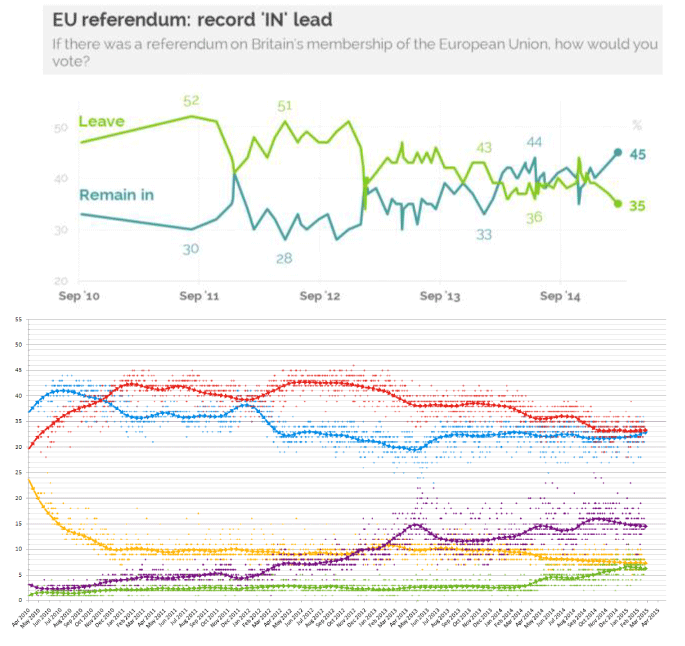 This isn’t a particularly recent phenomenon either. When UKIP first hit 10% in the polls at the beginning of 2013 – and Cameron was panicked into announcing that he would hold an In/Out referendum – support for leaving the EU suddenly collapsed. This shouldn’t have been too much of a surprise as it had also happened a year earlier when UKIP support first poked above the 5% mark. Although the proportion saying they would vote No recovered a little during 2013 it has never risen above 50% again and steadily declined during 2014.
UKIP may have celebrated the success of its high risk strategy of getting two defecting Tory MPs – Carswell and Reckless – to put themselves up for immediate re-election but it appears to have further damaged the prospects of achieving its cherished ambition of seeing the UK leave the European Union as there is now a 10% gap in favour of staying in.
What appears to be happening is that every time the prospect of actually having a vote on our EU membership edges a little closer, more people stop to think about the issues and decide that we are better off remaining on the inside rather than hurling abuse at it from the outside. I also think that the additional media exposure UKIP, and Nigel Farage in particular, receives as its poll ratings rise doesn’t help its long term cause. Clearly, there is a growing minority who are attracted to Farage’s disjointed rhetoric which is why UKIP could be a significantly disruptive force at the General Election, although emerging with only one or two seats.
A far greater proportion of the electorate are not taken in by Farage’s bluster. Indeed, the poll trends suggest they are repelled by it which is why the support for leaving the EU is declining.
It is probably even worse for UKIP and the anti-EU camp. Add to mix the Don’t Knows and the experience of the Scottish referendum is that if they are galvanised into voting they will split substantially in favour of the status quo – staying in the EU.
I am always shocked by the number of people who need to make presentations as part of their job – almost an essential requirement for people moving up the management ladder – who let themselves be stripped of personality and turned into dull, inspiring clones.
We’ve all sat through presentations by management consultant types which have been overloaded with Powerpoint slides, mechanically delivered and oh so routine. Safe but dull. I’ve worked with hundreds of people to take them on that difficult and, for many, frightening journey from behind the desk to the front of the stage and my starting point is always to build on people’s own personalities. It works. It produces better, more confident speakers.
I was delighted to have the opportunity to discuss my approach with Roger Edwards, a leading marketing strategy and social media consultant in the financial services sector, for his weekly podcast.
We also shared some views on the challenges facing the financial services sector as it gets to grips with social media.
Other articles on Presentation Skills and Public Speaking
The Perils of Boardroom Presenting or How the Mighty Fail
Don’t let those public speaking fears crush you

Oborne set out his case in a powerful, passionate article on the Open Democracy website
The high profile departure of Peter Oborne from his position as the Daily Telegraph‘s chief political commentator has sparked a fierce debate about editorial integrity. It is an important debate and one that should be carried out in public, in front of and involving the readers and audiences we all crave and which commercial departments have to monetise.
I have worked in business-to-business media, mainly covering financial services, for over 30 years and the tension between commercial and editorial departments has been a fact of life for my entire career. At its best that tension is creative and inspiring; at its worst it is sordid and dishonest. There are plenty of examples of both ends of that very wide spectrum played out daily in newspaper, magazine and website offices.
For me transparency, honesty and integrity have always been the cornerstones.
Can sponsored content really add value?
Sponsored editorial content has been around for years and can provide readers with valuable, high quality information, especially in business publications. The challenges for an editor when presented with a sponsored content opportunity are to win the trust of the sponsor and then to ensure that readers know the content is sponsored. What the sponsor is buying is access to your audience, your readers. If they are remotely intelligent they will also realise that they are buying a partnership with your brand and its values because that it what the readers buy too.
For me that always meant working with sales teams and sponsors from an early stage to set the objectives, content and style of any sponsored content, an approach that applies to print, online and events. This has worked many times and when it does it delivers great content for the readers and real value for sponsors. When it doesn’t work – for instance, when a dumb PR person gets hold of it and thinks it should be all about products and mention the company in every other paragraph it becomes a waste of everybody’s time and money: readers will just flick past it whether it is on page or on a website.
The second challenge is to get it labelled clearly: tell the readers it is sponsored. This has actually proved the harder battle to fight over the years and has undoubtedly got harder in the digital era. I believe readers appreciate the honestly and clarity. They are perfectly capable of making up their own minds what delivers value to them and do not want to be misled. Just about every market I have worked in has been blighted by a bucket shop “ad-for-ed” competitor which thinks its readers are stupid and can’t spot the correlation between who is advertising and the coverage they get (or don’t get in the case of HSBC and the Daily Telegraph). It is a fools’ game, a race to the bottom and hardly ever a recipe for long term commercial success. Quality advertisers and sponsors want to be associated with quality editorial products and readers want to be able to trust what they are reading: holding the line on this nonsense will pay off in the long term.
The media must be more transparent
Transparency applies in other ways too and the national newspapers have been poor at this for years. I give you one example to illustrate the point.
Just over ten years ago the switch by large numbers of insurance companies and others to call centres and back offices in India was generating alot of comment and I contribute my fair share to that. The chief executive of one insurer – Patrick Snowball at Norwich Union (Aviva) – took me to task over some of the things I wrote and said it was ill-informed and I ought to go an see for myself. I politely pointed out that my modest editorial budget was not going to stretch to a trip to India so he responded by offering to take me (and a couple of other journalists) to India for a week to visit a range of call centres.
I went and wrote several articles on Indian call centres for the various publications I was working across at the time and at the end of each one I put a footnote saying the trip was paid for by Norwich Union but that they didn’t exert any influence over what I wrote (not even a request for a quote check – another real blight on modern journalism). To me that left the intelligent reader to make up their own mind on the value of the content. I call that honesty. These trips go on all the time and I hardly ever see mention of who paid for them in articles or alongside videos. Why?
Sometimes you just have to be tough
There have been times when I have not been flavour of the month in advertising departments, especially when writing something that upsets one of their major clients. This is where editors and journalists have to have thick skins but also be prepared to justify what they have written. My favourite story is about the collapse of Independent Insurance in 2001.
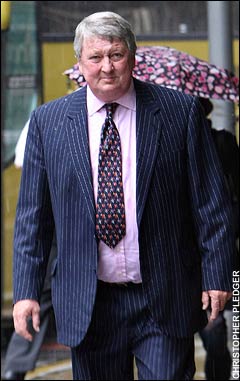
Bright: upset was an understatement
Two years prior to that I had a big – I mean big – falling out with the chief executive of Independent Insurance Michael Bright over something I had written which got under the skin of his considerable ego. Unable to sue me (I found out years later he had lawyers crawling all over what I had written but it was quite simply true and fair comment) he decided to withdraw all Independent’s advertising and sponsorship from Post Magazine, the main title I worked on at the time and back our competitor Insurance Times to the hilt, along with other fringe titles. This made for some uncomfortable conversations with our advertising department but I was not prepared to backtrack on what I had written and, to give them credit. they understood my stance even though the sight of large Independent adverts elsewhere must have caused them constant grief and individually cost them money in lost commission and bonuses.
Vindication came two years later when Independent collapsed, leaving in its wake a long list of creditors, including Insurance Times which never got paid a six figure sum for advertising it had gladly taken from Independent. I couldn’t help feeling certain sense of vindication. Six years later I sat in Southwark Crown Court and watched Bright sentenced to seven years imprisonment for his part in leading the fraud that brought Independent down.
Peter Oborne has lifted the lid off a murky world and has done the media and the public who depend on it for honesty, complete and impartial coverage of the issues and industries that matter to them a huge service. If it helps restore some of the balance between editorial and commercial departments so they can work in partnership and not with one dominating over the other then we will all be better off.
I am struggling with this endless General Election campaign. It is, of course, an inevitable consequence of the move to fixed-term Parliaments, a reform I am still largely in favour of. However, a glance across the Atlantic should have been enough to prepare ourselves for months of campaigning.
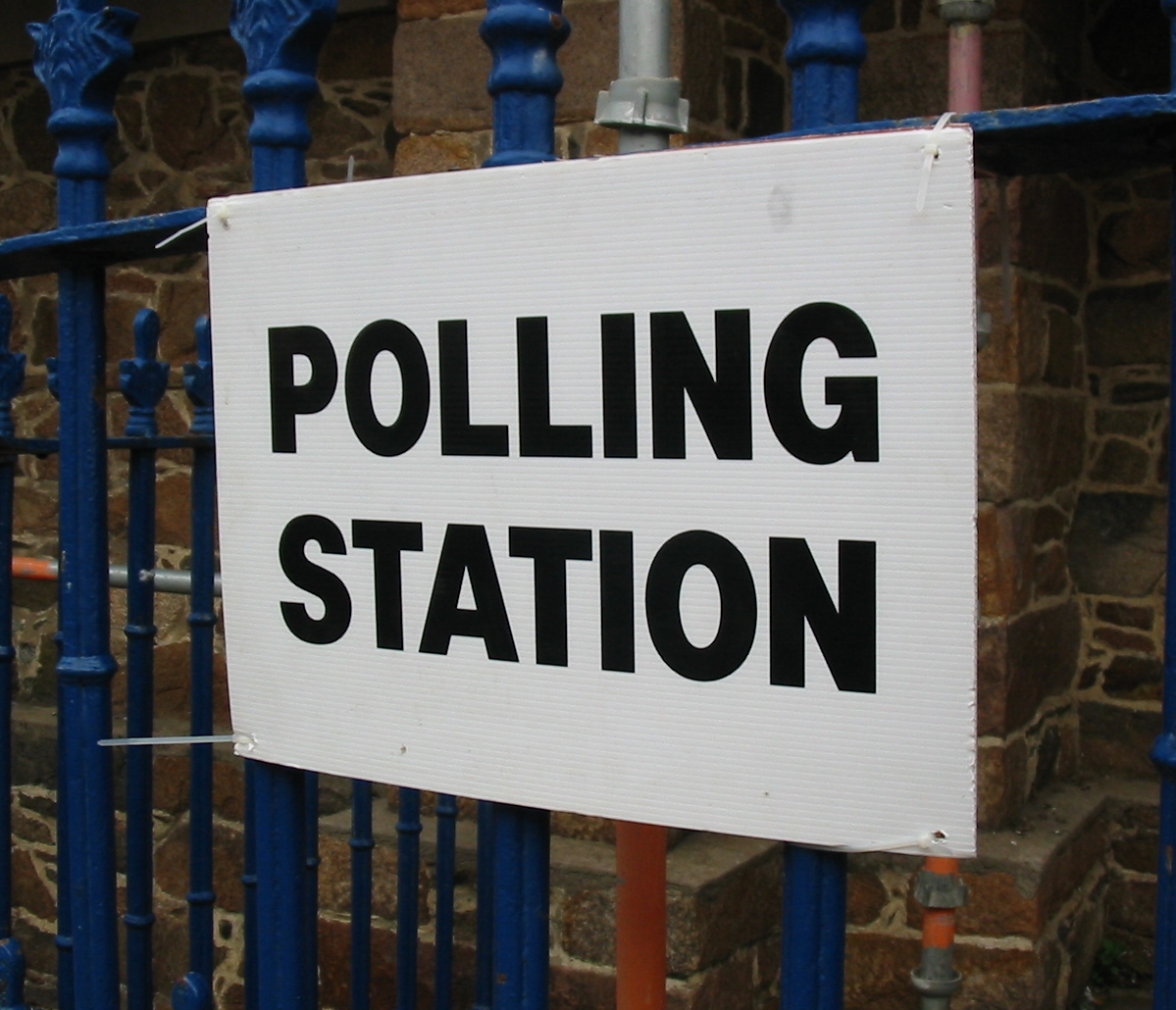
We’ll be exhausted by the time Polling Day finally arrives on 7 May
What is disappointing is the way the political parties have responded to this challenge. They are using the electorate as one giant focus group to test an endless stream of disjointed policy initiatives lurching from the health service one day, to education the next and the economy the day after – and so on. There is little sense of an overarching theme with any of this except, tellingly, from the Scottish Nationalists. There should be no mystery as to why the SNP continues to poll strongly – it has its big idea and remains stubbornly focused on it.
The absence of a coherent narrative joining together the daily diet of unrelated policy initiatives is crippling the main parties. The polls aren’t moving because they are not engaging the electorate (just exhausting us) and they are not engaging us because we have no real sense of the vision of what they are offering for the next five years. We have a vague of what they stand for and don’t stand for and they are playing around the edges of that hoping that one day, one policy will hit the mark and shift just enough floating votes their way to make a difference. It is a directionless, passionless form of campaigning that deserves to fail.
Manifesto damp squibs?
What would shake up the political agenda would be if one party was brave enough to stop test marketing policies and publish a manifesto that communicated a vision, a sense of direction and built a powerful narrative linking its policies. My guess is that in this elongated General Election campaign the manifestos will be a damp squib, little more than a collection of the policy announcements we have already heard and which have got a vague thumbs up from the pollsters. I expect this will be true of Labour, Conservatives and Liberal Democrats. This may create further opportunities for the minority parties already upsetting the establishment apple cart.
The SNP already seems well-equipped to avoid this trap but the opportunity is also there for the Greens and UKIP to make further inroads into the votes of the mainstream parties by creating a simple, strong and focused narrative. UKIP will attempt to do this around its simplistic anti-EU message and would do well to avoid making too much fuss of the manifesto Nigel Farage is meant to be writing after its complete abandonment of its 2010 manifesto. The Greens are quietly creeping up on the outside but don’t seem to have found the accelerator pedal yet: there is time.
Lack of campaigning momentum
The barrage of daily policies currently being inflicted on us also highlights another looming problem with this campaign: how will the parties maintain, let alone build, the momentum as polling day approaches? They can’t rely on the TV leaders’ debates to do that alone if they haven’t developed a strong core message by then. I see a real danger that the debates could become just another squabble about whatever policy initiative happens to have grabbed the attention that day, turning them into an extension of Prime Minister’s Question Time and further turning the electorate away from political debate and the political process.
There is a big prize to be won by the party bold enough to break away from the present fragmented, directionless, uninspiring mess.
The Committee on Climate Change seems a little late to the Flood Re party. This independent body set up to advise the government has come out with a barrage of criticisms of the joint government and insurance industry initiative to ensure affordable flood insurance is available to all homeowners.
It has done so on the day that Flood Re announced that former government minister Mark Hoban will be its chairman, the latest in a series of rapid steps taken towards implementation following the passing of the relevant legislation.
It is rather late to be raising some of the points the CCC’s expert on adapting to global warming, Professor Lord John Krebs, has aired in a letter to Flood Re’s chief executive Brendan McCafferty. Some of his concerns, such as the inclusion of properties in Council Tax Band H, have been argued over in Parliament and have become part of the terms of reference for Flood Re so it is hard to see what benefit there is in revisiting those arguments now.
However, Lord Krebs does raise some interesting issues that won’t go away and which Flood Re should address.
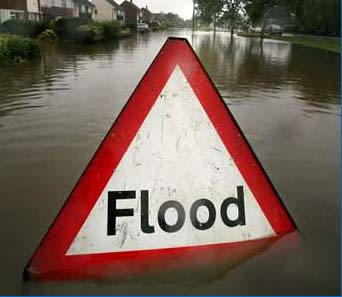
Flood Re: can it persuade insurers to embrace ‘resilience’?
He talks alot about resilience, arguing that more needs to be done to make high risk homes more resilient to flooding. He is right in identifying what needs to be done but hasn’t brought together all the elements that are needed to push this to the top of Flood Re’s agenda. It isn’t, as he appears to suggest, just a matter of using the threat of higher insurance costs as a negative incentive for householders to do more to protect their homes and make them more resilient.
This starts with the government. Spending on flood defences has to be maintained. Developers and the planning authorities have to be penalised for building on flood prone land if not prohibited altogether. These are matters of government policy.
The insurance industry also has a major contribution to make to improving resilience and must stop running away from its responsibilities in this area.
I have argued for many years that insurers could do more to encourage flood-resilient reinstatement when dealing with flood claims. Over 20 years of spiraling flood claims they have done far too little to make the properties they insure and which have been flooded significantly more resilient to the next flood, arguing that it would amount to ‘betterment’. This, they say, isn’t what the policyholder has paid for and would push up claims costs. They even worry that if they paid extra to make a property a better risk the householder might then go and insure with one of their competitors. I have always thought that a rather blinkered, short-term perspective.
If all insurers agreed to a package of reasonable – not extravagant – improvements they could make to properties that are flooded that would directly contribute to lower claims costs and a shorter reinstatement periods the next time a flood hits then it would be an investment in reducing future costs. It isn’t too hard to imagine many householders seeing their insurers investing directly in better protection of their properties actually being more prepared to contribute themselves to additional measures. That would certainly go some way to ticking Lord Krebs’ boxes.
Perhaps this is something Flood Re in its privileged position as a pan-industry scheme and without the competitive concerns of individual insurers to cramp its response could promote. It would be a constructive response to the CCC’s concerns.
Flood Re has taken an important step closer with the Government’s confirmation that the legislation needed to enable the new pooled flood insurance scheme to be set up will be presented to Parliament in the New Year. With some key appointments confirmed at the same time it does look as if two years of talking are at an end. The focus is now firmly on the practical steps to be taken to get it up and running by July 2015.
The Department for Environment, Food and Rural Affairs announced at the same time that properties in Council Tax Band H (and I in Wales) will be included in the scheme. This deals with one of the most obvious anomalies in the Government’s original proposals which would have seen owners of these properties contributing to the levy – set at 2.2% of premiums – but not eligible to benefit from the scheme if they have a claim. This was a crude, if minor, piece of social engineering totally inappropriate for private insurance. If governments want to redistribute wealth and promote equality they have a vast array of tax and benefits tools at their disposal.

The Somerset Levels in full flood. (from http://www.dillington.com/blog)
The Government has also removed a lot of the uncertainty about when it will step in should the cost of meeting claims ever overwhelm Flood Re. A sensible compromise about how far it might be subsidised from public expenditure and how this and its capital requirements will be reviewed seems to have been reached.
Leaseholders out in the cold
DEFRA has rejected most of the other pleas for the scheme to be extended, probably correctly, although I still think some consideration must be given to the problems faced by business property owners who live on the premises, such as pubs and B&Bs. Leaseholders have been quick to complain about their exclusion but they are running businesses for profit and should be expected to pay the market rate for insurance if they want to let properties in high-risk flood areas. Owners and occupiers of ground floor flats may find they have issues with obtaining affordable contents insurance and this needs to be kept under review.
Should small businesses be in?
Small businesses will also feel aggrieved that their pleas to be included in Flood Re have been rejected but the small business lobby never really came up with a viable proposal for their inclusion. People speak emotively about “small businesses” but what, exactly, is a small business and when would its premises be eligible for subsidised insurance? And who would subsidise it? Big businesses or other small businesses in low flood risk areas? Flood Re works on a cross-subsidy from low-risk domestic properties to high risk properties but you can’t ask homeowners to subsides businesses. The small business lobby simply failed to address these issues.
2009 cut-off retained
Properties built since 2009 will also remain outside the scheme in order to discourage the building of new properties on flood plains. It still looks a rather arbitrary date and could leave a lot of people on modest incomes exposed to high premiums, possibly even unobtainable cover. Perhaps it is necessary to have a simple, if rather blunt, cut-off in order to get Flood Re off the ground. I would hope that as it gets established this will be reviewed with reference to known and identifiable flood risks when planning permission was granted. If a flood risk was known at the time, it should be excluded; if it wasn’t, it should be covered by Flood Re.
The challenge now, however, is to get Flood Re off the ground with major decisions to be made on placing the reinsurance cover and putting in place operational systems that will be able to cope with the volume of claims Flood Re will receive when (rather than if) there is a major flooding incident in the next few years.
The unpredictability of severe weather means that it will have to be ready to respond on day one next July. After all, the 2007 floods that devastated so many parts of the country happened in June and July.
Jeremy Thorpe, who died yesterday at the age of 85 after a thirty year battle with Parkinson’s Disease, was one of the dominant political personalities of my teenage years. He spoke a language that transcended the sterile class warfare that Labour and the Tories had sunk into in the 1960s and was hugely refreshing because of it. He was a fierce opponent of the evil racist regimes in Rhodesia and South Africa and his courage in speaking out against them was also attractive to many a teenage radical.
He was also a victim of his own confused sexuality in an era far less tolerant than our own. This drove him into a series of bizarre responses to Norman Scott’s vindictive campaign against him which led to his spectacular downfall. That story is retold in vivid detail in many newspapers and websites today and makes sad reading.
For me it is as a brilliant campaigner and a passionate radical Liberal that I will remember him, alongside the modest dignity with which he accepted his exit from public life and his years of illness.

Thorpe: a charismatic platform orator
He was never afraid to be outspoken on a cause he believed in and his opposition to the illegal racist regime in Rhodesia (now Zimbabwe) marked him and the Liberal Party he by then led as a brave and distinctive voice in a timid world. While the Labour Prime Minister Harold Wilson was making the white rebel leader Ian Smith feel undeservedly important by negotiating endlessly with him, Thorpe came up with a more direct solution: bomb the sanctions busting railway lines. Wilson’s attacks on Thorpe were vicious, labelling him “Bomber Thorpe” but I still believe Thorpe was right. The sanctions against Rhodesia were ineffective because the railways from the African coast carried goods to and from the illegal regime with impunity. Cut the supply lines and Smith’s regime would have probably buckled, saving the country from years of guerrilla warfare and, maybe, the blight of the Mugabe regime today.
Thorpe was also the Liberal leader who knew when to say no to the Tories.
Many of us who campaigned for the Liberal Party for the first time in February 1974 held our breath when he walked into 10 Downing Street at the invitation of Ted Heath who wanted a coalition with the Liberals to keep the Tories in power. Despite being offered the job of Foreign Secretary, Thorpe rejected the coalition as it lacked cast iron guarantees on cherished Liberal policies such as electoral reform. What a shame Nick Clegg didn’t take the same stance in 2010.
He was a colourful, genuinely charismatic politician of a type we rarely see nowadays, putting principle before naked ambition as he showed in 1974.
He was also a committed European who would have destroyed Nigel Farage, not pussyfooted around him as today’s party leaders do. I always thought his greatest campaign was the EU referendum in 1975 when he outshone whoever he shared a platform with at some huge rallies – Ted Heath, Roy Jenkins and others were constantly overshadowed by Thorpe.
Many obituaries have commented on his brilliance at recalling names and faces: it was an astounding gift which I never saw fail him. I remember my late mother thinking she was one of the most important people in world when on meeting him briefly for the second time at a Liberal Party Assembly sometime in the mid-70s he remembered her name, where she came from and that her son was a Young Liberal despite us not sharing a surname (my mother, a young widow, had remarried).
One story I must share from later in his life illustrates his humility and simple humanity. We were at a Christmas party at Jonathan Fryer’s house in the early 1990s and when we noticed our two eldest daughters Eleanor and Olivia had disappeared I went to find them. They were with a few other young children sitting on the stairs with Jeremy Thorpe telling them some wonderful Christmas stories. The children were enthralled but had no idea who this man was until a lady guest walked past and said that one day they would read about him in their history books. Jeremy just turned round and said “I don’t think so. I’ll be a tiny footnote at best”. He deserves more than that.
This week’s hard-hitting report from the London Market Group – London Matters – pulls few punches when it comes to describing the scale and breadth of the challenges facing the London insurance market. It deserves a wide audience.
The London insurance market matters, not just to the UK insurance industry but to the UK economy. The report highlights a few key stats that should remind everyone of this: “The London Market now controls more than £60bn of annual premiums, employs 48,000 people, generates more than 20% of ‘The City’s’ GDP and over 8% of London’s GDP.” But, the report produced by Boston Consulting argues, this position is being steadily eroded, especially in the important emerging economies around the world and in some of the classes of business, such as reinsurance, that have long underpinned London’s success.

London insurance market under threat
It throws out many reasons for this, some of which are partially out of London’s control, the growing desire to buy locally when capacity, expertise and cover are available being prime among them. Of course, getting close to those local markets is something the key London players are doing and they clearly need to step up their efforts on that front but if the political and economic forces in in other countries are pushing people towards local players then it will be an uphill battle.
The report highlights the diminishing share London has in emerging markets and I have heard some firms already dismiss this concern by arguing that it doesn’t matter if they have a smaller share of a rapidly growing market so long as their revenues are growing. This is an insular and short-term view. A decreasing market share means a decreasing influence, it means that when new risks emerge those markets won’t think to look to London for a solution as London will have become a tiny blip on their radar screens. It also means that London will lose the ability to shape and guide those markets, thereby ensuring it remains at the forefront of everybody’s thinking.
Call for unity
Another area where the London Market Group has hit the target is its call for greater unity of purpose across the London Market when it comes to putting the market’s case to regulators and governments and promoting it around the globe. The proliferation of market bodies in such a commercially and physically tight-knit market baffles many outsiders. The LMG under its forceful chairman Steve Hearn is certainly doing its best to tackle that problem. It will need alot of goodwill and a fresh willingness on the part of some major corporate and trade associations egos to take a back seat if it is to succeed.
One issue that it wants the market to lobby on with a clearer voice is the cost of regulation, one of the potential deterrents to doing business in London identified by the report. It needs to be careful on this.
The cost of regulation is not the only reason why London is more expensive. As the report vividly illustrates the transactional and processing costs of doing business in the London Market are still too high. The 20 year drive to reduce these costs by making the market more efficient continues to proceed at, at best, a stately pace. It needs to speed up if it is to persuade politicians and regulators that they need to play their part in reducing the costs of doing business in London.
Attacking regulators and the costs of complying with their ever more complex regimes wins easy applause from market practitioners. It doesn’t always win you many friends among regulators, politicians or the wider public and nor should the industry expect it to. A more nuanced approach to this debate is needed. One of the strengths of London over many other domiciles and local markets is the quality and strength of its regulation. The market should show more willingness to promote this as a reason for doing business here. If it does I can’t help feeling that regulators will be more sympathetic to arguments about where costs do exceed the benefits the market has shown it is willing to promote.
Everybody with an interest in the future of the London Market should read this report and ask themselves what they can do to defend and promote the market.
The report and a CEO summary can be downloaded from the LMG’s website – Download reports
We are six months away from a General Election and rarely in the post-war era can the outcome be so uncertain this close to polling day.

Edward Heath: called snap election in 1974
I’ve seen some commentators suggest that the first election of 1974 was similarly wide open but the crucial difference is that it was snap election. It was called by Prime Minister Edward Heath on a simple “Who governs the country?” question in the face of crippling strikes by miners and power workers that had reduced the country to a three day working week with mid-week football matches played in the afternoon. At the end of August 1973 we were not wildly speculating on the outcome of the next General Election as we were just a little over three years into the Heath government.
The big unknown as election campaign of 1974 progressed was how well Jeremy Thorpe’s resurgent Liberal Party would do: it was the first election for over 40 years where the prospect of a significant vote for a third party threatened to disturb the two-party duopoly of British politics. Its impact was relatively minor in the end, polling a sizeable 19.3% but winning only 14 seats. Talks with the Tories over a potential coalition were over very quickly and a minority Labour government under Harold Wilson came into office.
How different from today.
That third party is now a real force in British politics and in government. All the talk now is about the likely impact of a fourth party in England – UKIP. The Scots and Welsh already have four party politics, of course, with their powerful nationalist parties.
Decline of Labour-Tory duopoly
Behind this is a story of the decline in the Labour-Tory stranglehold on British politics. From its high point in 1951 when they grabbed a massive 93% of the popular vote, through a 75% share in 1974 to 68% at the last General Election, the latest polls suggest that Labour Conservatives between them will be lucky to command a 65% share next year. Thus predictions about the outcome are highly speculative as the prospect of a genuine four party contest in the first-past-the-post system used for Westminster elections is a new dimension that has election experts frankly guessing. Some seats could be won on barely 25% of the vote.
So, everything is to play for. There are few certainties beyond the Liberal Democrats losing votes and seats (but no clarity on how far they will fall) and UKIP emerging as a major disruptive force.
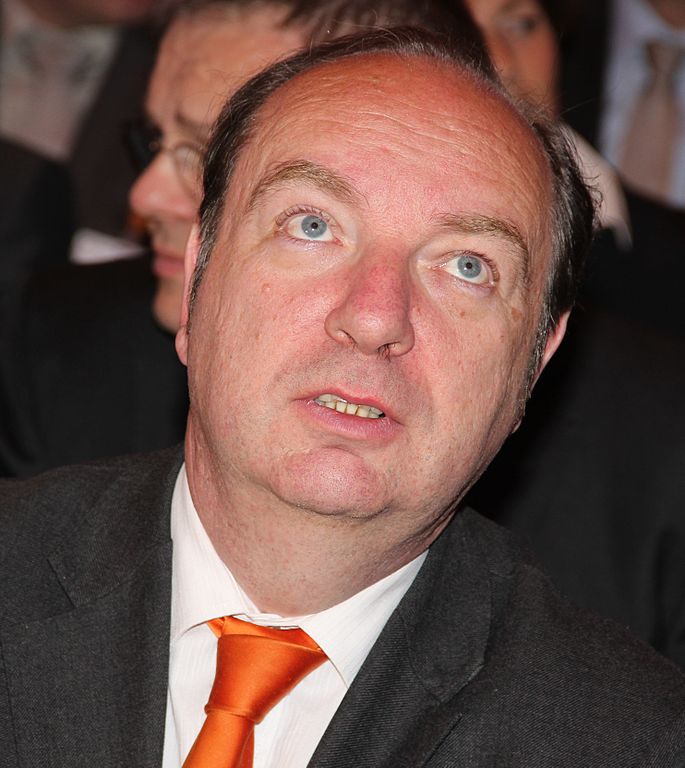
Norman Baker: Get me out of here before I lose my seat
From now until next May every national political event has the potential to exert a major influence over the outcome which is why the resignation of Norman Baker, a junior Liberal Democrat minister in the Home Office hit the headlines and has prompted so much comment. The simple truth is that it has very little to do with his dissatisfaction with the Home Secretary and an awful lot to do with his need to distance himself from the Tories who threaten his Lewes seat. Attracting less interest was the resignation of two other Lib Dem MPs – Jenny Willott and Mark Hunter – as junior whips: both have small majorities over the Conservatives. The Coalition is effectively dead as the Liberal Democrats start the grim struggle to recover some of the electoral ground they have lost since 2010. What we are seeing in office now is much nearer to a minority Conservative government than the Rose Garden Coalition of 2010.
Can the UKIP bandwagon be stalled in Rochester?
It is also why the by-election in Rochester and Stroud on 20 November will take on a such a major significance.
Is this where the Tories halt the UKIP bandwagon or will it gather fresh momentum that will see it fatally undermine Cameron’s prospects of a second term as Prime Minister? No-one seems to know.
If Mark Reckless wins the seat for UKIP then we will very likely see further Tory defections before the General Election and maybe some local deals on electoral pacts, although it is hard to see a rampant UKIP agreeing not to contest Tory seats unless it is given a clear run elsewhere. A UKIP win will force Cameron to turn up the anti-EU rhetoric which is already in danger of alienating the pro-Europe centre ground that he will need if the Tories are to stand any chance of winning with an outright majority: a rock and a hard place.
A Tory win should stabilise the Tories, at least a little, but it is unlikely to dampen UKIP’s determination to push itself to fore and ensure that we have that unpredictable, unprecedented four-way contest.
Marie-Louise Rossi, who died on Sunday night (26 October) at the age of 58, left a huge legacy for the London insurance market for which she acted as a powerful, persuasive advocate for over a decade while at the helm of the International Underwriting Association (IUA).

Marie-Louise Rossi: London Market champion
She combined her 30 year career in the insurance industry with a strong interest in politics which saw her serve as a councillor in Westminster and also fight the Parliamentary seat of the Cities of London and Westminster, albeit for different parties. The interest politics came from her father, Sir Hugh Rossi who was an Conservative MP 26 years and served as a junior minister under both Edward Heath and Margaret Thatcher.
At Oxford, where she studied Literae Humaniores (Philosophy and Ancient History) at St Anne’s College, she was treasurer and secretary of the famous debating society at the Oxford Union. She also became involved in the Bow Group – a pro-Europe Conservative organisation drawing on the One Nation tradition – and later served as its chairman.
Her insurance career began when she graduated in 1979 and became a credit and political risks broker, first with Hogg Robinson and later with the Sedgwick Group. After a short period as a consultant she was appointed chief executive of the London International and Reinsurance Market Association (LIRMA) in November 1993.
Five years later LIRMA merged with the Institute of London Underwriters to create a single, unified voice for the London company market and Rossi was appointed as it first chief executive. Her impact on the market in this role was enormous.
It was during the early part of the current century that the negotiations in Europe over the single market in reinsurance and with the United States over access to the US were at their most intense and sensitive. She was in her element.
An intensely intelligent woman, which sometimes made her seem a little distanced from mere social chit-chat, she demonstrated perfect mastery of every brief. Occasionally frustrated but never outwardly angry she knew how to play the long game that is essential for success when negotiating in international forums.
The success of the Reinsurance Directive which opened up European markets in 2005 was due in no small part to her persistence and ability to build alliances with key interest groups in the political labyrinth that is the European Union.
With the passing of the directive she felt her work at the IUA was done and left in 2005 to pursue her political career, leaving a confident, well organised and extremely effective trade body as her lasting legacy.
After serving as a Conservative councillor in the late 80s and early 90s, she found she was out of step with increasingly strident anti-European tone of the party and after a spell chairing the all party European Movement, decided to join the Liberal Democrats and it was under this new political banner that she fought the 2005 General Election, failing to make much impression on the strong Conservative majority in the Cities of London and Westminster.
Recent years saw her involved in high level lobbying for the industry on wide variety of topics including environmental liability, political and terrorism risks and piracy as well as branching out into setting up and advising new businesses.
She battled with cancer for several years but rarely let it stop her pursuing her twin political and industry careers, although these became increasingly fragmented as a result of the illness.
She died peacefully with her elderly parents Sir Hugh and Lady Rossi at her bedside. She leaves a brother and two sisters but never married.
••••••••••••••••••••••••••••
Originally published on Post Online on 27 October


 David Worsfold