

This is the year of the ballot box. Over 50 national elections involving a potential 4 billion voters going to the polls are due to take place this year. They could leave the world looking rather different by the end of the year.
The potential of one set of elections to influence the next is endless, especially as they are taking place at a time of heightened geo-political tensions.
United Kingdom
Of course, for us in the United Kingdom we are most focussed on our own General Election which must at least start in 2024, although it could still be running in January next year. That prospect seems unlikely. The big question is: will it be May or will it be in the autumn?
That this is the dominant political story in the UK, exposes one of the huge shortcomings of our political system – placing the power to determine the date of the General Election in the hands of the Prime Minister. The corrosive impact of the uncertainty this creates has long been recognised but the attempt to introduce fixed term, five year Parliaments did not outlast the Coalition government of 2010-15.
We have now entered a phase where every political decision, every utterance by party leaders and every policy announcement is judged in terms of its impact of the potential date of the election and its outcome. This does not make for good government, although that is something the Tories abandoned long ago amid the post-Brexit chaos of five Prime Ministers in seven years.
The choice for Sunak seems to be about choosing a date that causes the Tories the least damage in terms of lost seats, as any prospect of holding on to power finally vanished when his hapless predecessor crashed the economy in September 2022. It is also being heavily influenced by the open manoeuvring around the Tory leadership after the anticipated defeat.
The UK election might be important to us: however, it is a sideshow when it comes to world politics.
Taiwan The first date on this roller-coaster of what could be a series of epoch shaping elections is 13 January, when Taiwan – the Republic of China – goes to the polls. There the battle between the ruling Democratic Progressive Party (DPP) and the main opposition Kuomintang (KMT) is about more about tone when it comes to the all-important subject of Taiwan’s independence and its future relationship with the increasingly aggressive People’s Republic of China. Under Xi Jinping, China has made what it sees as the reunification of China a priority despite the overwhelming majority of Taiwan’s 23.5 million people rejecting the idea.
The DPP has a more forceful approach to Taiwanese independence than the KMT and a maverick third party, the Taiwan People’s Party. China’s notorious propaganda machine has flooded the country with fake news, deepfake videos and wave after wave of disinformation primarily aimed at undermining the DPP.
If there is one theme that links all these elections it is the potential of disinformation campaigns, fuelled by the lax policies of the main social media platforms, to undermine democratic processes.
Should the DPP’s candidate Lai Ching-te succeed despite China’s disruptive efforts then we can expect an escalation in tensions in the South China Sea with Communist China stepping up its military aggression towards Taiwan. The world could quickly find itself balanced on the knife-edge of a wider conflict, testing America’s policy of “strategic ambiguity” to its limits.
Russia
The one so-called election that we can be certain of the outcome is the Russian Presidential election in early March. Putin will win by a landslide majority. He has murdered, exiled or imprisoned the opposition but will still claim the election result as a rousing endorsement of his attack on Ukraine.
Ukraine This is the election that will probably not happen. A week after Putin is carried back into the Kremlin in triumph, Ukraine was due to hold a Presidential election. All elections in Ukraine are currently suspended under the martial law imposed when Russian forces rolled across the border in February 2022.
There is nothing unusual about countries suspending elections in wartime. The UK did it twice in the last century and it is hard to see how fair and free elections can be held when Russia occupies part of the country and much of the essential infrastructure of elections has been damaged or destroyed, but Russia and its supporters will be bound to exploit this for their own propaganda. Hardliners in the US Republican Party opposed to supporting Ukraine are already making noises about the cancellation of the elections as being another reason to abandon Ukraine.
Europe The European Parliament elections will take place in mid-June and are currently predicted to see a strong showing among far-right parties across the continent. This will probably not be enough to depose the centre-right European People’s Party grouping as the largest party in the Parliament but will tilt the balance in the Parliament in a strongly rightward direction, giving a much enlarged platform to parties with strong neo-fascist elements in their ranks.
This, in turn, will influence to complexion of the European Commission at a time when the EU faces crucial issues around enlargement and continued support for Ukraine. It will also feed through to important national elections in subsequent years, not least the next French Presidential election in 2027.
United States of America By the time America goes to the polls in November, the impact of the elections in the first half of the year will have fed through to its highly polarised politics. This far out it is hard to predict what the impact of that might be, especially as the identity of the Presidential candidates is not certain, although most commentators still predict a re-run of the Biden v Trump contest of four years ago.
The world will be watching nervously as the Presidential election progresses as outside of Republican America and the Kremlin the prosect of a second Trump Presidency is almost unthinkable and certainly highly undesirable.
The Rest
There are plenty of other national elections due to take place next year, not least in the world’s largest democracy, India. As we have recently seen with Argentina, populations are so disillusioned with mainstream politicians that they are sometimes inclined to make bizarre and disruptive choices. Add to that volatile mix the possibility of unscheduled elections in countries like Israel and we can see why the ballot box will be so important this year.
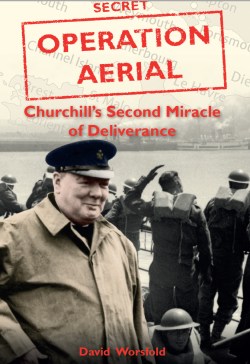
I was delighted recently when the distinguished Washington correspondent Llewellyn King asked me to join him and his fellow presenter, Adam Clayton Powell III, on their popular White House Chronicle programme to talk about what happened in France in June 1940 after Dunkirk fell to the Germans on 4 June.
This, of course, is the subject of my recent book – Operation Aerial: Churchill’s Second Miracle of Deliverance.
The challenge was to pick out some of the stories in the book that would be most likely to appeal to a North American audience. Fortunately, there are several angles that are either universal, such as the sinking of the Lancastria at St Nazaire, feature America journalists, such as the redoubtable Virginia Cowles, or regiments from Canada.
You can watch the result as White House Chronicle kindly gave me permission to share it widely.
The book would make an ideal Christmas present for anyone interested in WW2 history. The complex – and previously untold story – is made accessible by telling it through the voices of the people who were involved.
It is available in hardback or paperback from the publisher Sabrestorm, all good bookshops and on Amazon.

Lloyd’s announcement this week that it is going invest £12m in a series of initiatives to support recruitment and career progression for black and minority ethnic staff, in a programme called Inclusive Futures, as part of its response to the market’s historic involvement in the slave trade has been met with a mixed response.
This follows extensive research by Black Beyond Data, funded by the Mellon Foundation, a project based at Johns Hopkins University in Maryland, USA, which was initiated just over three years ago when the Black Lives Matter movement cast new light on the involvement of London’s powerful financial institutions in financing, supporting and perpetuating the slave trade.
To no-one’s surprise it found that Lloyd’s played a significant role in that vile, brutal and inhumane trade.
In addition to £12m going into Inclusive Futures, Lloyd’s says US$50m (£40m) will be invested globally through the African Development Bank and Inter-American Development Bank focused on “regions affected by historical enslavement”. We await greater clarity on what that means.
Other initiatives include establishing a permanent memorial at Lloyd’s to remember the victims of transatlantic slavery, sponsoring a requiem by composer David Önaç to memorialise enslaved Africans, and inaugurating an annual lecture to be given by speakers on diversity and history – the Flint Lectures – named after the first black broker to work at Lloyd’s.
This is good as far as it goes.
It has run into predictable criticism from some campaigners who want institutions that benefitted from slavery to pay reparations directly to the descendants of slaves. This sounds laudable in principle but would be fraught with difficulties and could see a lot of money spent on administering what would inevitably be a highly complex scheme. The passage of time, coupled with the patchy historical records would mean that identifying the right people and fairly allocating money would be almost impossible.
Is £12m enough? I don’t know the answer to that. It seems a very modest sum considering the extent of its involvement in the slave trade and the wealth of the modern insurance market. I think the pressure to increase that investment and extend the scope of its Inclusive Futures project could well see it increase.
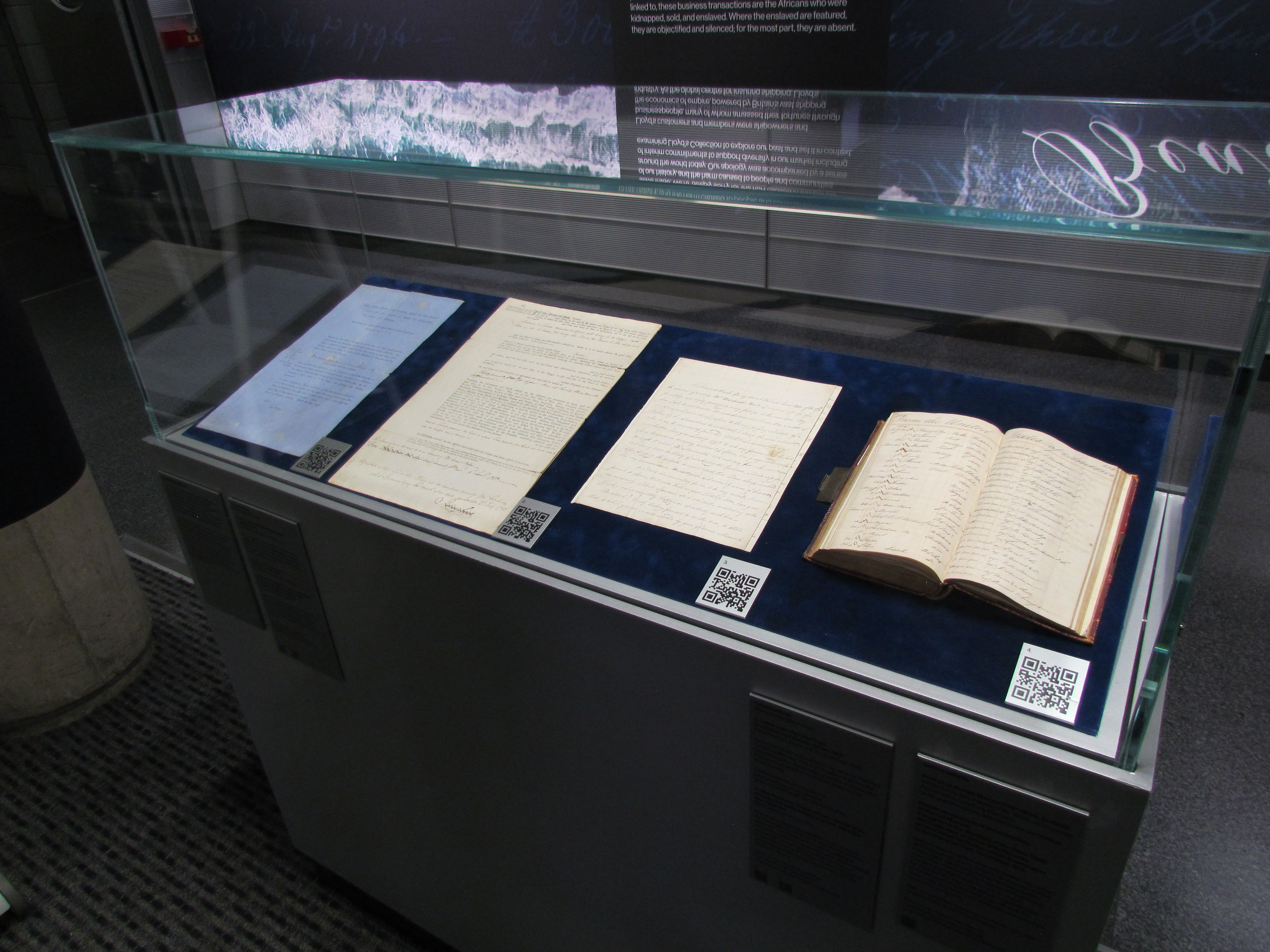
Lloyd’s has done a good job in laying out its past, much of which can be viewed in an online exhibition called Underwriting Souls. There is also a modest physical exhibition in the Lloyd’s building for those who work there to visit.
The big omission, and one that I have raised before, is the lack of any connection to slavery today.
Modern slavery is a serious problem. There are clear definitions of it and far too many examples around the world, the most serious, and probably the largest, being the Uyghurs in Xinjiang province in China.
It is all very well making an effort to acknowledge the part the London insurance market played in facilitating slavery 250 years ago but what if we are repeating that crime now? How will our descendants judge us if we stand by and do not ask serious questions about the way some of the businesses that are insured into Lloyd’s operate and their involvement in modern slavery?
They will judge us harshly, and rightly so.
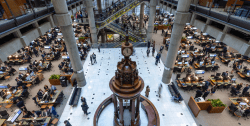
Lloyd’s has decisively put to bed the speculation that has been running since the Covid pandemic lockdowns that it might leave its present Lime Street HQ. Earlier this year it finally stopped the persistent rumours that it might exercise the 2026 break clause in its lease. Now, the market authorities have said they are looking to extend the lease beyond its current end in 2031. This is not just talk. They have backed their words with investment in the main underwriting floor which re-opened recently after a major summer re-fit.
This should be welcomed by everyone who cares about ensuring London maintains its key position in the global insurance market.
Some people forget that Lloyd’s is merely a tenant in its own building. Although it commissioned the building on the site of an older Lloyd’s building from the 1920s, it no longer owns it. It was first sold to Commerzbank for £231m in 2005 before Chinese insurer Ping An paid £260m for it in 2013. The current lease extends to 2031, with that now dismissed break clause in 2026.
It is an iconic building, designed by Richard Rogers and once damned with faint praise to me by Alan Lord, the market’s chief executive when the building opened in the mid-1980s: “If you look around London at the buildings constructed since the war it makes every other office look as about as innovative as an igloo. You might love it or loathe it but you cannot be neutral about it.”
Over the subsequent decades most people have at least come to appreciate it, if not love it. It is seen the world over as the Lloyd’s building, the only truly distinctive building associated with the insurance industry in the City of London. Although people may argue that a physical presence in the City is less important in this digital age, it still sends out a clear message about the importance of the insurance industry to the fortunes of the City and, in turn, the UK economy.
The faith being shown in the building is more than affection for an important architectural feature of the City of London. It says Lloyd’s believes it has an important part to play in the market’s future – a future that also includes significant investment in a wide range of digital initiatives. It is now up to insurers, underwriters, brokers and everyone who does business through London to show they, too, are committed to that vision of a varied future.

“Brexiters outraged after crowds wave EU flag at Last Night of the Proms”, screams a headline on The Guardian website this morning.
You have to weep at the ignorance and stupidity of these brain-dead Brexiters. They pretend to care about freedom but when people exercise their own individual freedom of choice over which flag to wave at a concert they foam at the mouth with outrage.
Nobody was forced to take a flag. It was a matter of personal choice. I think it says a lot for the sort of world these right-wing fanatics want us to live in that this offends them so much. Perhaps they ought to contemplate what “Britons never shall be slaves” or “Land of Hope and Glory, Mother of the Free” really mean.
They also profoundly misunderstand the Last Night of the Proms. It is a party at the end of a two-month long season of music concerts, the longest, and widely acknowledged as the greatest, classical music festival in the world. For many years I went to the Proms every summer and you make some great friends there – indeed, it is where I met Mariette, my wife of over 40 years. The Last Night is a farewell to many of those friends for another year, an opportunity to let one’s hair down and have a sing-song together with people you have shared the most wonderful musical experiences with night-after-night for those two months. Even in the 1970s it was never, for the Promenaders, a festival of patriotism, beyond the pride of being part of a great music festival.
Even back then flags of other nations were mixed in with the Union Flags, and EU flags have been growing in number over the last decade. The fact that so many people took them when given the opportunity yesterday is a commentary on where music lovers, always internationalists, now stand on one of the great debates of our time. I expect many people were waving both an EU flag and a Union Flag: I know I would have been.
The trouble is that those now so upset about one concert in a season of over 80 events see it in isolation, having no understanding of its context. They are also no defenders of the sort of freedom I treasure.
• (Of course, there are some flags that you would not expect see there and which would be antithetical to the values of an international and increasingly diverse music festival. The EU flag is certainly not one of those. That is a wider debate for another day)

The letters column of The Guardian has been carrying several comments from readers about the media owner’s decision to block Open GI, which powers ChatGPT, from harvesting its content. Many of these correspondents argue that The Guardian should set aside its commercial interests and concerns about intellectual property and allow developers of artificial intelligence tools to use its content to “train” its own content generating machines.
The Guardian is not alone in taking this approach. Other reputable media outlets on both sides of the Atlantic are doing the same.
They are right to do so.
The argument that if you do not allow AI developers to exploit quality content then the output of their products will be poor quality because it must draw on less reputable sources is deeply flawed. Of course the developers want to be able to draw on a wide variety of sources, especially those that have invested time, money and skills in producing top quality content. It is in their commercial interests to do so. If their products produce rubbish then people will not want them – once they realise they are not reliable. It is not the job of The Guardian and the content creators that work for it and other media outlets to boost the profits of AI developers.
If the developers of AI products want to use content created by others they should negotiate proper terms and offer appropriate payment for doing so.
This seems very reminiscent of the early days of the internet when some people threw their hands up in horror at the idea that they might actually have to pay for some online content. Many argued that the internet was an open shop where anyone could use anyone else’s content – be that words, images, illustrations – without having to pay the creators. Of course, those same people would never contemplate working for nothing themselves.
We seem to be allowing artificial intelligence to drag us back into that dismal space where people think it is OK to rip off other people’s work and not pay for it.
It is not the job of content creators or media owners to polish up AI products. That is the job of developers. They will have to work much harder in vetting sources, checking facts and editing the output. Just like the rest of us who have ever worked in publishing, journalism and the creative industries do.
In the meantime, that old adage “Buyer Beware” must be first and foremost in the minds of the users of generative AI tools.

There is no end to Tory sleaze. Johnson’s shameful Resignation Honours List, Nadine – Give me a Peerage – Dorries, Sunak’s feeble excuses for not declaring huge shareholdings and soon we will have Liz Truss’s Resignation Honours List.
All of these scandals have things in common: a complete disregard for rules and conventions, unparalleled arrogance and a deep sense of unearned entitlement.
Truss dishing out honours for 49 days of unmitigated disaster as Prime Minister embodies and magnifies all these deeply corrosive faults. Corrosive because they undermine respect for public service and further lower all politicians in the public’s minds. Those are not ingredients for a healthy democracy and public space.
You have to applaud the decency of the two people rumoured to have declined to be named in this list of shame. Perhaps they realised the association with Truss would haunt them for the rest of their lives, much as people will forever question those on Johnson’s list, especially his new Peers.
This will only heighten the need for a complete overhaul of our honours system, although there is no chance of that happening under this Tory government. It knows its days are numbered and is determined to milk the system for all it is worth, diminishing the value of honours for all those wonderful people who dedicate their lives to genuine public and community service. Of course, they are largely the very people Tories care nothing about, except when it comes to empty election slogans.
Most countries have a system for honouring people who deserve public recognition for their service. Many prohibit the award of any honours to serving politicians. That would be a start.
Much else needs fundamental reform before we end up with an honours system fit for the 21st century, starting with the House of Lords. If the next non-Tory government wants to be seen as progressive, sweeping away the 18th century anachronism at the heart of our Parliamentary system is essential.
Further down the honours ladder more needs to be done to make them inclusive. The mostly widely awarded honours retain a heavy legacy of Empire. I have long thought that a simple change from Order of the British Empire to Order of British Excellence would be a seamless transition to the more inclusive era we now live in.
And one of the simplest reforms would be to scrap the privilege granted to Prime Ministers to create their own honours lists. Truss certainly doesn’t deserve one.

When Twitter was launched in 2006 it quickly became a social media phenomenon. Its brevity, ease of use and sheer novelty saw it surge past other social media platforms in popularity and usage.
Now, under the ownership of Elon Musk, with the cack-handed re-branding to X, it is in decline, with long-term users deserting it in droves. Every decision Musk makes seems to accelerate this downward trajectory.
As someone who joined Twitter over 14 years ago, has used it extensively and helped many organisations establish their own Twitter presence, this is not something I relish. However, it cannot be ignored.
Almost from the day he walked into the Twitter boardroom, Musk has seemed bent on its destruction. The savage cutbacks in staff meant that offensive, inaccurate and outrageously false content found its way back onto the platform. The ending of the blue tick verification and its replacement with a worthless paid for option was another blow to those of us who wanted to use Twitter responsibly and engage with others of a similar disposition.
Musk has also ended the ability of many other apps to display Twitter/X content, including WordPress which this site uses. The Twitter feed that was such a familiar feature of so many websites has disappeared. In many ways, this is the most baffling of Musk’s decisions. The Twitter feeds were a showcase for the platform, inviting people, including non-users, to engage with it. Surely, it was a useful marketing tool?
The cumulative effect of these changes has had a negative impact.
Decline in engagement
Over the last few months, I have noticed a sharp decline in engagement on Twitter, even before its rebranding to the sinister looking black X. The same type of content has been getting far less response, sharing and comment than previously. I have also seen less and less content of interest to me in my timeline. This suggests the new algorithm relegates content that interests me to the fringes or that people who posted that sort of content have deserted the platform. I suspect it is a combination of the two.
I was already questioning the value of Twitter, on which I have a modest following of just over 5000, but have despaired over the last two weeks as Musk has continued with his bizarre campaign of wonton destruction of the platform.
The withdrawal of Tweetdeck and its replacement with an inferior paid for option is among the worst of the many poor decisions Musk has made. It was a fantastic tool for organising accounts and content into manageable groups, sharing those communities with others and quickly focussing on the specific content that was of interest to you just when you needed to. Without it, my timeline has become almost unmanageable.
Yes, there are other tools – communities, hashtags and so on – but they do not offer the same control, ease of use and focus that Tweetdeck offered.
Contempt for customers
The way Tweetdeck was canned also laid bare Musk’s contempt for his customers. No warning, no explanation, no incentive to explore his new alternative: it was just turned off one morning.
Now, comes the announcement that the ability to block accounts is being withdrawn. This cancels the basic right to chose who you engage with and who you want to see your content. Leaving the option to mute accounts is hardly an adequate substitute.
It is a further step into the sort of unfettered anarchy that many imagined Twitter was previously. It might have been messy, occasionally leaving you open to seeing content you would rather avoid and being on the receiving end of unwelcome engagement but you had a range of tools available to help you deal with that. Whittling away those tools will drive away more professional users, businesses and responsible organisations. It is a trend that is already powerfully in motion. I know people who left Twitter when Musk took over, many more who have lost interest in it and use it less. I will join the latter group. I will not be casting anything more that the occasional glance at it, adding far less content than I have done over the last 14 years, all while I watch Musk bury a once thriving social media platform – X marks the spot.

Mike Bright, who died from sepsis last week, aged 78, was a polarising character. It was impossible to be neutral in your response to him in life, and so it is in death.
The comments from those who knew him, worked with him and for him captured in Jonathan Swift’s report of his death in Insurance Post give an accurate flavour of how the insurance world viewed Bright. The comments on the LinkedIn post of that story go even further in exposing the respect and affection he inspired, and the contempt and hate he provoked.
I have written many times about the legacy of Bright and Independent Insurance, having been at the editorial helm of Post and Insurance Age while he was in his pomp at Independent and, before that, Lombard Elizabethan/Continental.
Here is my summary of that legacy from 2011, with thanks to Jonathan Swift and Insurance Post for allowing me to reproduce it here.
•••••••••••••••••
From the day a group of insurance journalists found themselves huddled on windswept airfield [in July 1987] waiting for an airship to emerge from a hanger, which it never did, we knew Independent Insurance was going to be different.
I had followed Michael Bright’s career since his early days at Lombard Elizabethan so I knew that his transformation of Allstate into Independent would be done with some panache and genuine sense of purpose. He had plenty of outspoken views on the insurance market, especially the relationship between insurers and brokers, so it was no surprise to see this as one of the key focuses. Its broker clubs transformed the market, as did its fresh, modern approach to branding and advertising.
Hospitality was big with Independent, whether it was the Royal Philharmonic Orchestra or its box at Wembley. Accepting it often came at a price, however, as on more than one occasion I was chided by Mr Bright for something I, or one of my colleagues on Post, had written. Indeed, this stormy relationship stretched back to the Lombard days, when I was once greeted at a cricket match by the booming Mr Bright announcing to a tent full of brokers: “Worsfold, I don’t know how you have the cheek to show your face here after what you have written.” That said, he could be very entertaining and engaging as a host when he wanted to be.
Mr Bright has often been cast as a bully but there was much more to him than that. He once invited a long-serving very junior member of staff to the box at Wembley for an FA Cup final because he was a Liverpool fan, who were in that year’s final. It wasn’t his fault they lost to Wimbledon that day. He was genuinely upset for the guy that his gesture had backfired.
Despite all the outward success of the company, there were always tensions right at the heart of Independent. The departure of senior directors such as Robert McCracken, Keith Rutter and Alan Clarke always left one nervous about what it was like right at the heart of Independent, although the bluff and loyal — disastrously loyal as it turned out — Phil Condon always offset some of those concerns. Questioning Mr Bright about this at a press conference rendered me virtually persona non grata as far as he was concerned for the last three years before the firm’s ignominious collapse. [It also left Post considerably poorer as, having failed to get lawyers to bring me to heel, he withdrew Independent’s substantial advertising and sponsorship from Post. The upside of this was that when Independent went down it owed Post virtually nothing, unlike other publications he threw money at].
Independent always did everything with a certain style and lavish, if not always classy, luxury. At the Monte Carlo Reinsurance Rendezvous you met everybody else in one of the bars or cafes where brokers, insurers and reinsurers buzz around with a manic sense of purpose. You met Messrs Bright and Condon in their shorts and t-shirts sitting at a beach table under a bar umbrella with Del Boy-sized cocktails in hand. That was the same Mr Condon who claimed at his trial that he knew nothing about reinsurance and never had anything to do with it.
Independent Insurance was Michael Bright, and in the end it was his ego that brought it down. He really believed he could buck the market and spin a deal or six to get through the downturn without sacrificing his promises to grow and grow.
•••••••••••••••••••••••
There is more background on the demise of Independent and the trial of Bright, Condon and Lomas in the piece I wrote in 2007 in the wake of their conviction, From Pomp to Prison

One of this government’s most dishonest policies is the Voter ID scheme which obliges people wanting to vote to arrive at polling stations with a form of photo ID chosen from a cynically constructed list.
Superficially, it looks like a solution in search of a problem. That is where the dishonesty comes in.
The weak, disingenuous arguments put forward by the Tories that it was to stop voter fraud, where someone impersonates a registered voter, were simply lies. Voter fraud is an insignificant, almost non-existent, problem. The real reason was a crude, misdirected attempt at voter suppression. Armed with their highly selective list of acceptable ID they hoped to bar many young people – far less likely support the Tories at the best of times, let alone this corrupt shambles – from voting.
Did it work?
Only up to a point. The report from the Electoral Commission says 14,000 people were officially recorded as being turned away from polling stations in the local elections in May and did not return. That is 14,000 too many, especially as many were identified as being from disadvantaged groups. Added to that has to be the number of people who did not even get into a polling station as they were met by “greeters” who asked if they had ID, turning away those without it before they had a chance to have their presence at the polling station officially recorded. 40% of polling stations used this system.
I certainly saw this happen at my own polling station in the Brentwood Borough Council ward of Shenfield. Some of those I saw who were put off at this stage came back later but, although I wasn’t outside the station for more than a couple of hours, I suspect many did not.
I had to smile at some of the findings in the Electoral Commission report which suggested that the elderly – who are usually more likely to vote Tory – were disproportionately represented among those 14,000 disenfranchised voters.
Some research has suggested that as many as 400,000 people could be put off from voting at a General Election because of the hassle of finding suitable ID, or because they do not have something that is on the list and do not know about the ways of obtaining acceptable identification from their local council. That is a shocking number.
Turnout in elections has been steadily falling over the years. That is not good for democracy. Let’s not mince words: anything that makes it less likely citizens will vote is an attack on democracy.
This policy needs to be scrapped as part of a wider reform of electoral law in this country. This should include lowering the voting age to 16 and introducing proportional representation for all elections. The latter could have an explosive impact on democracy in the UK as it would remove the need for the awkward permanent coalitions we call the Conservative and Labour parties. Both would fragment as the pressure to form large parties uncomfortable in their own skins would be removed.
- I am happy to record that, despite the new impediments to voting, the good people of Shenfield still produced one of the largest ward turnouts in the recent local elections, 41.4%.
- To those who throw their hands up horror at the thought of coalitions running national and local government, I can report that the Joint Administration we – the Liberal Democrats – have formed with Labour in Brentwood to wrest control of the Council from the Tories has hit the ground running and has all the hallmarks of a successful partnership. It can be done.


 David Worsfold